

Rising online travel fraud targets Indian tourists as cybercriminals exploit post-pandemic travel demand.
A man from Goa has become the latest victim of sophisticated online travel scams after losing ₹2.67 lakh (approximately $3,200) to a fraudulent Maldives holiday package website, highlighting the growing threat of digital fraud targeting aspirational travellers in India.
The victim, who wished to remain anonymous, discovered the scam after making a full payment via credit card for a luxury Maldives package that promised overwater villas, all-inclusive stays, and seamless travel arrangements. Instead of receiving booking confirmation, he was left with a non-functional website and unresponsive customer support.
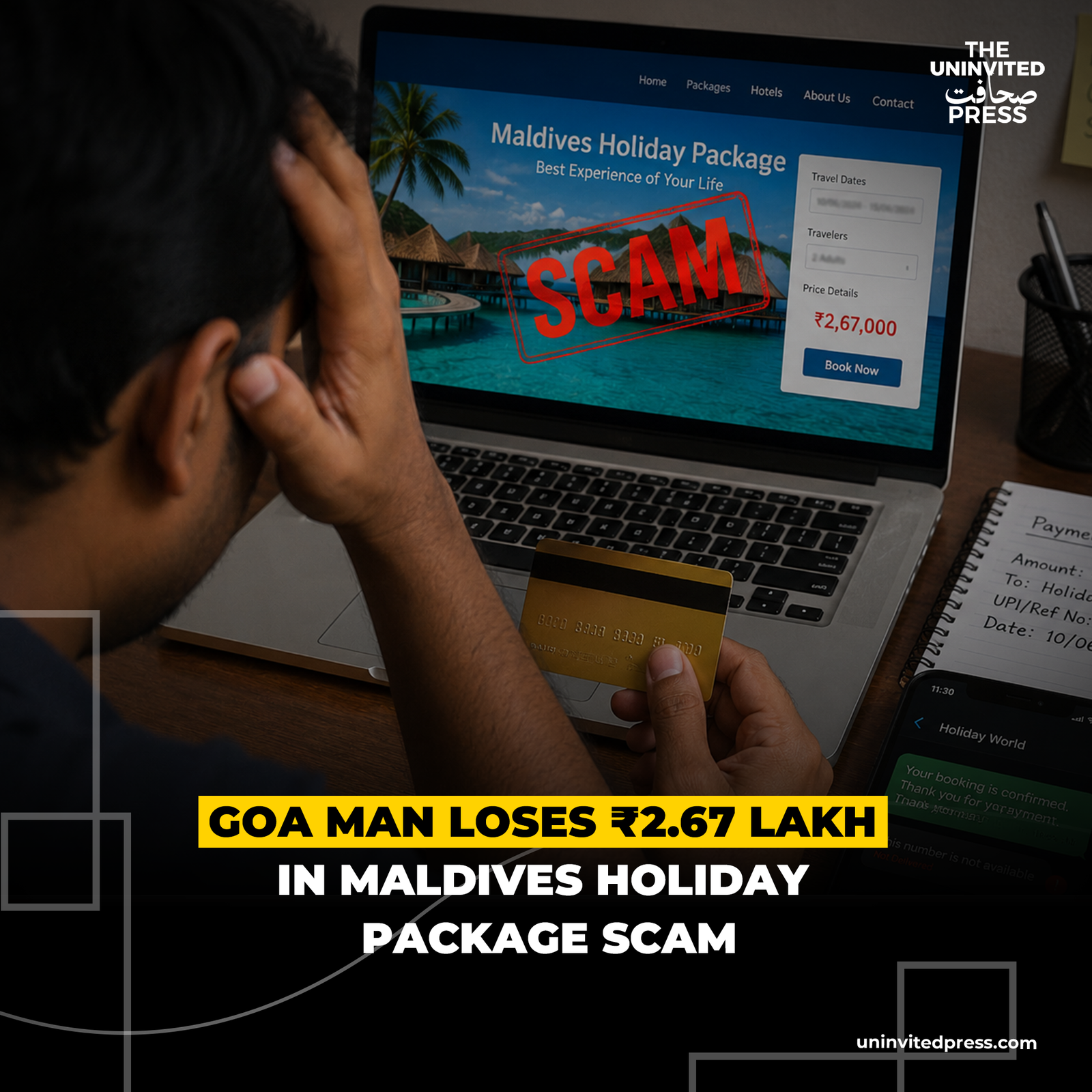
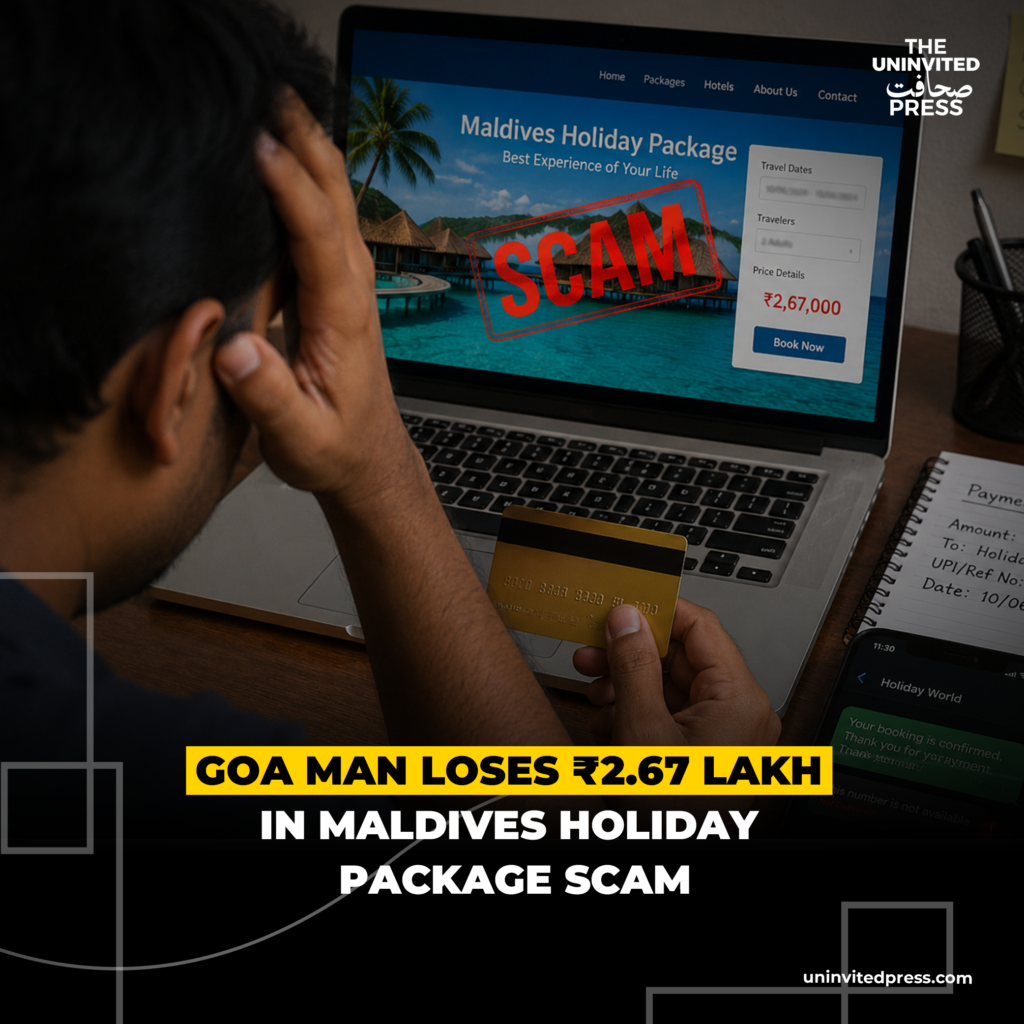
The fake website, styled professionally with images of tropical resorts and Maldives travel deals, displayed a total package price of ₹2,67,000 and included convincing details such as travel dates, hotel options, and a “Book Now” button. A large red “SCAM” stamp overlaid on the screenshot now serves as a warning in circulating reports about the incident.
Fake Booking Sites Target Tourists:
Cybersecurity experts say such scams have multiplied across India, particularly targeting popular international destinations like the Maldives, Dubai, and Thailand. Fraudsters create near-identical replicas of legitimate travel websites or use social media advertisements to lure victims with unrealistically low prices.
“Goans and other middle-class Indians saving for dream vacations are especially vulnerable,” said a cybersecurity analyst based in Mumbai. “These scams prey on excitement and urgency, often using limited-time offers or fake customer testimonials.”
According to recent data from India’s cybercrime portal, travel and tourism-related frauds have seen a sharp rise, with losses running into hundreds of crores annually. Many victims report being redirected to fake payment gateways or pressured into UPI transfers that are nearly impossible to reverse.
Goa Man Falls Victim to Travel Scam:
The Goa man came across the advertisement while browsing holiday deals. After initial contact via WhatsApp and a seemingly legitimate website, he proceeded with the payment. Within hours, the site went offline, and all communication channels were blocked.
Local police in Goa have registered a case under relevant sections of the Information Technology Act and are coordinating with national cybercrime agencies to trace the perpetrators. Authorities suspect the operators may be part of larger networks operating from abroad, similar to those recently linked to Southeast Asian and emerging South Asian scam hubs.
Tourism Scams Prompt Safety Warnings:
Consumer rights groups and tourism authorities are urging caution. Official advice includes:
- Verifying travel agents and websites through government-approved portals
- Avoiding unusually cheap deals that seem too good to be true
- Using credit cards for better dispute resolution instead of direct bank or UPI transfers
- Checking reviews on independent platforms rather than relying solely on website testimonials
The Maldives, a favourite destination for Indian tourists, has seen a boom in travel demand, making it a prime target for scammers. Genuine operators have also reported increased cases of impersonation.
As India’s digital economy expands and more citizens book international travel online, such incidents underscore the urgent need for stronger digital literacy, faster cross-border law enforcement cooperation, and stricter regulation of online advertisements.
For the victim in Goa, the financial loss has not only shattered holiday plans but also left him wary of future online transactions-a common story echoing across many Indian households.