

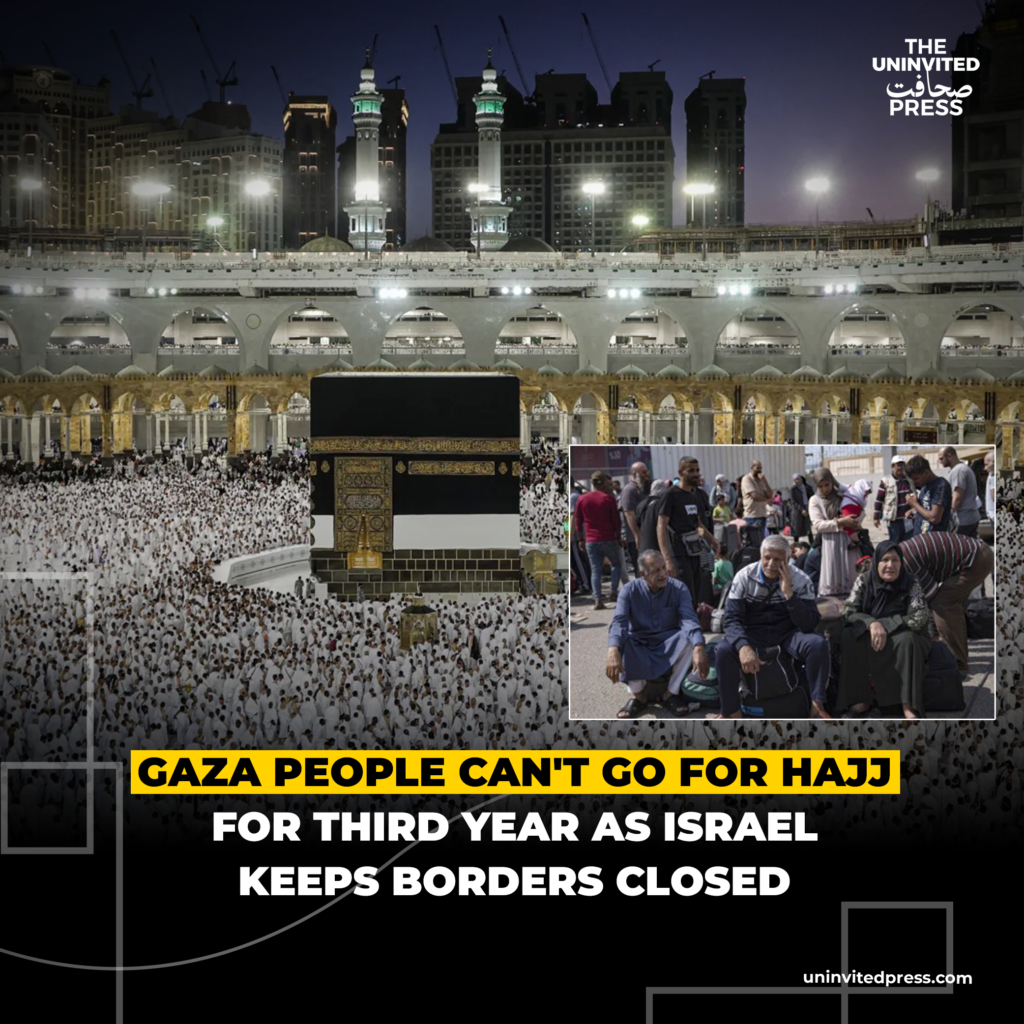
Palestinians in the besieged enclave remain unable to fulfil one of Islam’s major pillars amid ongoing restrictions and humanitarian crisis.
For the third consecutive year, Palestinians in Gaza are unable to travel to Saudi Arabia to perform the Hajj pilgrimage, as Israeli authorities continue to impose tight restrictions on border crossings.
The development has left thousands of devout Muslims in the coastal enclave heartbroken, depriving them of a religious duty many had hoped to fulfil after years of waiting. Gaza’s Ministry of Awqaf and Religious Affairs confirmed that no residents from the territory have been granted permission to leave for Hajj this year.
Gazans Miss Hajj Again as Border Restrictions Continue:
Israeli authorities have cited security concerns for maintaining strict controls on the Rafah and Erez crossings, effectively preventing the vast majority of Gaza’s 2.3 million residents from travelling abroad. Only a limited number of medical cases and specific humanitarian exceptions have been allowed in recent years.
This marks the third year in a row that Gazans have been largely excluded from the annual Hajj, which draws millions of pilgrims to Mecca. In previous years, small groups were occasionally permitted through Egyptian coordination, but such arrangements have become almost impossible since the escalation of the Israel-Gaza conflict.
Many families in Gaza have expressed deep sorrow over the situation. “Hajj is a dream for every Muslim, but for us in Gaza, it has become an impossible dream,” said one resident who had saved for years to perform the pilgrimage.
Gaza’s Hajj Ban Sparks Concerns Over Religious Freedom:
The blockade has compounded the suffering of Gaza’s population, already facing severe shortages of food, medicine, and basic services following prolonged conflict and destruction. Rights groups argue that preventing civilians from performing religious rites constitutes a form of collective punishment.
Saudi authorities have reportedly facilitated Hajj participation for Palestinians from the West Bank, but Gaza remains isolated. The Kingdom has not issued an official statement on the matter this year.
As the Hajj season concludes, many in Gaza are turning to prayers at local mosques, hoping for a future where they can one day fulfil this sacred obligation. The issue has reignited broader discussions about freedom of movement and the right to religious practice under occupation.