

Floods and landslides devastate remote communities as relentless rains expose growing climate vulnerabilities.
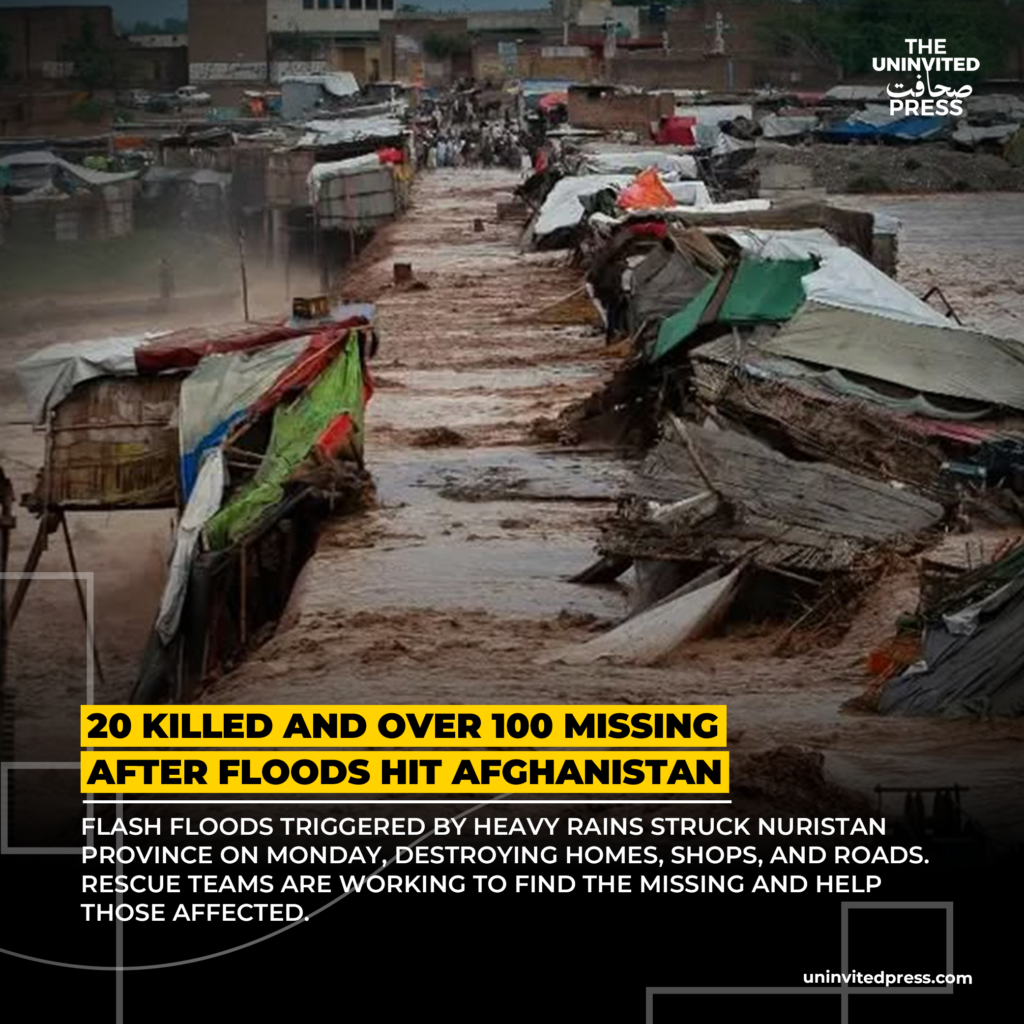
At least 20 people have been killed and more than 100 remain missing after powerful flash floods triggered by heavy monsoon rains struck Parun, the capital of Nuristan province, in eastern Afghanistan on Monday.
The sudden deluge swept through the mountainous area, destroying homes, shops, roads, and other infrastructure in a region already grappling with poverty, isolation, and the impacts of decades of conflict and environmental degradation. Authorities say the death toll is preliminary and could rise as rescue teams continue searching for survivors amid difficult terrain and damaged access routes.
According to Afghanistan’s National Disaster Management Authority (ANDMA), more than 80 people were also injured in the flooding. The floods carried large boulders and debris, devastating the municipal section of Parun, including hotels and commercial premises located near the river. Among the missing is reportedly the mayor of the city.
Local residents and officials described scenes of chaos as floodwaters surged without warning, sweeping away people and property. Rescue operations are underway, with teams working to locate the missing, many of whom include government employees and civilians who attempted to assist others during the crisis.
Deadly Floods Expose Infrastructure Gaps:
Afghanistan is one of the countries most vulnerable to the effects of climate change. Experts note that changing weather patterns have led to more frequent and intense flash floods in mountainous provinces like Nuristan, exacerbated by deforestation, which reduces the soil’s ability to absorb heavy rainfall.
This latest disaster adds to a pattern of deadly floods that regularly strike different parts of the country, often claiming dozens or even hundreds of lives in a single season. In recent years, similar events have destroyed farmland, irrigation systems, and homes, deepening humanitarian challenges in a nation where millions already face food insecurity and limited access to basic services.
Nuristan, a remote province bordering Pakistan, is characterised by steep valleys and limited infrastructure, making emergency responses particularly challenging. Communication and access to affected areas have been hampered, complicating efforts to deliver aid.
Taliban Intensify Flood Rescue Efforts:
Taliban government officials, including chief spokesperson Zabihullah Mujahid, expressed sorrow over the losses and confirmed that search and rescue operations are continuing. The authorities have urged citizens to avoid flood-prone zones and appealed for support from local and international relief organisations.
Humanitarian agencies have long warned that Afghanistan’s disaster preparedness is stretched thin, with limited resources available for both immediate response and long-term mitigation measures such as reforestation, early warning systems, and resilient infrastructure.
As rescue efforts persist and families search for loved ones, the floods in Nuristan serve as a stark reminder of the urgent need for greater international attention to Afghanistan’s humanitarian and climate challenges. In a country facing multiple crises, these natural disasters compound existing vulnerabilities, affecting some of the world’s most marginalised communities.