

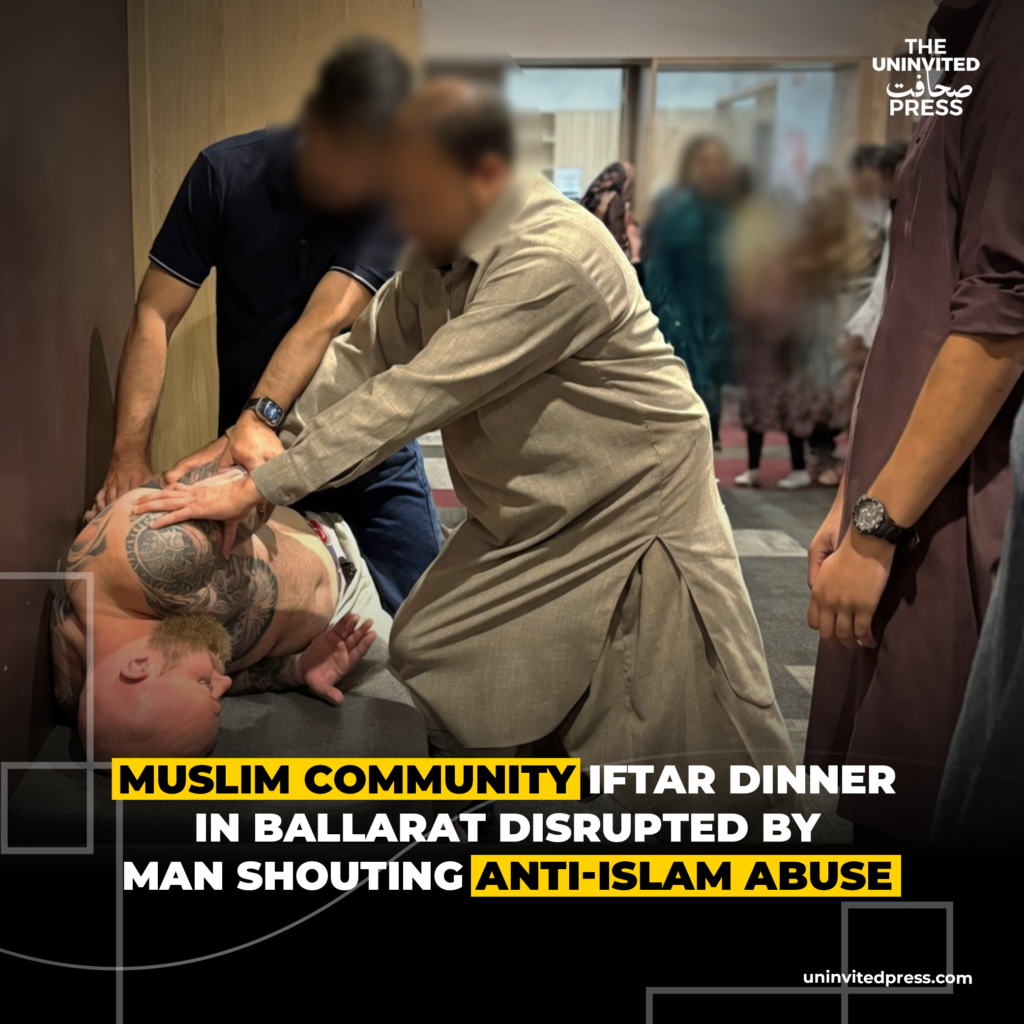
A far-right man disrupted a Muslim Iftar in Ballarat with abuse and assaults, leaving kids traumatized-no arrest made.
Ballarat Iftar Attack: Far-Right Intruder Disrupts Ramadan Gathering, Walks Free:
A peaceful Iftar dinner in Ballarat turned chaotic when a self-proclaimed far-right man burst in, shouting anti-Islam slurs and throwing punches, leaving families-including young children-traumatized. The incident highlights escalating Islamophobia in Australia, where Muslim communities increasingly face threats amid national debates on social cohesion. As investigations continue, questions mount over why police let the alleged attacker walk free.
Families Traumatized, Community Questions Normalization of Hate:
The disruption unfolded rapidly at the Alfredton community hall, where around 50-60 members of Ballarat’s Muslim community had gathered for Iftar-the evening meal breaking the daily Ramadan fast. Witnesses describe a serene atmosphere shattered around sunset when the 37-year-old man approached the venue.
According to Usman, a Ballarat resident who attended with his family and spoke to media on condition of anonymity, the intruder first targeted children playing outside, issuing threats that prompted them to flee inside crying. “A guy has come in … Daddy,” his daughters shouted, as recounted in reports. He then forced his way through the doors, unleashing a barrage of abuse. “He was using demeaning words toward Islam (words I cannot repeat), and he was trying to free himself from that restraint,” Usman said. The man allegedly threw punches, held one victim’s neck, and kicked others, with slurs escalating to threats like “I will kill you all” and “Death to Muslims.”
Three community members quickly intervened, restraining the man on the floor until police arrived. Video footage captured the scene, showing the intruder subdued amid the chaos. Victoria Police confirmed they found the man detained, interviewed him at the scene, and issued a “direction to move on” without arrest. The investigation remains active, but no further details on the man’s identity or charges have been released.
In the aftermath, victims like Usman described profound shock. His daughters, too frightened to sleep alone, have asked, “Why was he chanting such things?” and “Have we done anything wrong to him?” Usman, who has lived in Australia for 20 years without prior incidents, questioned if such attacks are becoming normalized: “Do we need to prepare ourselves for this new thing? Is it going to be common?”
Ballarat Attack Amid National Surge in Anti-Muslim Hate:
Ballarat, a regional city in Victoria with a population of about 116,000, hosts a small but growing Muslim community of around 767 people (based on 2021 census data, likely higher now). The Islamic Society of Ballarat, established to provide a place of worship and foster community ties, organizes events like this Iftar to celebrate Ramadan-a month of fasting, prayer, and reflection observed by Muslims worldwide. Islam has roots in Australia dating back to the 19th century with Afghan cameleers and Malay pearlers, but modern communities in regional areas like Ballarat are often recent immigrants or refugees seeking quieter lives.
This incident occurs against a backdrop of surging Islamophobia in Australia. Reports show a 740% spike in anti-Muslim incidents since the December 2025 Bondi terror attack, including vandalism, assaults, and online hate. The Islamophobia Register Australia documented a 150% rise in in-person attacks and 250% online since Israel’s Gaza war began in 2023, with further escalation post-Bondi. Recent examples include threatening letters to Lakemba Mosque during Ramadan 2026 and physical disruptions at protests. Political rhetoric, such as One Nation leader Pauline Hanson’s recent Senate censure for claiming “no good Muslims,” has fueled normalization of such bias. Experts note AI-generated content amplifies online hate, as highlighted by Ballarat Regional Multicultural Council CEO Suzanne Ryan-Evers.
The attack underscores vulnerabilities for minority groups in regional Australia, where resources for community safety may lag behind urban centers. It also raises broader questions about social cohesion amid debates on immigration and national identity.