

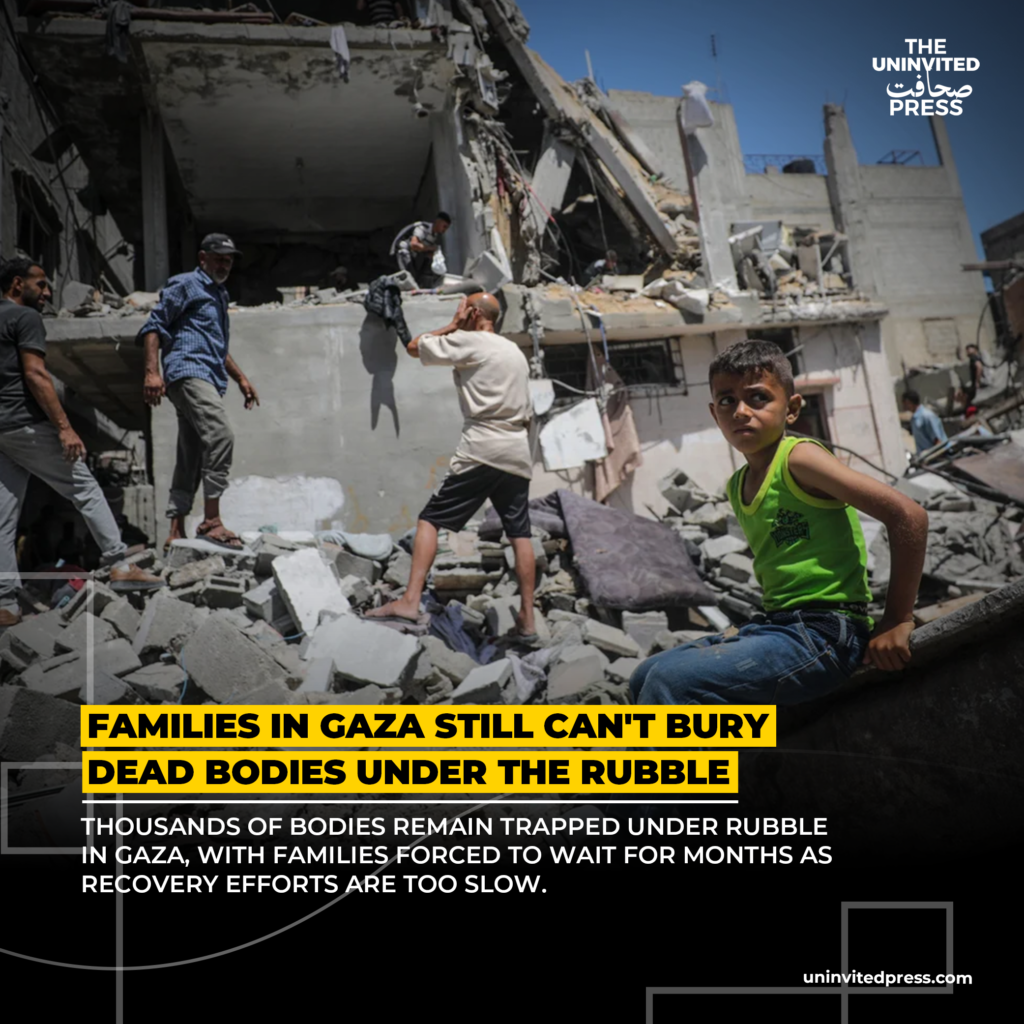
Thousands of bodies remain missing months after Israeli bombardment, as recovery efforts lag amid ongoing restrictions and destruction.
In the shattered neighbourhoods of Gaza, families continue to mourn not only the loss of loved ones but also their inability to give them a proper burial, with thousands of bodies still believed to be trapped beneath mountains of concrete and debris.
More than 18 months since the escalation of the war, Palestinian rescue teams and civilians say the scale of destruction has made recovery operations painfully slow, leaving entire families in limbo as they search for closure.
“We just want to bury our dead”:
Ahmed Al-Khalidi, 42, lost his brother and two nephews when their three-storey home was destroyed in an Israeli airstrike in northern Gaza last year. He returns almost daily to the site, now a pile of rubble, hoping to recover their remains.
“We dig with our hands and simple tools. Sometimes international organisations help with heavy machinery, but it’s never enough,” he told Media. “How can we move on when we can’t even say goodbye?”
According to Gaza’s Civil Defence and health officials, an estimated 7,000 to 10,000 bodies are still believed to be under the rubble across the enclave. Many families have been waiting for months-in some cases over a year-without confirmation of their relatives’ fate.
Gaza Rubble Crisis Hinders Recovery Efforts:
The massive scale of destruction-with more than 70 percent of Gaza’s residential buildings damaged or destroyed-has severely complicated search and rescue efforts. Heavy machinery is scarce, fuel is limited, and movement restrictions continue to hamper coordinated operations.
Gaza’s Government Media Office has repeatedly accused Israel of deliberately delaying the entry of equipment needed for rubble removal and recovery missions. Israeli authorities have cited security concerns, claiming that Hamas may use such operations for military purposes.
International humanitarian organisations, including the United Nations, have described the situation as a profound humanitarian tragedy, warning that the prolonged inability to recover bodies poses serious public health risks in addition to the immense psychological toll on families.
A humanitarian catastrophe without end:
The plight of families searching for their dead comes as Gaza continues to face acute shortages of food, medicine, and shelter, with much of the population displaced multiple times.
Human rights groups have called for an immediate ceasefire and unrestricted humanitarian access to allow for the recovery of remains and the dignified burial of the dead-a basic cultural and religious requirement in Palestinian society.
For many in Gaza, the inability to bury their loved ones has become a symbol of the enduring suffering inflicted by the long war. As one mother whose daughter remains missing under the ruins of Khan Younis said: “Even in death, we are denied peace.”