

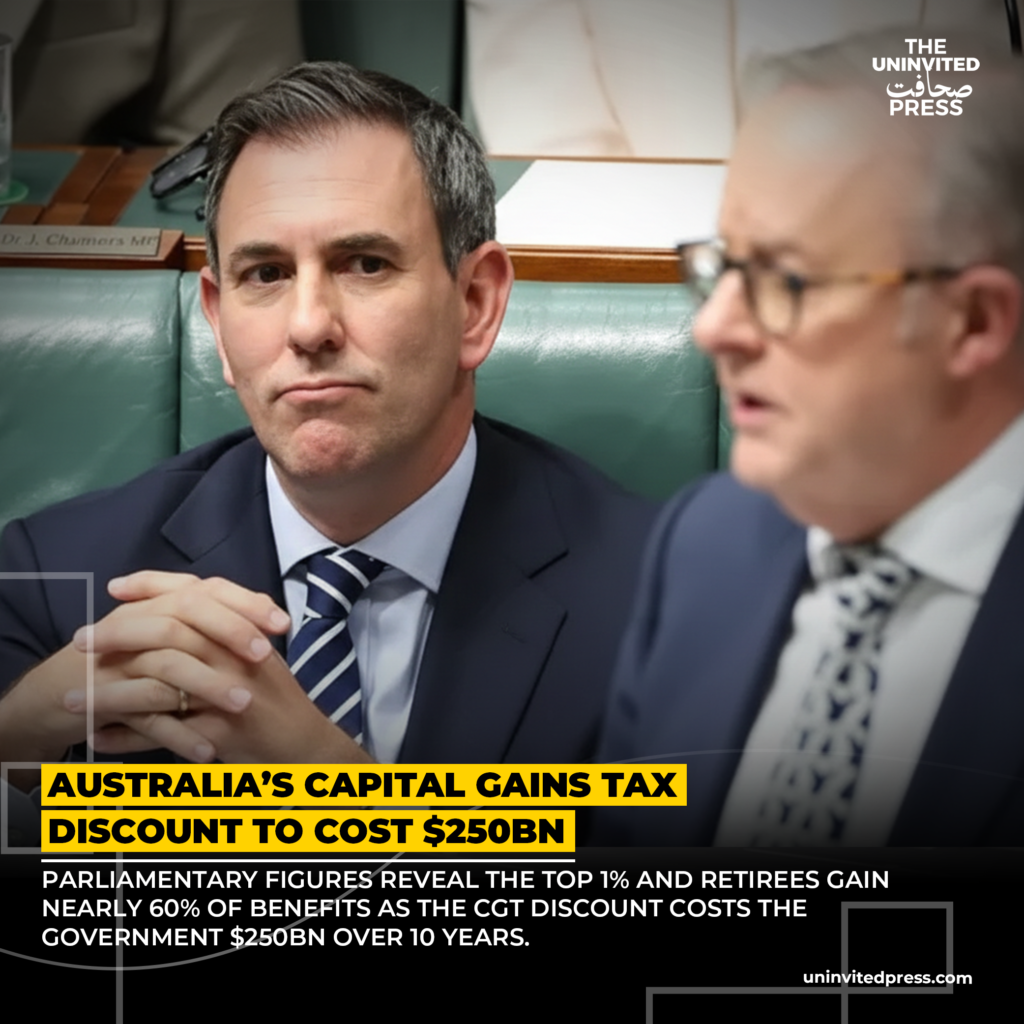
Australia’s CGT discount projected to cost $247bn over 10 years, with 59% benefits to top 1% and retirees, per PBO. Debate rages on reforms amid housing woes.
$247B CGT Break Worsens Inequality, Hits Housing:
New figures from Australia’s Parliamentary Budget Office reveal the 50% capital gains tax discount will cost the federal budget a staggering $247 billion in foregone revenue over the next 10 years-more than it has in its entire 25-year history. This concession, which halves taxes on profits from assets held longer than a year, overwhelmingly benefits the top 1% of income earners and retirees, who capture nearly 60% of the savings this financial year. As housing affordability plummets and inequality widens, these revelations intensify pressure on the Albanese government to overhaul the policy, potentially freeing up billions for public services while addressing generational divides.
Quarter-Trillion CGT Break Fuels Political Fury:
The PBO’s bombshell analysis dropped on February 5, 2026, amid a Greens-led Senate Select Committee inquiry into the CGT discount’s operations. Commissioned by Senator Nick McKim, the report updates prior Treasury estimates, projecting a $247 billion hit to the budget from 2025-26 to 2035-36-surpassing the $205 billion total cost since the discount’s inception in 1999. This year’s foregone revenue alone stands at $21.8 billion, a sharp rise driven by soaring property and share values.
The breakdown is stark: The top 10% of earners scoop up 82% of the benefits, with the ultra-wealthy top 1% claiming 59%-a concentration that’s worsened over time. Retirees, often with no taxable income, maximize gains by timing asset sales, further tilting the scales. Younger Australians under 35 receive just 4% of the perks, highlighting a generational chasm.
Prime Minister Albanese addressed the figures on February 6, refusing to rule out reforms while emphasizing the need for “fair” tax settings. The inquiry, launched in late 2025, has already heard from experts on how the discount fuels property speculation.
CGT Discount: From 1999 Tax Overhaul to Today’s Housing Crisis:
The CGT discount traces back to September 1999, when the Howard government, led by Prime Minister John Howard and Treasurer Peter Costello, replaced an inflation-indexed system with a flat 50% reduction for long-held assets. Aimed at boosting investment, it applied to individuals and trusts, with super funds getting a 33% discount. Over time, critics argue it supercharged property prices, making homeownership elusive for millennials and Gen Z.
Australia’s housing crisis provides the backdrop: Median home prices have doubled in a decade, with Sydney’s at over $1.4 million. The discount, paired with negative gearing, has drawn 2.2 million investors into the market, often at the expense of first-time buyers. Past reform attempts faltered-Labor’s 2019 election pledge to halve the discount contributed to their defeat.
This tax break exacerbates wealth inequality, with men benefiting 1.5 times more than women due to asset ownership gaps. Human impacts hit hard-young renters face skyrocketing costs, while retirees cash in on untaxed gains. Reforming it could fund infrastructure, health, or housing subsidies, but risks market shocks if not grandfathered.