

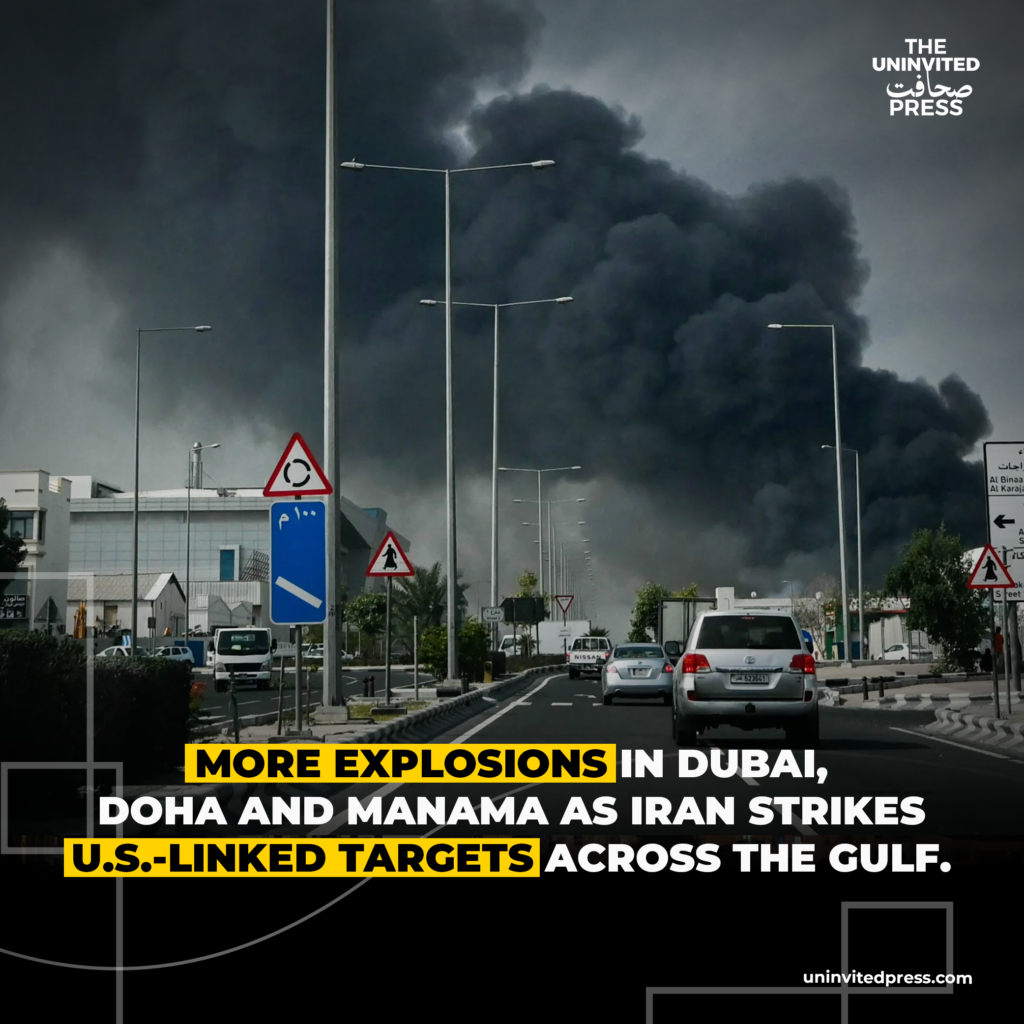
Explosions in Dubai, Doha, and Manama as Iran strikes U.S.-linked targets in retaliation for Khamenei’s death, causing deaths, injuries, and regional chaos.
Gulf Cities Rocked by Iran’s Retaliatory Strikes After Khamenei Killing:
Explosions echoed across key Gulf cities for a third day on March 2, 2026, as Iran unleashed retaliatory strikes on U.S.-linked targets in Dubai, Doha, and Manama following the U.S.-Israeli attacks that killed Supreme Leader Ayatollah Ali Khamenei. The assaults, which have damaged airports, hotels, and residential areas, have claimed at least four lives and injured over 100, shattering the Gulf’s image of stability and raising alarms over oil supply disruptions and broader conflict. This escalation highlights the precarious position of U.S. allies in the region, caught between hosting American forces and facing Tehran’s wrath.
With global markets reeling and evacuations underway, the strikes mark a dangerous new phase in Middle East tensions, potentially drawing in more nations. As Iran vows to continue until its goals are met, the human and economic costs mount rapidly.
Three Days of Devastating Missile Strikes Shake Gulf Cities:
The strikes commenced on February 28, 2026, shortly after U.S. and Israeli forces launched “Operation Roaring Lion,” killing Khamenei and dozens of Iranian officials in Tehran. By midday, Iran responded with a barrage of missiles and drones aimed at U.S. bases in the Gulf. In Manama, Bahrain, explosions targeted the U.S. Navy’s Fifth Fleet headquarters, with smoke plumes visible over the city and a hotel complex hit, prompting civil defense responses.
On March 1, the attacks intensified, with blasts in Dubai damaging the Fairmont The Palm hotel and residential areas near the Burj Khalifa, injuring at least four. Doha reported intercepts over Al Udeid Air Base, the largest U.S. military facility in the Middle East, with debris causing fires in industrial zones. Witnesses in Dubai described hearing jets overhead and seeing thick smoke rising from Jebel Ali Port after debris ignited a blaze.
By March 2, fresh explosions were reported in all three cities, with Bahrain intercepting 45 missiles and nine drones, and Qatar downing incoming projectiles without casualties. Visuals show massive smoke clouds over urban areas, disrupting daily life and forcing evacuations.
The UAE confirmed three deaths and 58 injuries since the strikes began, mostly from debris. Overall casualty figures remain fluid, with NYT tallying at least four deaths and over 100 injuries across the region.
Gulf Faces Escalation Amid U.S.-Iran Conflict and Strategic Threats:
These strikes stem from decades of U.S.-Iran animosity, exacerbated by Iran’s nuclear program, support for proxies like Hezbollah, and recent escalations. The U.S.-Israeli operation on February 28 targeted Iranian leadership and nuclear sites, codenamed “Roaring Lion,” in response to perceived threats. Gulf states like UAE, Qatar, and Bahrain host key U.S. bases-Al Udeid in Qatar (10,000 troops), Fifth Fleet in Bahrain, and facilities in UAE-making them prime targets for Iranian retaliation.
Historically, the Gulf has positioned itself as a neutral hub for finance and tourism, diversifying from oil since the 1990s. However, hosting U.S. forces has drawn them into conflicts, as seen in the 2020 Soleimani assassination aftermath. The current attacks underscore vulnerabilities, with strikes on luxury hotels and airports threatening economic pillars like Dubai’s aviation sector, which handles over 80 million passengers annually. Significance lies in potential oil price spikes-Gulf supplies 20% of global crude-and risks of wider involvement from Saudi Arabia or others.