

Silent epidemic highlights failures in public health response as opioid-related deaths surge among middle-aged Australians.
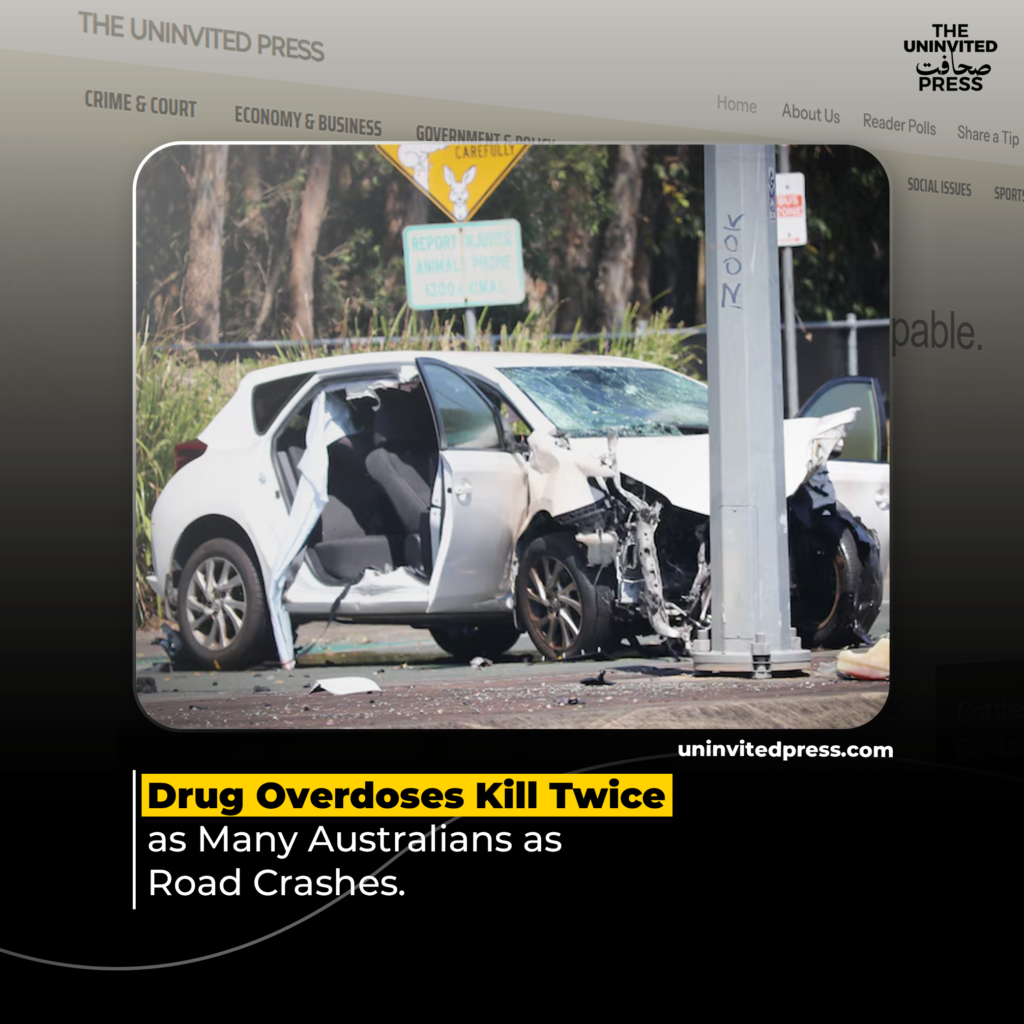
New data reveals a grim milestone in Australia’s ongoing public health crisis: In 2024, drug-induced deaths reached a record high of approximately 2,596, nearly double the number of fatalities from road crashes, which stood at around 1,300.
The figures, drawn from a preliminary analysis by the Penington Institute and reported across Australian media, underscore a decade-long trend where overdose deaths have consistently outpaced road tolls, yet receive far less sustained national attention or funding.
Overdoses Surpass Road Deaths:
According to the Penington Institute’s preview of its annual overdose report, around 2,091 of the 2024 deaths-roughly 80 percent-were unintentional. This equates to an average of seven people dying every day, or one every 3.5 hours.
Opioids, including prescription painkillers, heroin, and increasingly potent synthetics, remain the leading substances involved in these fatalities. While younger demographics have historically been hardest hit, new analysis shows Australians in their 40s and 50s now recording the highest numbers of accidental overdose deaths.
The crisis is not uniform across the country. New South Wales reported the highest number of unintentional drug-induced deaths (587), followed closely by Victoria (572). Indigenous Australians continue to experience disproportionately higher rates compared to non-Indigenous populations,
Australia has long prided itself on its road safety record, with decades of investment in stricter laws, enforcement, infrastructure improvements, and public awareness campaigns yielding significant reductions in fatalities over time.
Yet the same level of coordinated national urgency has not been applied to the overdose epidemic, experts say.
“Overdose deaths have been higher than the road toll for years, but we don’t treat it with the same seriousness,” said one public health advocate in recent coverage. The road toll garners immediate government responses and media scrutiny after major incidents, while overdose deaths often occur in private and are framed primarily as individual failings rather than a systemic public health issue.
Australia Urged to Rethink Drug Policy:
Multiple factors drive the surge: an ageing population of people who use drugs, the persistence of stigma around addiction, limited access to treatment and harm reduction services in regional areas, and the infiltration of more dangerous substances into illicit markets.
Many overdoses occur at home, and a significant proportion involve people with a history of chronic pain or mental health conditions who were initially prescribed opioids.
Calls for reform include treating drug dependence as a health issue rather than a criminal justice one, expanding access to naloxone (the overdose-reversal drug), safe consumption spaces, and better integration of mental health and addiction services.
Reverend Bill Crews and others have emphasised the need to shift from punitive approaches to evidence-based public health strategies.
As Australia grapples with this hidden toll, advocates argue that the scale of the tragedy-double the road deaths-demands a response commensurate with the loss of life.
With preliminary 2024 figures already painting the deadliest year on record, the upcoming full Penington Institute report is expected to fuel renewed debate over policy priorities in the lead-up to future federal and state elections.
For families like that of Kris Quon, who lost his life to overdose years ago, the statistics represent irreplaceable human loss.
“The fact that the number of deaths is higher than our annual road toll should make governments stand up and take notice,” said one expert.
Until then, Australia’s overdose crisis continues largely out of sight, claiming lives at a rate that challenges the nation’s self-image as a leader in public safety and social welfare.