

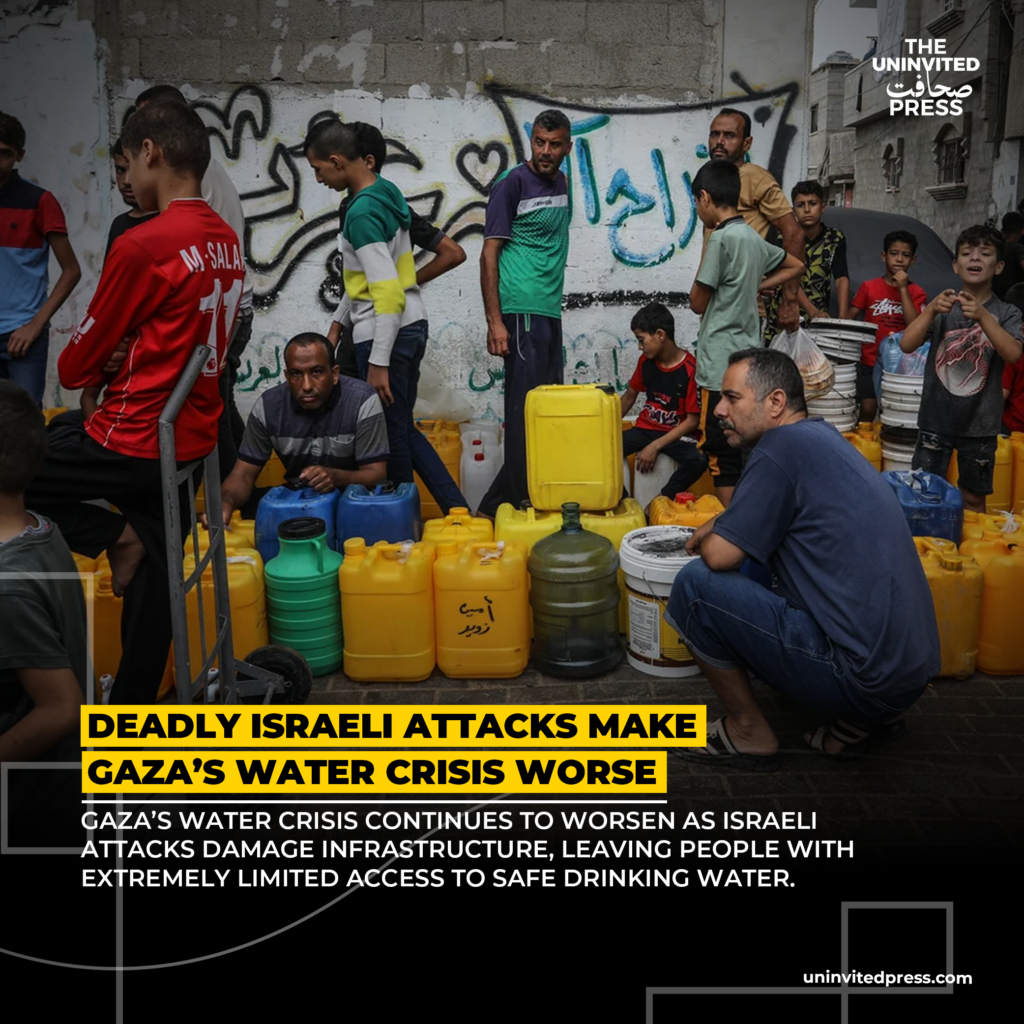
Palestinians forced to rely on contaminated sources as infrastructure destruction leaves families with just litres of unsafe water per day.
Israeli military strikes continue to devastate what remains of Gaza’s water infrastructure, pushing the besieged enclave into a deepening humanitarian catastrophe where safe drinking water has become a rare and dangerous luxury for its more than two million residents.
Recent attacks on desalination plants, pumping stations and water pipelines have worsened an already dire situation, with residents queuing for hours to fill jerrycans from sporadic aid deliveries or contaminated local sources. Images from across Gaza show families, including large groups of children, gathered around colourful plastic containers in a desperate bid to secure water for drinking, cooking and basic hygiene.
Widespread Destruction of Gaza’s Water Infrastructure Amid Ongoing Conflict:
According to Palestinian officials and UN agencies, over 70 percent of Gaza’s water supply infrastructure has been damaged or destroyed since the escalation of hostilities. Dozens of water wells, main transmission lines and reservoirs have been hit, while desalination facilities-critical in a territory where groundwater is largely undrinkable-operate at a fraction of their capacity due to damage, fuel shortages and Israeli restrictions on repairs.
In Gaza City alone, municipal authorities report that 72 water wells have been put out of service and more than 150,000 metres of water networks destroyed. Recent strikes on facilities in areas like Shuja’iyya have further reduced already limited output.
Palestinian engineers say Israeli forces are actively hindering repair efforts by restricting the entry of essential equipment and materials, leaving crews unable to restore basic services.
Dying of thirst:
Residents describe daily torment as water scarcity compounds other hardships. In displacement camps such as al-Mawasi, families report having access to as little as 4.5 to 6 litres of water per person per day-far below the UN emergency standard of 15 litres. Many are forced to drink brackish or contaminated water, leading to a surge in waterborne diseases.
“We are dying of thirst,” one displaced resident told Media, echoing widespread frustration that has sparked protests in several camps demanding increased water access.
Aid organisations warn that the combination of destroyed sanitation systems, sewage flooding and polluted water sources poses a severe public health risk, particularly to children and the elderly, amid ongoing displacement and overcrowding.
Call for immediate action:
Humanitarian groups, including Oxfam and the UN, have repeatedly urged Israel to allow unrestricted entry of fuel, equipment and aid to repair water systems. They stress that targeting or obstructing civilian water infrastructure violates international humanitarian law.
As attacks persist and reconstruction remains blocked, Gaza’s water crisis risks becoming irreversible, threatening the lives and health of an entire population already pushed to the brink by prolonged conflict and blockade.