

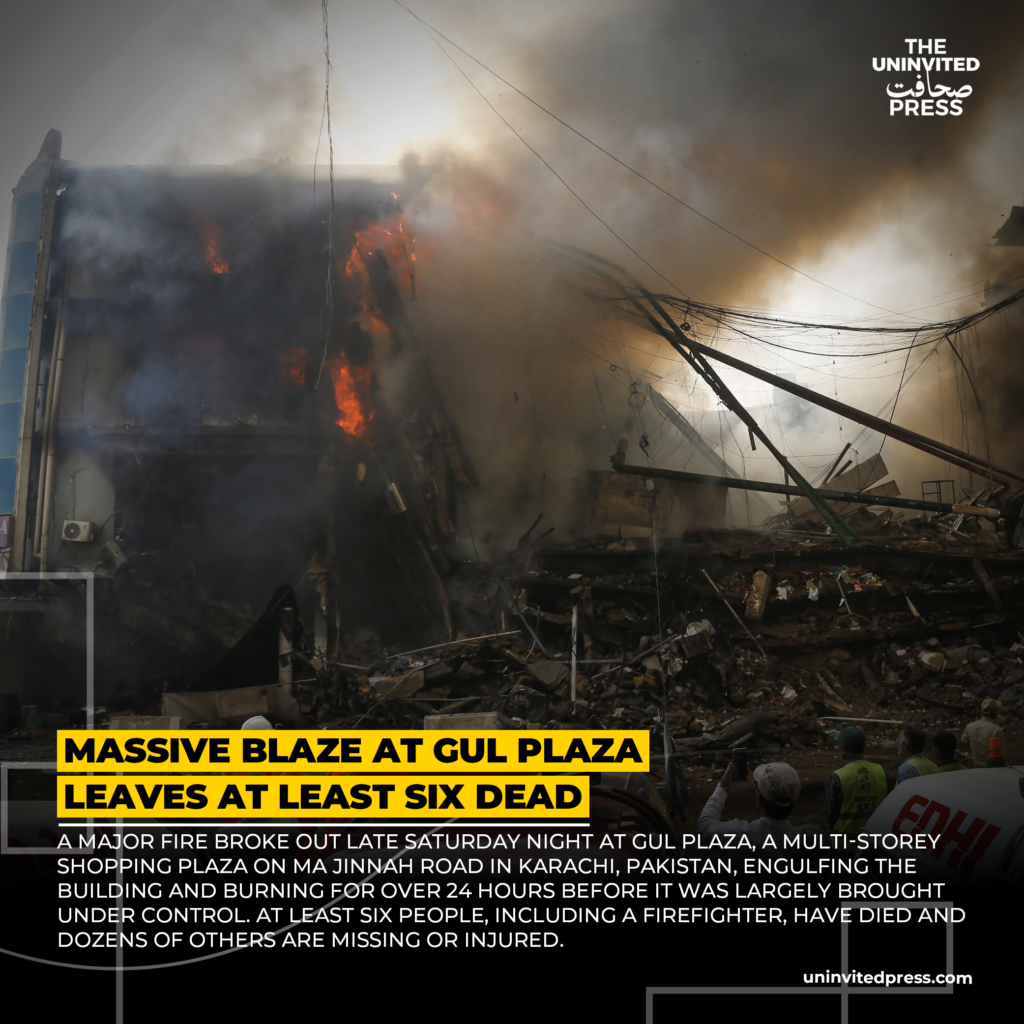
A massive fire at Gul Plaza in Karachi, Pakistan, on January 17, 2026, killed at least 26, left dozens missing, and destroyed 1,200 shops. Inquiry underway into safety failures.
Deadly Gul Plaza Inferno Exposes Karachi’s Fire Safety Failures:
A devastating fire ripped through Gul Plaza, a bustling multi-story shopping mall in Karachi, Pakistan, late on January 17, 2026, killing at least 26 people, including a firefighter and a child, and leaving over 60 others unaccounted for. The blaze, which destroyed hundreds of shops and caused partial building collapse, has exposed chronic safety issues in the city’s aging infrastructure, prompting a government inquiry and widespread grief among families and traders. As rescue teams sift through rubble, the death toll is feared to rise, highlighting the human toll of neglected fire protocols in one of South Asia’s most populous cities.
Inferno Unleashed: From Ground-Floor Spark to 36-Hour Nightmare:
The fire erupted on the ground floor of Gul Plaza shortly after 10:30 p.m. on Saturday, January 17, 2026, in a section storing imported garments and plastic goods. Emergency services received the first call at 10:38 p.m., but by the time firefighters arrived, flames had already climbed to upper levels, engulfing the entire structure. The blaze spread rapidly due to flammable materials such as cloth, foam, and perfumes stored in the shops.
Rescue operations involved over 20 fire trucks from the Karachi Metropolitan Corporation, Rescue 1122, and naval units. Firefighters battled the inferno for more than 24 hours, with reports extending to 36 hours before it was fully contained on January 19. During the effort, parts of the building collapsed, killing firefighter Furqan Ali, 25, when debris fell on him. Cranes were deployed to clear rubble and demolish unstable sections, as the structure risked further collapse.
By January 20, rescuers had recovered multiple bodies, many charred beyond recognition, requiring DNA testing for identification. Hospitals activated mass disaster protocols, treating the injured before discharging most. Police used mobile phone data to trace some missing persons, shortlisting several based on last-known locations inside the mall.
No Exits, No Sprinklers, No Accountability: The Systemic Rot Behind Karachi’s Mall Disasters:
Gul Plaza, built in the 1990s with an additional floor added in 2003, spans about 8,000 square yards and housed around 1,200 shops selling clothing, electronics, cosmetics, and household items. Located in Karachi’s historic Saddar district, it served as a vital economic hub for thousands, employing over 5,000 people and generating daily livelihoods for low-income traders.
This incident marks Karachi’s deadliest fire since the 2012 Baldia Town factory blaze, which killed over 260 workers and was later ruled arson. More recently, a November 2023 mall fire in the city claimed 10 lives and injured 22, often attributed to substandard safety measures and illegal constructions. Experts point to systemic issues: many older buildings lack proper fire exits, sprinklers, or ventilation, exacerbated by rapid urbanization in Pakistan’s largest city, home to over 20 million residents.
The fire’s timing-amid Pakistan’s economic strains-amplifies its impact, with traders estimating losses up to 25 billion Pakistani rupees (about $90 million), wiping out decades of work. It underscores broader challenges in urban safety enforcement, where corruption and lax regulations have long been criticized by rights groups and local media.
Admitted Failures and Delayed Rescue Spark Outrage After Gul Plaza Fire:
Sindh Chief Minister Murad Ali Shah acknowledged shortcomings, stating, “I’m admitting that there are faults. I can’t say whose fault this is. An inquiry will be conducted and heads will roll.” He announced 10 million rupees ($36,000) compensation per deceased family and ordered a comprehensive safety review. Prime Minister Shehbaz Sharif expressed grief and pledged federal support, directing authorities to protect lives and assist victims. President Asif Ali Zardari called for strengthened fire safety systems, praising the fallen firefighter’s bravery.
Rescue officials, like Hassan Khan from Rescue 1122, blamed flammable materials for the rapid spread: “The fire spread rapidly because of the presence of flammable materials such as plastic foam, cloth, and perfume in the building.”
Victims’ families voiced frustration over delayed responses. Qasir Khan, whose relatives are missing, said, “The bodies will come out in pieces from here. No one will be able to recognise them,” blaming slow rescue efforts. Shopkeeper Yasmeen Bano lamented, “We’ve been left high and dry, reduced to zero; 20 years of hard work, all gone.” Traders’ groups, like All City Tajir Ittehad, highlighted economic devastation, calling it a blow to thousands’ livelihoods. No response yet from mall owners.