

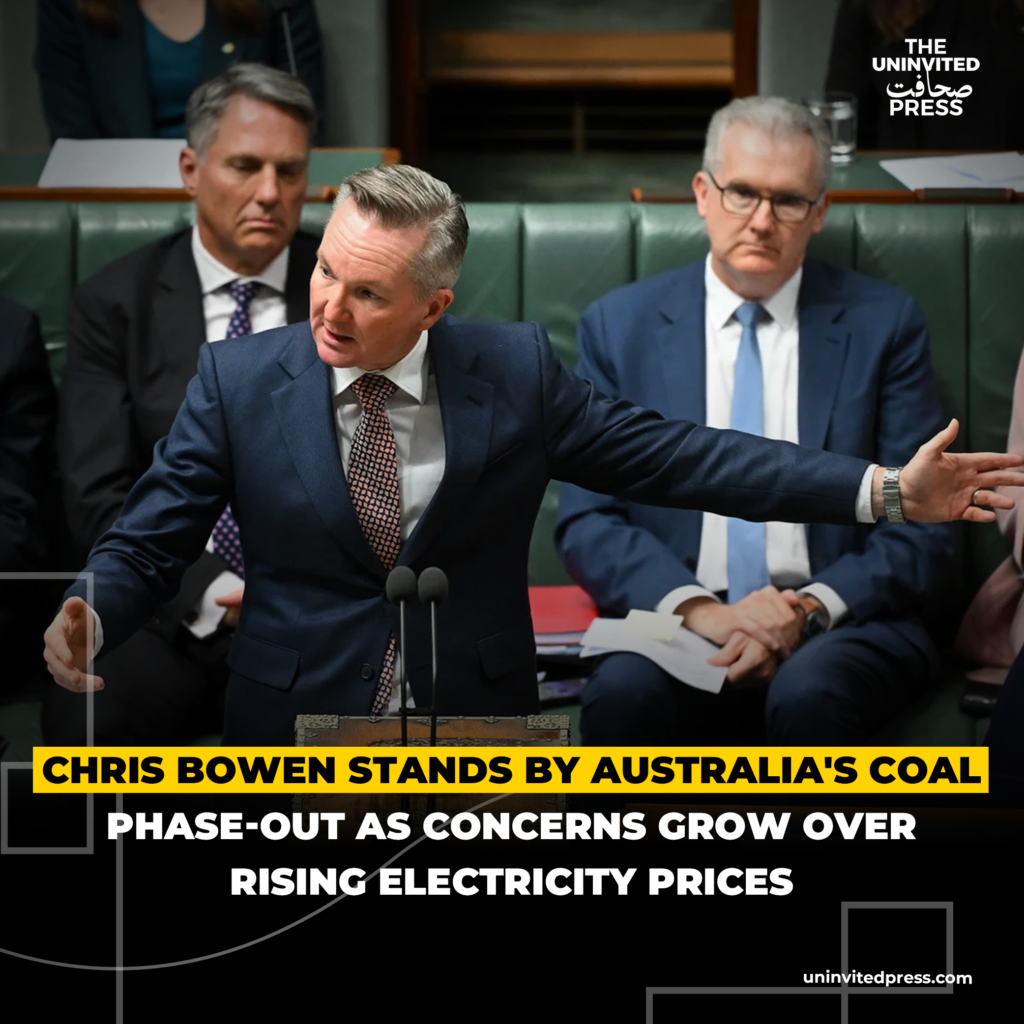
As wholesale electricity prices are forecast to nearly double by 2029, the climate minister insists ageing coal plants are the problem-not the solution-while defending the renewable transition on the world stage.
Australia’s Climate Change and Energy Minister Chris Bowen has doubled down on the country’s planned phase-out of coal-fired power, rejecting calls to slow the transition even as warnings mount that electricity prices could surge sharply in the coming years.
Speaking amid the COP31 climate talks in Turkey, where he has been pushing for faster global electrification, Bowen acknowledged that more work is needed to ensure falling wholesale prices translate into lower household bills. Yet he maintained that prolonging reliance on Australia’s ageing coal fleet would only make power more expensive and less reliable.
Recent analysis has sharpened the political pressure. Reports indicate wholesale electricity prices could nearly double by 2029 if coal-fired stations shut faster than new renewable generation and storage can replace them. Demand is rising with population growth, electric vehicle uptake and expanding data centres, while several coal plants approach the end of their operational lives. The opposition has seized on the forecasts, accusing Bowen of living in an “alternative reality” by focusing on international climate commitments while households face cost-of-living pain.
Australia’s Coal Exit Debate Intensifies:
Bowen’s response has been consistent and combative. He argues that coal is no longer reliable baseload power. “Coal isn’t baseload power anymore-it’s an unreliable asset,” he has said, noting that unplanned outages at coal plants have occurred virtually every day for years and that each breakdown drives price spikes. Keeping ageing plants online longer, he contends, would raise costs for households and businesses rather than protect them. The faster the shift to renewables, the more affordable energy will become, according to the government.
The minister has pointed to recent declines in wholesale prices-in some periods falling by around a third-as evidence that the renewable build-out is beginning to deliver. He has also highlighted strong uptake of household batteries under government incentives, arguing these reduce peak demand and put downward pressure on prices for all consumers. Still, he has conceded that retail bills remain higher than desired and that “a lot more work” is required to pass savings through to households.
The debate sits at the heart of Australia’s energy transition. Labor’s target of 82 per cent renewable electricity by 2030 remains ambitious. Progress has been uneven: new wind and solar projects face grid connection delays, community opposition and supply-chain constraints, while transmission upgrades lag. Coal still supplies a significant share of power on many days, particularly in New South Wales and Queensland, underscoring the gap that must be filled.
Opposition figures argue the government is closing coal plants without adequate replacements, risking both higher prices and reliability shortfalls. They have criticised Bowen for prioritising climate diplomacy while domestic energy security looks increasingly strained. Business groups and some state governments have also expressed concern about the pace of change, particularly as energy-intensive industries and data centres expand.
Bowen Rejects Calls to Reverse Coal Phase-Out:
Bowen has rejected any suggestion of reversing course. He has framed the choice starkly: either replace unreliable coal with cheaper, cleaner renewables, or lock in higher costs and greater vulnerability by “sweating” old assets for longer. Nuclear power, pushed by some on the opposition side, he dismisses as too slow and expensive for Australia’s needs.
The tension is particularly acute because Australia remains one of the world’s largest fossil-fuel exporters even as it seeks to decarbonise its domestic electricity system. Bowen’s dual role-defending the domestic transition while leading negotiations at COP31-has drawn both praise for ambition and criticism for perceived inconsistency.
For ordinary Australians, the immediate question is when, or whether, power bills will ease. Temporary relief measures and the battery scheme have provided some cushion, but sustained lower prices depend on the renewable pipeline accelerating and network reforms ensuring wholesale savings reach consumers. Bowen insists the government is focused on both short-term relief and the long-term structural shift.
As coal units continue to age and close, and as climate diplomacy intensifies, Australia’s energy politics remain tightly bound to the cost-of-living pressures facing households. Bowen’s message has not changed: the phase-out of coal is not the cause of high prices but the necessary path out of them. Whether the renewable build-out can keep pace will determine if that claim holds.