

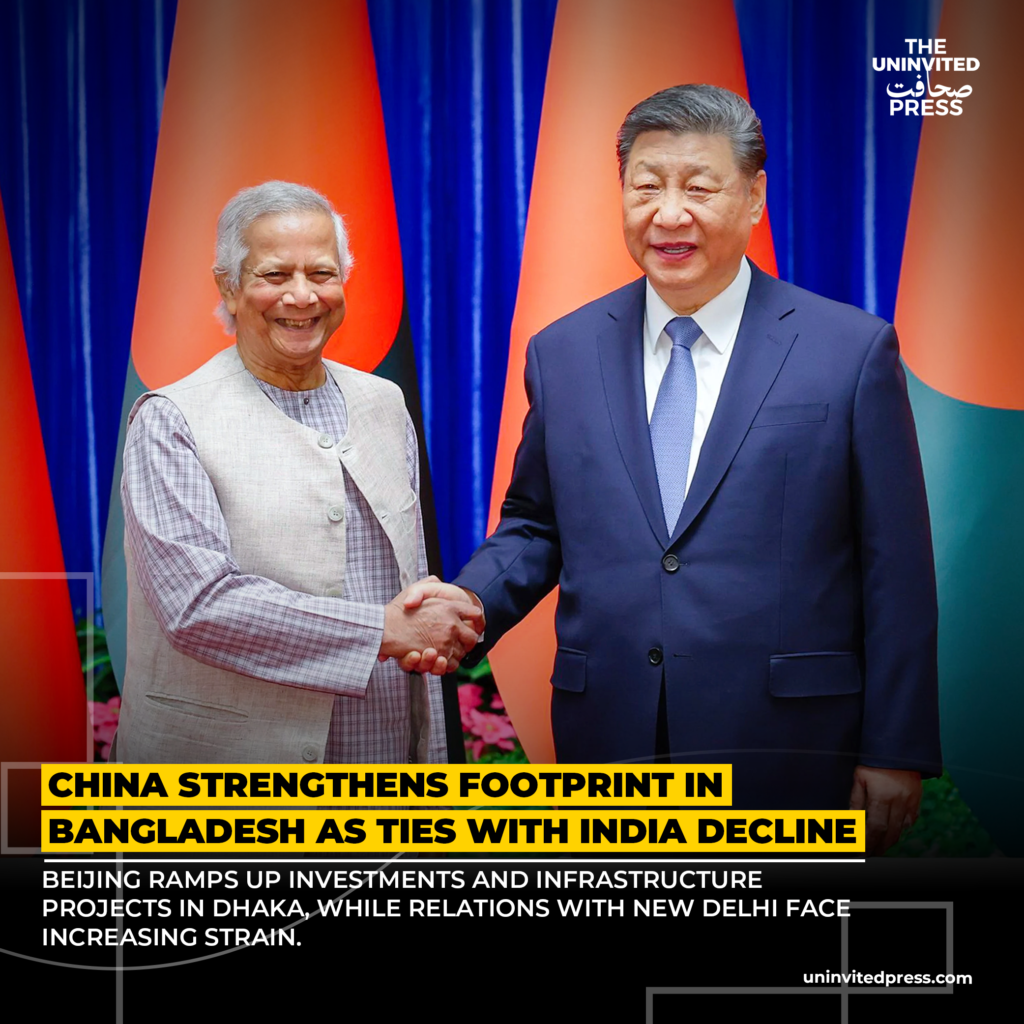
China pledges $2.1B to Bangladesh in deals with Yunus and Xi, boosting infrastructure as India-Bangladesh ties strain post-Hasina ouster in Dhaka.
Yunus Lands $2.1B China Deal Amid India Rift:
In a pivotal diplomatic maneuver, Bangladesh’s interim leader Muhammad Yunus met Chinese President Xi Jinping in Beijing on March 28, 2025, securing $2.1 billion in loans, investments, and grants to fuel economic growth. This deal underscores China’s expanding influence in South Asia, coming as Dhaka-New Delhi ties fray over the exile of former Prime Minister Sheikh Hasina and mutual trade barriers. With Bangladesh’s election looming on February 12, the shift could redefine regional power dynamics, amplifying Beijing’s Belt and Road footprint while testing India’s neighborhood strategy.
Beijing Summit: Yunus Secures $2.1B China Deal After Hasina Ouster:
The Yunus-Xi summit marked a high point in bilateral engagement. Yunus arrived in Beijing on March 26, 2025, for a four-day visit, including the Boao Forum. On March 28, the leaders held talks at the Great Hall of the People, followed by the signing ceremony. Xi expressed willingness to lower interest rates on existing loans from 3% to 1-2% and waive commitment fees, per Bangladeshi officials.
The $2.1 billion commitment broke down as follows; $1 billion from private firms for a Chattogram economic zone, $400 million loan for Mongla port, $350 million for another industrial zone, and $150 million in aid. Agreements covered hydrological data sharing on the Yarlung Zangbo-Yamuna River, media collaboration, and health initiatives.
This followed Hasina’s ouster on August 5, 2024, amid student-led protests over job quotas that escalated into anti-government unrest, killing around 1,400. Yunus assumed power on August 8, dissolving parliament and banning the Awami League. His China visit was his first major foreign trip, signaling a reorientation.
Post-meeting, implementation advanced. By mid-2025, Chinese firms ramped up presence, with Yunus urging over 100 CEOs to invest in renewables and tech. FTA negotiations began, and zero-tariff access extended to 2028. As of February 2026, projects like Mongla port upgrades proceed, amid Bangladesh’s election campaign.
China-Bangladesh Axis Grows as India’s Leverage Shrinks:
China-Bangladesh relations date to 1975, but deepened under the Belt and Road Initiative (BRI) since 2016, when Xi visited Dhaka and pledged $40 billion. Key projects include the Padma Bridge Rail Link, inaugurated December 2024, and Karnaphuli Tunnel, both Chinese-built. Bangladesh owes China about $6 billion, or 16% of its external debt.
Hasina balanced China and India, but her pro-Delhi tilt-evident in security pacts and trade-irritated some domestically. Her 2024 fall, fleeing to India, sparked anti-India backlash in Bangladesh, including protests over her extradition for alleged crimes. India halved aid to $23 million in its 2026 budget, citing “setbacks.”
Bangladesh’s 175 million people and $461 billion GDP make it a BRI prize, offering China access near India’s northeast. For Dhaka, Chinese funds aid recovery from 2024 unrest and inflation over 9%. Yet, debt risks loom, with critics warning of “debt traps.” Regionally, it heightens India-China rivalry, with Delhi fearing encirclement.