

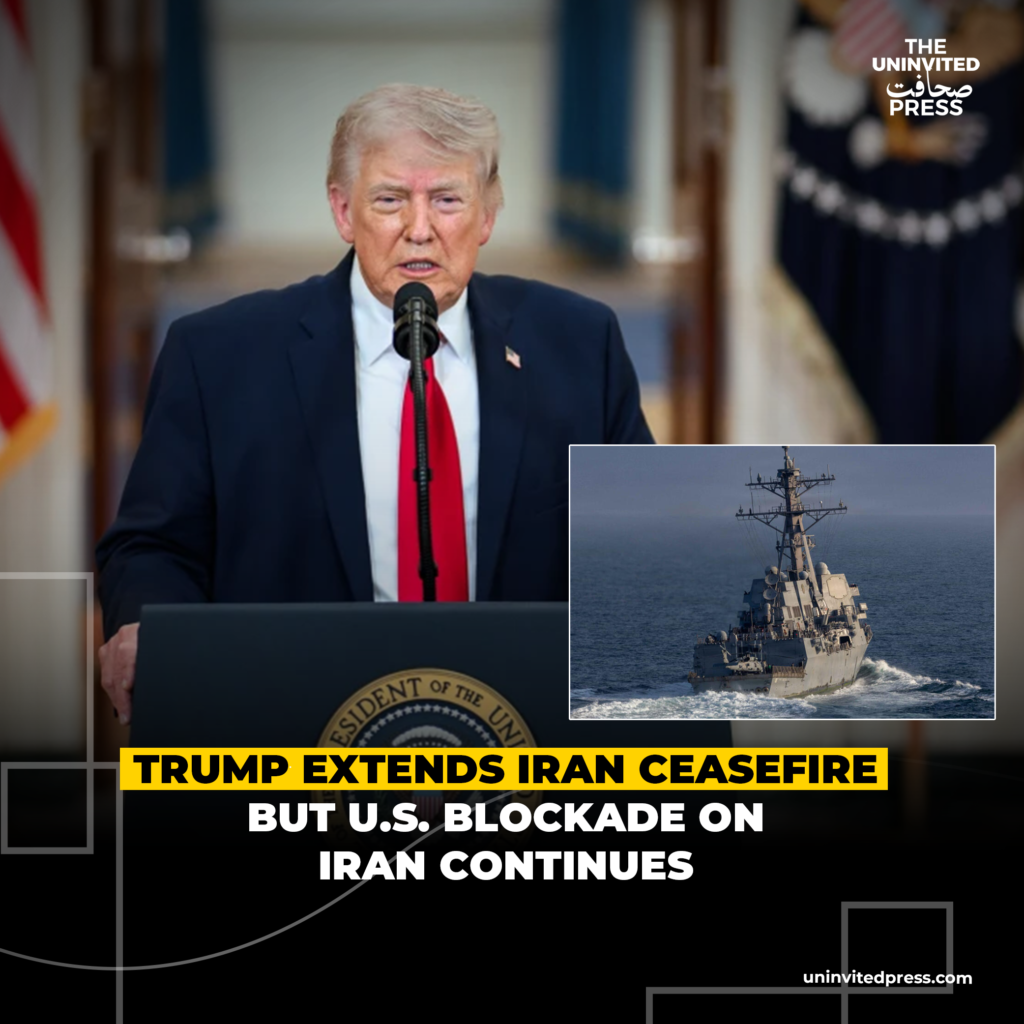
US president announces pause in hostilities at Pakistan’s request while keeping pressure on Tehran’s oil exports and economy, as Iran denounces the move as a violation of the truce.
US President Donald Trump has extended the fragile ceasefire with Iran indefinitely, citing the need for Tehran to present a “unified proposal” to end the two-month war, even as the US military continues its naval blockade of Iranian ports and the Strait of Hormuz region.
In a statement posted on social media on Tuesday, Trump said he was responding to a request from Pakistan, which had been mediating talks, and directed US forces to “continue the blockade” while remaining “ready and able” for potential renewed action.
The announcement comes just one day before the original two-week ceasefire was due to expire, amid stalled negotiations and growing tensions over the US-imposed restrictions on Iranian maritime trade.
Blockade remains despite truce extension:
While Trump framed the extension as a gesture to allow diplomacy, Iranian officials have repeatedly described the US naval blockade-which prevents vessels from entering or leaving Iranian ports-as an “act of war” and a clear violation of the ceasefire agreement.
Iran’s Foreign Minister Abbas Araghchi has condemned the interdiction of Iranian-linked vessels, including recent seizures of oil tankers, calling the actions a breach that undermines any meaningful talks. Tehran has insisted it will not negotiate “under the shadow of threats” or while the blockade remains in place.
The US Navy, under the direction of Central Command, has deployed significant forces-including destroyers, aircraft carriers and surveillance assets-to enforce the blockade, which targets Iranian oil exports and has contributed to economic strain on the Islamic Republic. US officials, including Treasury Secretary Scott Bessent, have highlighted the blockade’s effectiveness in filling Iranian oil storage facilities and forcing wells to shut in.
Fragile diplomacy amid internal divisions in Iran:
Trump described Iran’s leadership as “seriously fractured,” suggesting the extension gives Tehran time to formulate a coherent negotiating position. Peace talks, initially planned in Pakistan with US Vice President JD Vance expected to participate, have been thrown into doubt after the cancellation of key travel and Iran’s reluctance to engage while under blockade.
The conflict, which erupted earlier this year between the US, Israel and Iran, has already caused significant regional instability, disruptions to global energy markets and heightened risks in the vital Strait of Hormuz-through which a substantial portion of the world’s oil supply passes.
Analysts note that the US strategy appears to combine military pressure with economic warfare, maintaining the blockade to weaken Iran’s position ahead of any potential deal. However, critics argue this approach risks escalating tensions and could push Iran toward more hardline responses or closer alignment with its regional allies.
Wider regional implications:
The ceasefire extension temporarily prevents renewed hostilities but leaves core tensions unresolved. Donald Trump has maintained a strict pressure stance, while Iran has signaled readiness through military displays ahead of the deadline.
The situation remains fragile, with ongoing economic pressure, mutual accusations, and no clear breakthrough in talks. Iran has not yet officially responded, leaving the future of negotiations uncertain on the 54th day of the conflict.