

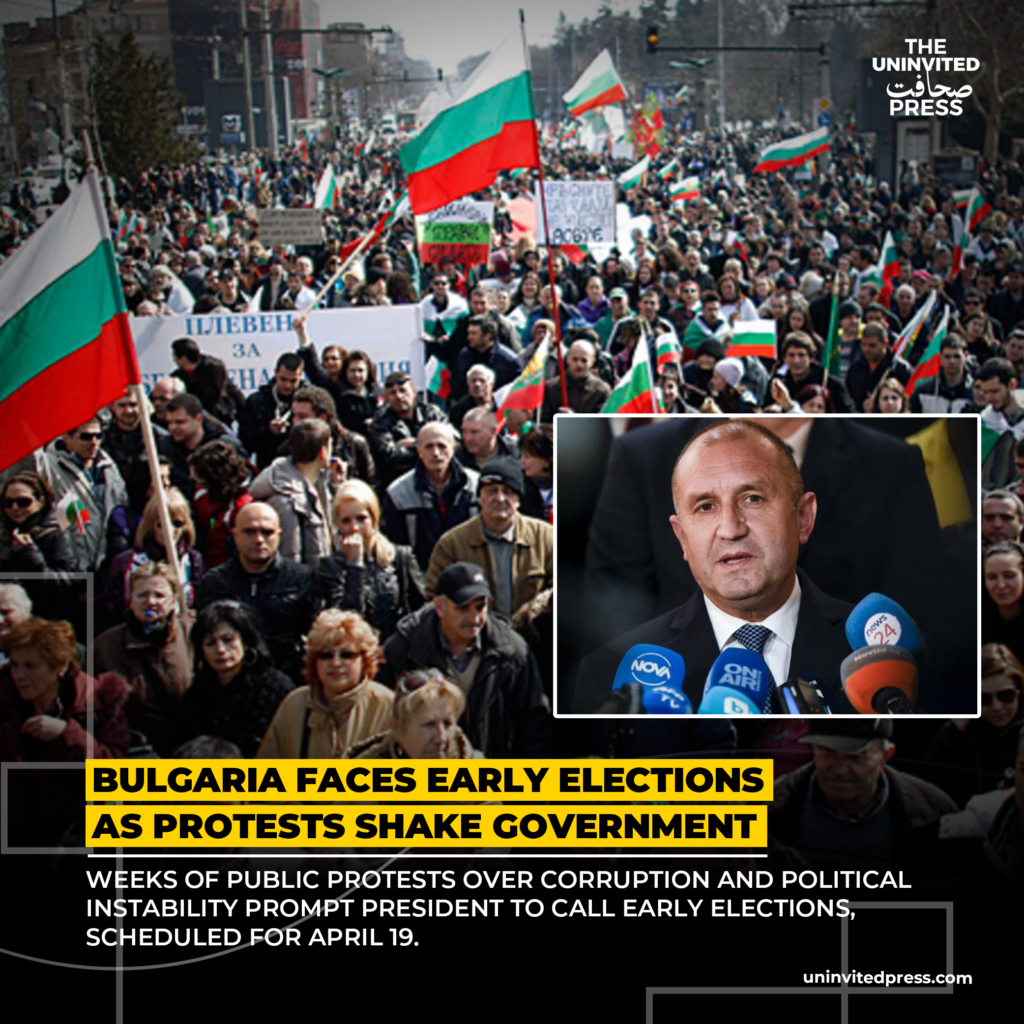
Bulgaria heads to snap elections on April 19, 2026, after protests over corruption force government resignation, marking the eighth vote in five years amid political chaos in the EU nation.
Bulgaria Holds Eighth Election Amid Turmoil:
Bulgaria’s President Iliana Iotova announced on February 18, 2026, that snap parliamentary elections will be held on April 19, following the December 2025 resignation of Prime Minister Rosen Zhelyazkov’s government amid massive protests over alleged corruption and a controversial budget. This marks the eighth election in just five years for the EU’s poorest member state, highlighting chronic instability that has crippled governance and fueled public outrage. As a caretaker administration takes charge, the vote could reshape the political landscape, especially with ex-President Rumen Radev entering the fray, but risks prolonging the deadlock if no stable coalition emerges.
Budget Crisis Sparks Bulgarian Political Upheaval:
The announcement came during a news conference in Sofia, where President Iotova, after meeting with caretaker Prime Minister Andrey Gyurov, declared she would issue a decree for elections on April 19. Gyurov, deputy governor of the Bulgarian National Bank, presented his interim cabinet, tasked with ensuring fair polls amid ongoing tensions.
Protests erupted on November 26, 2025, when around 20,000 people gathered in Sofia, organized by the opposition We Continue the Change-Democratic Bulgaria (PP-DB) coalition, to block parliament over the draft 2026 budget. Demonstrators decried tax hikes and fund allocations favoring officials, labeling it the “worst budget in 30 years.” Clashes with police injured three officers, but the protest remained largely peaceful.
By November 27, GERB leader Boyko Borisov called for budget withdrawal, and PM Zhelyazkov suspended it for dialogue. Protests spread, with Velichie blocking traffic on November 28. On December 1, up to 150,000 rallied in Sofia, turning violent with fires and vandalism; 71 were arrested. The government withdrew the budget on December 2, but demands shifted to resignation.
Ex-President Radev addressed the nation on December 2, urging the government to step down and calling for snap elections. Demonstrations continued nationwide, with scuffles in parliament and more arrests. A revised budget was submitted on December 8, but opposition filed a no-confidence motion on December 5.
On December 11, Zhelyazkov resigned, citing the protests as a step toward a “normal European state.” Parliament approved it unanimously. Radev began consultations, but coalition failures led to the caretaker setup. Protests persisted into January 2026, focusing on electoral integrity and machine voting.
Radev resigned on January 23, 2026, to enter politics, paving the way for Iotova’s ascension. She appointed Gyurov last week, leading to the February 18 announcement.
Instability Delays Bulgaria’s EU Integration:
Bulgaria’s turmoil dates to 2021, when anti-corruption protests ended Boyko Borisov’s long rule, sparking a cycle of snap elections. No government has lasted a full term since, with coalitions fracturing over corruption scandals and influence from figures like Peevski, sanctioned by the U.S. for graft. The EU’s poorest nation, with a GDP per capita half the bloc’s average, ranks high in corruption perceptions, fueling emigration and healthcare crises.
The 2024 election saw GERB win but form a fragile minority government, surviving six no-confidence votes before protests over the 2026 budget-accused of favoring elites-proved fatal. A March 2025 court ruling reshuffled seats, enabling Velichie’s entry and tightening the majority. This instability delays EU funds and reforms, impacting Bulgaria’s eurozone entry on January 1, 2026.