

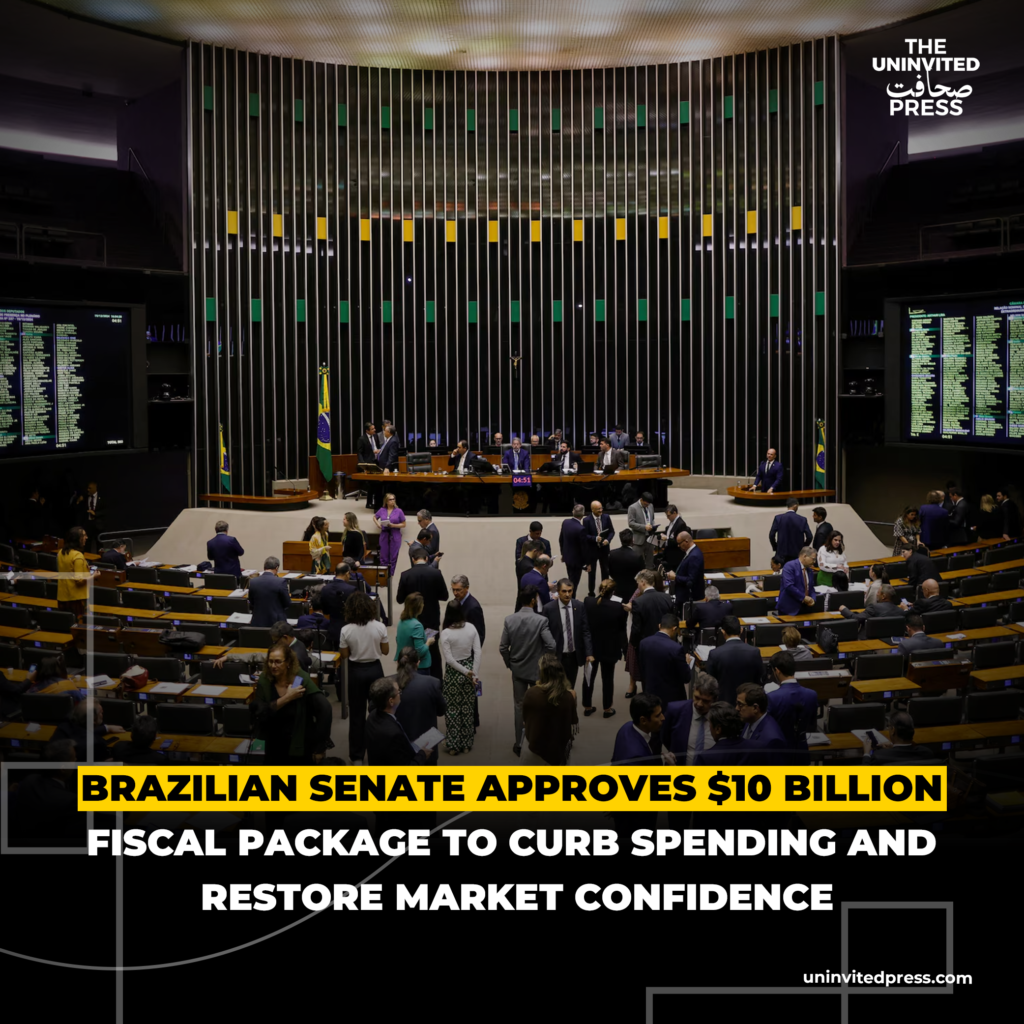
Lawmakers back Lula-backed measures expected to improve public finances by up to 60 billion reais in 2027 as investors demand stronger fiscal discipline.
Brazil’s Senate has approved a fiscal adjustment package designed to curb public spending and boost revenues, a move the government of President Luiz Inácio Lula da Silva presents as essential to meeting budget targets and restoring confidence among investors unsettled by the country’s debt trajectory.
The bill, passed on Wednesday, combines spending restraints with revenue-raising steps projected to improve public finances by as much as 60 billion reais (approximately $10.3 billion) in 2027. It now moves to the lower house of Congress for consideration. Officials say the measures are critical to achieving a primary surplus target of 0.5 percent of gross domestic product next year while preserving space for campaign pledges such as expanded welfare benefits and student support.
Brazil Approves New Measures to Tighten Fiscal Spending:
Finance Minister Dario Durigan sought to reassure markets after the vote, pledging further action to strengthen the public accounts. “We are going to adopt new and additional measures right away,” he said, while ruling out any change to Brazil’s 3 percent inflation target or the introduction of capital controls.
The package tightens rules on expenditure growth, limits certain corporate tax breaks and closes loopholes. In years when additional spending freezes are triggered to meet fiscal goals, the annual real growth of primary spending would be capped at 2 percent, down from the current 2.5 percent ceiling under the existing fiscal framework. The government also secured adjustments to federal transfers to states and preserved flexibility to exclude limited diesel subsidies from the 2026 fiscal target calculation amid ongoing global energy price pressures.
Approval came after days of negotiation. The main text had cleared the Senate earlier, but final votes on amendments were delayed amid opposition demands and concerns over the scale of the adjustment. Lawmakers ultimately rejected several opposition proposals that would have imposed deeper cuts or altered key revenue measures. The final supplementary vote passed comfortably.
Brazil’s Fiscal Plan Faces Market Doubts:
Markets have remained cautious. Brazil’s currency has weakened significantly since Lula’s re-election in late October, and long-dated bond yields rose even as the package advanced. Many analysts describe the plan as a necessary first step rather than a comprehensive solution to Brazil’s rising debt burden, which some projections suggest could climb further in the coming years without additional reforms.
Supporters of the government argue the package balances fiscal responsibility with social priorities after costly election-related spending. Critics on the right contend it does not go far enough in restraining expenditure, while some on the left worry that tighter rules could eventually pressure health, education and welfare programmes.
The legislation still requires approval in the Chamber of Deputies. Its passage through the upper house marks an early test of Lula’s ability to manage a fragmented Congress and respond to market pressure as he prepares for another term. Whether the package succeeds in calming investors will depend on the speed of its final approval and the credibility of any further measures the government announces in the weeks ahead.