

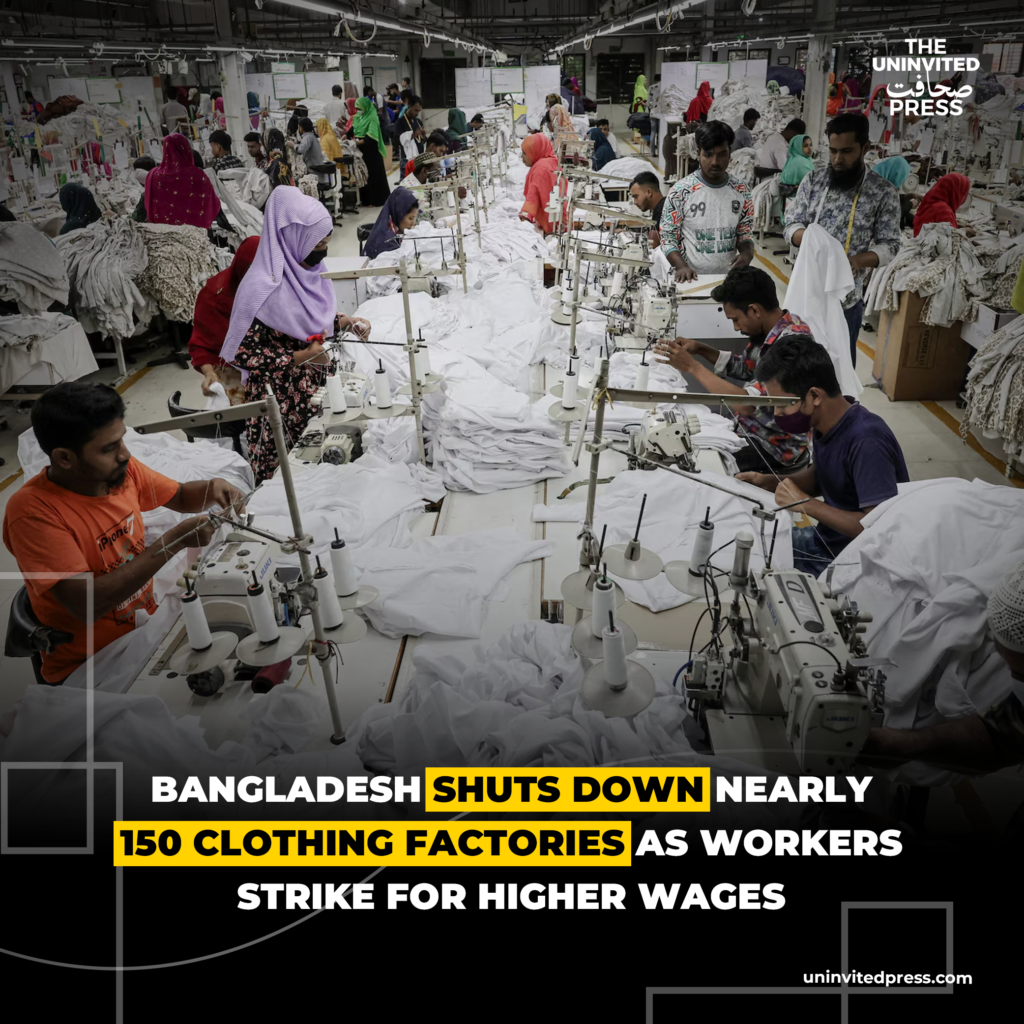
Garment workers demand minimum pay more than double current rate as industry faces production halt in key hubs.
Nearly 150 clothing factories in Bangladesh have suspended operations after garment workers walked off the job demanding a substantial increase in the minimum wage, according to reports from the country’s main industrial zones.
The closures, concentrated in the textile hubs of Savar, Ashulia and Gazipur on the outskirts of the capital Dhaka, affected production over the weekend. Workers are calling for a monthly minimum wage of 30,000 taka (approximately $240 or £182), more than double the current rate of 12,500 taka set in 2023.
Employees say the existing pay no longer covers basic living costs amid rising prices for food, housing, transport and healthcare. Inflation in Bangladesh has hovered around 8 percent, eroding purchasing power for the sector’s roughly four million workers, many of them women.
Bangladesh Garment Unrest Threatens Export Industry:
Bangladesh’s ready-made garment industry is the world’s second-largest after China. It generates nearly $40 billion in annual exports-accounting for about 80 percent of the country’s total export earningsand contributes roughly 10 percent of GDP. Major global brands source clothing from the country’s factories.
Factory owners have invoked a “no work, no pay” provision under Bangladesh’s labour law, allowing them to suspend operations without paying wages when production is disrupted. Industry representatives have warned of indefinite closures if the unrest continues, citing damage to facilities and missed export deadlines during peak order season.
Police reported closing multiple sites after workers left the factories and staged protests, including a temporary blockade of a major highway in Gazipur. Earlier waves of demonstrations in recent weeks had forced hundreds of factories offline at times and involved clashes with security forces using tear gas.
Bangladesh Wage Dispute Intensifies as Talks Continue:
In response to the growing pressure, the government formed a Minimum Wage Board on 1 November to review the pay structure and recommend revisions. The board includes representatives from workers, employers and the government. Officials have urged employees to return to work while the process continues, with a revised scale potentially taking effect from December.
Workers’ groups maintain that only a significant rise will restore living standards. Employers argue that a sharp increase could undermine Bangladesh’s competitive edge as a low-cost manufacturing base, especially amid higher energy costs and global buyer pressure on prices.
The dispute highlights long-standing tensions in an industry that has driven Bangladesh’s economic growth while facing repeated labour unrest over wages, working conditions and safety. As talks proceed, both sides face pressure to reach a settlement that balances workers’ needs with the sector’s role as a cornerstone of the national economy.