

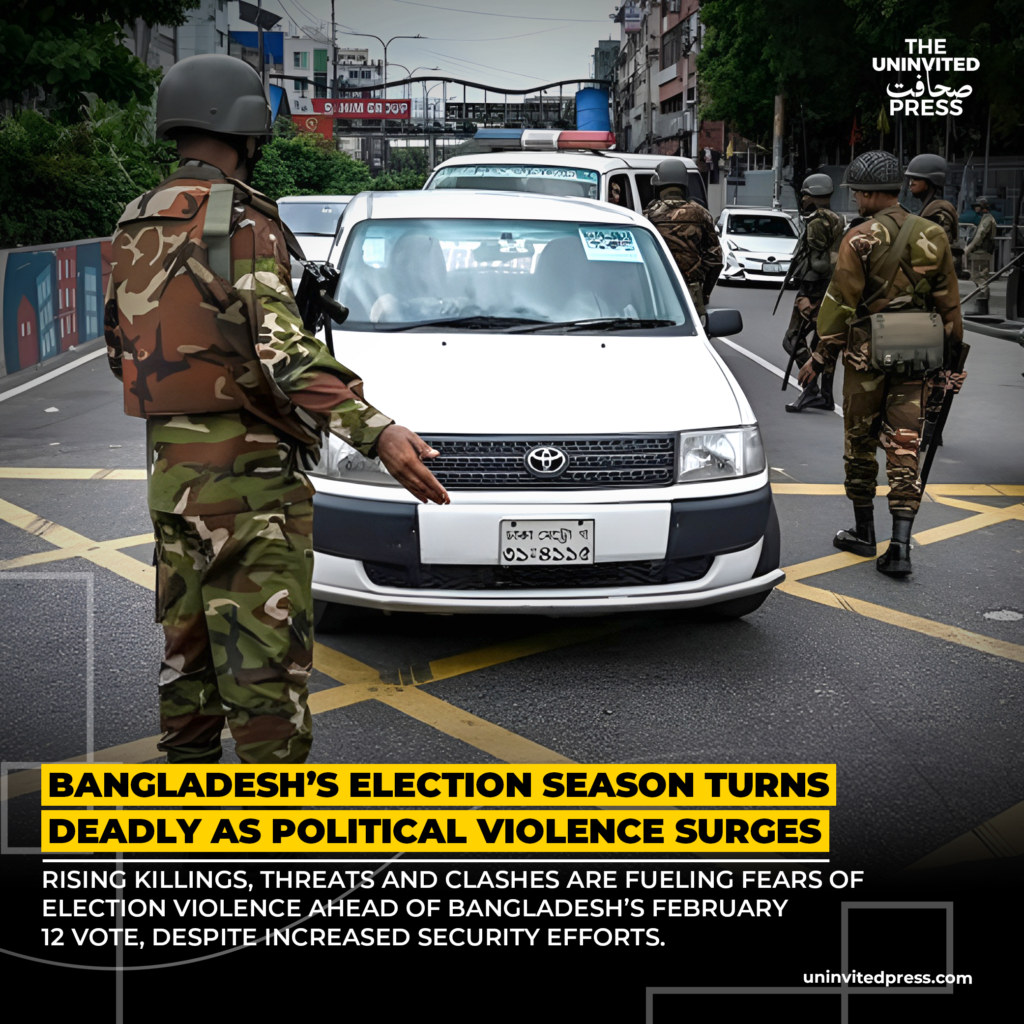
Bangladesh faces surging political violence with 16 killings ahead of February 12, 2026, elections. Clashes between rivals threaten democracy post-Hasina ouster, despite security boosts.
Bangladesh’s Deadly Slide Toward a Violent February 12 Ballot:
Dhaka, Bangladesh-A wave of deadly political violence is gripping Bangladesh as the country hurtles toward its February 12 parliamentary elections, the first since the dramatic 2024 uprising that toppled longtime leader Sheikh Hasina. At least 16 political activists have been killed in targeted attacks and clashes since the vote was announced in December 2025, fueling widespread fears that the ballot could descend into bloodshed. This surge comes despite bolstered security measures, raising urgent questions about the stability of the interim government under Nobel laureate Muhammad Yunus and the prospects for a credible democratic process in a nation scarred by decades of turbulent polls.
The killings, including the high-profile assassination of youth protest leader Sharif Osman Hadi on December 12, 2025, have sparked riots, attacks on media outlets, and a climate of intimidation that activists say is deterring voters and candidates alike. As rival factions from the Bangladesh Nationalist Party (BNP), its allies like Jamaat-e-Islami, and rebel groups vie for power, the violence threatens to undermine the election’s legitimacy and deepen divisions in a country of 170 million people.
December 12 Assassination Ignites the Fire: How One Killing Sparked Bangladesh’s Violent Spiral?
The violence began intensifying shortly after Bangladesh’s Election Commission announced the 13th National Parliamentary Elections and a simultaneous referendum for February 12, 2026, on December 15, 2025. This followed the suspension of the Awami League, Hasina’s party, from participating, a move that has left a power vacuum and fueled accusations of exclusion.
On December 12, 2025, Sharif Osman Hadi, a 32-year-old youth leader who emerged during the 2024 anti-government protests and planned to run for parliament, was shot dead by masked assailants outside a mosque in Dhaka. The killing triggered immediate unrest, with mobs torching newspaper offices and prompting UN calls for an impartial investigation.
By early January 2026, reports of targeted attacks proliferated. On January 7, BNP activist Azizur Rahman Musabbir was gunned down, heightening fears among campaigners. Clashes erupted between BNP supporters, rebel candidates, and Jamaat-e-Islami allies in multiple constituencies, injuring dozens on January 26 alone in areas like Alamdanga. Security forces have set up checkpoints, as depicted in recent images from urban streets, showing armed personnel halting vehicles amid heightened patrols.
As of January 27, 2026, the death toll stands at least at 16, with hundreds injured in related incidents, according to cross-verified reports from media and rights groups.
Bangladesh at a Crossroads: A Violent Legacy and the High Stakes of Democratic Transition:
This election marks a pivotal moment in Bangladesh’s history, coming just 18 months after the July-August 2024 youth-led uprising that ended Hasina’s 15-year rule amid allegations of authoritarianism, corruption, and human rights abuses. The protests, which claimed over 1,000 lives, led to Yunus’s appointment as chief adviser to an interim government tasked with restoring democracy.
Bangladesh’s elections have been marred by violence since independence in 1971, with cycles of boycotts, rigging claims, and street clashes between major parties like the Awami League and BNP. The 2024 unrest exacerbated this, with thousands of firearms looted from police stations-15% of which remain missing-now stoking fears of armed confrontations.
The current surge reflects deep-seated rivalries: the BNP, led from exile by Tarique Rahman until his recent return, is fractured by internal rebels, while Jamaat-e-Islami seeks a comeback. Attacks on minorities, particularly Hindus, have risen, often framed as revenge against perceived Awami League supporters, amid a broader “culture of revenge.” Women and journalists face heightened intimidation, with online smears and physical threats curbing participation.
The stakes are immense: A flawed vote could derail the democratic transition, invite international sanctions, and destabilize the region, especially with strained India-Bangladesh ties over minority protections and anti-India sentiments.