

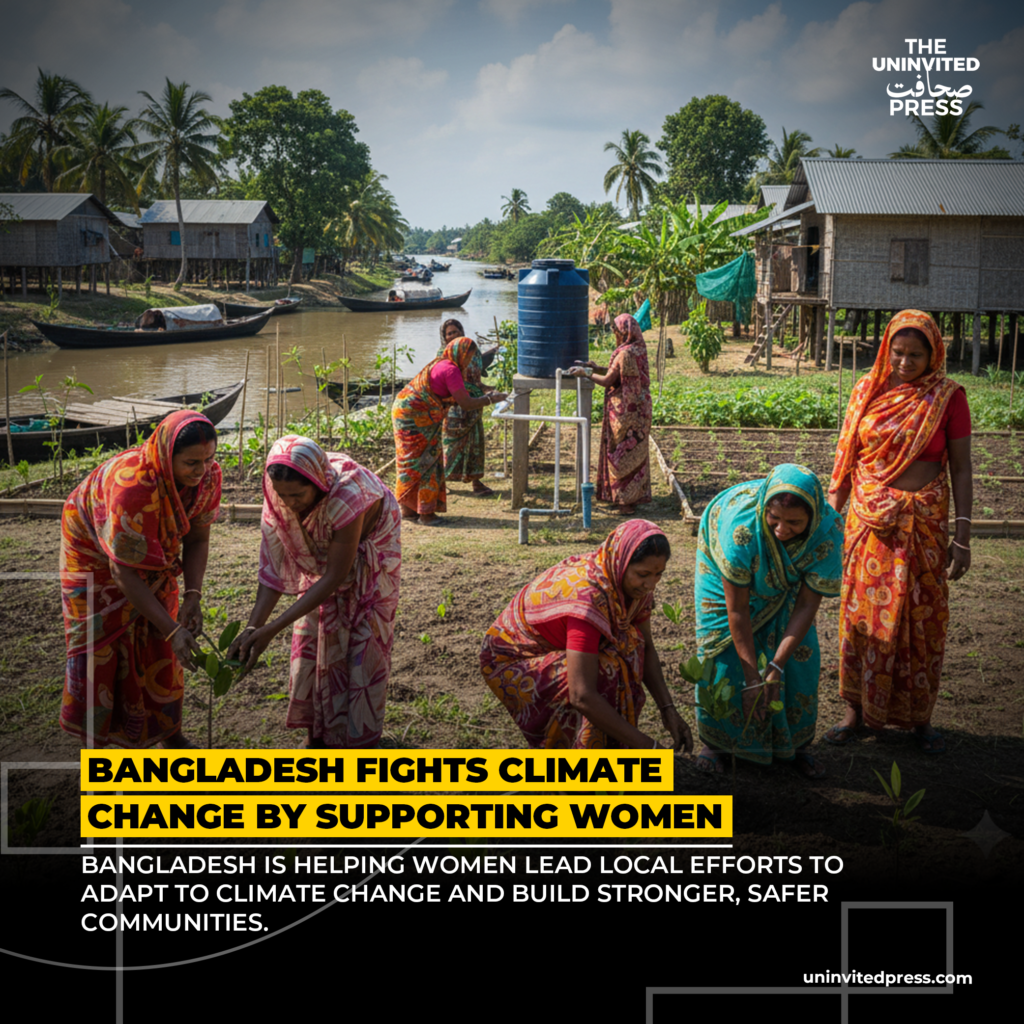
In the flood-prone deltas of Bangladesh, women are transforming vulnerability into strength, spearheading adaptation strategies that safeguard communities and livelihoods.
Empowering Women to Safeguard Bangladesh’s Climate Future:
As cyclones intensify and salinity invades farmlands, Bangladesh is turning to its most affected population-women-to drive climate resilience. Through government-backed programs and international partnerships, thousands of women in coastal regions are gaining skills in sustainable agriculture, water management, and disaster response. This shift not only bolsters local economies but also challenges gender norms, proving essential for the nation’s survival amid rising seas and extreme weather.
Women Lead Climate Adaptation Efforts in Bangladesh:
In the riverine landscapes of southern Bangladesh, where floods, cyclones, and rising salinity threaten livelihoods, women are emerging as key leaders in climate adaptation. In Satkhira, for example, Rafeza Begum transformed her struggle with saline-affected crops into opportunity by joining a UNDP-supported Women Livelihood Group in 2023. Trained in climate-resilient farming, she now cultivates salt-tolerant vegetables and sesame, boosting her income and supporting her community-a reflection of a broader trend of women leading recovery efforts.
Bangladesh’s progressive policies, including the Climate Change Gender Action Plan updated in 2024, prioritize women’s access to resources, leadership, and resilient livelihoods. Programs like UNDP’s Gender-responsive Coastal Adaptation project and UN Women’s EMPOWER initiative have trained thousands of women, installed rainwater systems, and supported renewable energy enterprises, collectively generating millions in income and improving community resilience. Parallel efforts by Oxfam, the Global Center on Adaptation, and academic projects in Cox’s Bazar and Narayanganj further empower women to co-design solutions, map climate risks, and drive inclusive adaptation strategies across coastal and urban areas.
Through these initiatives, Bangladeshi women are not just surviving climate shocks—they are shaping sustainable futures, demonstrating how gender-responsive action can turn vulnerability into leadership and opportunity.
Women Frontline Bangladesh’s Climate Fight:
Bangladesh ranks among the world’s most climate-vulnerable nations, with 30 million people at risk from sea-level rise by 2050. Cyclones like Amphan in 2020 and floods in 2024 displaced millions, hitting women hardest-they face increased unpaid labor, health risks, and limited resource access due to patriarchal structures.
Historically, adaptation focused on infrastructure like embankments. But recognizing women’s role-comprising 71% of agrifood workers in South Asia-shifted priorities. The 2013 ccGAP marked this pivot, with updates incorporating lessons from disasters. The 2025 NDC 3.0 further embeds women and youth in climate action, setting targets for resilient agriculture and social protection.
This lies in economic and social gains; Empowering women could boost GDP while enhancing resilience, as per IMF analysis. Yet, challenges persist, including elite capture in NGO programs and underrepresentation of disabled women.
In verifying these developments, we cross-checked project outcomes with official UNDP and UN Women reports, government documents, and independent studies. For instance, beneficiary numbers and policy updates are confirmed across multiple sources, though exact long-term income impacts remain estimates based on interim evaluations. Unclear aspects, like full implementation of the 2024 ccGAP, are noted as ongoing without specific completion dates from available data.