

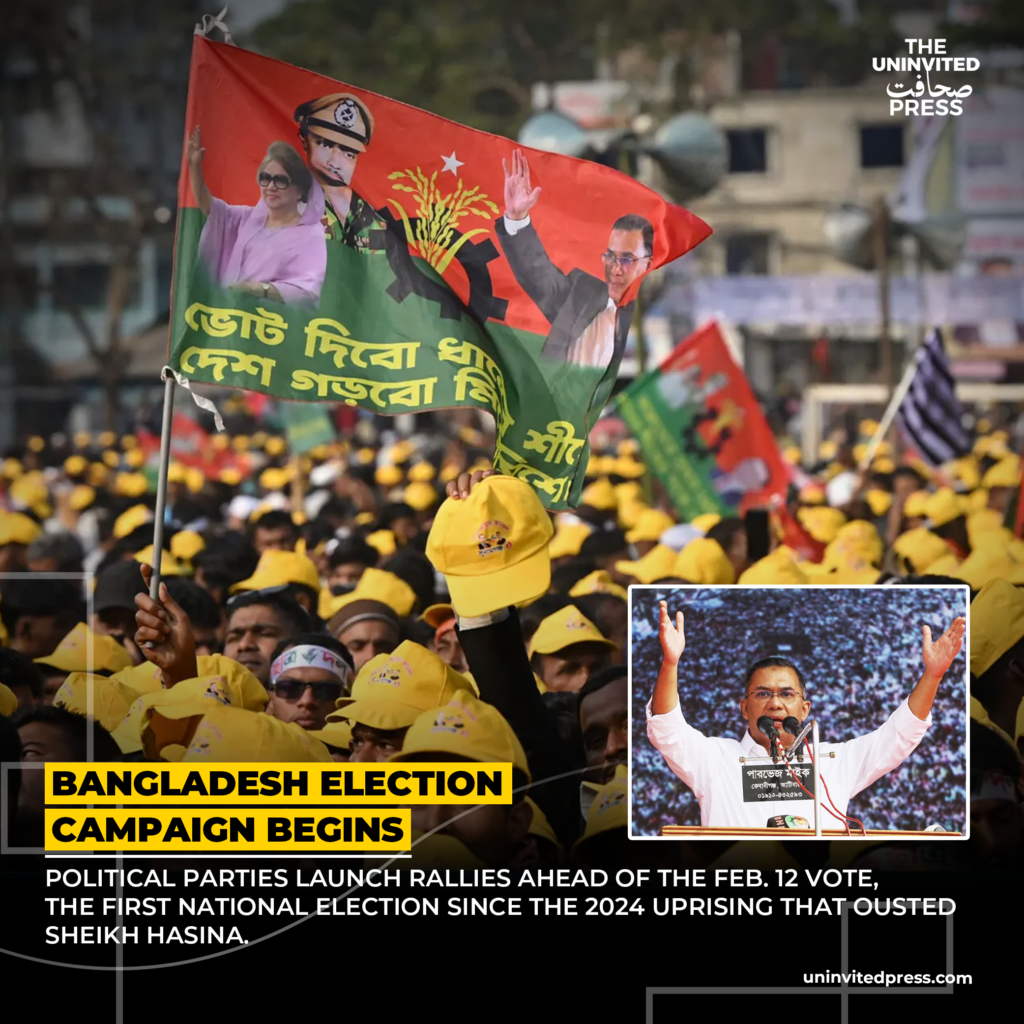
Bangladesh’s election campaign launches with rallies in Dhaka amid violence fears, marking the first vote since Sheikh Hasina’s 2024 ouster and testing democracy’s revival.
Bangladesh Enters a Volatile New Election Season After Hasina’s Fall:
Campaigning exploded onto the scene in Bangladesh on January 22, 2026, with thousands flooding streets in Dhaka and Sylhet for the first rallies since the 2024 uprising toppled Sheikh Hasina. Major parties like the Bangladesh Nationalist Party (BNP) and Jamaat-e-Islami launched fervent appeals, marking the nation’s first competitive national election in years. This pivotal poll, set for February 12 in Dhaka and across Bangladesh, could reshape the country’s democracy after 15 years of authoritarian rule, but early reports of clashes underscore risks to stability and human lives.
Tarique Rahman Returns to the Spotlight as Bangladesh’s Election Drive Intensifies:
The campaign trail ignited on January 22, as BNP acting chairman Tarique Rahman addressed thousands in Sylhet, his first major outing after returning from exile in London. Supporters waved flags and chanted in support, marking a symbolic reclaiming of political space long suppressed under Hasina’s rule.
In Dhaka, Jamaat-e-Islami and its allies, including the NCP, held parallel events, drawing crowds eager for change. The day unfolded peacefully in major hubs, but tensions flared elsewhere. In Munshiganj, rival BNP factions clashed during campaigning, resulting in one fatality from gunfire and multiple injuries, according to local reports. Both sides traded blame, highlighting internal rifts as the party positions itself as a frontrunner.
By January 23, Rahman continued his marathon push, wrapping up seven rallies across districts by 4 a.m., urging votes for BNP’s sheaf of paddy symbol. Plans for a Chattogram visit on January 24 signal an aggressive nationwide strategy.
February 12, 2026: Bangladesh’s Make-or-Break Vote + Historic Referendum on a New Charter:
Bangladesh’s political landscape shattered in 2024 when student-led protests against job quotas escalated into a nationwide uprising. By August 5, Sheikh Hasina resigned and fled amid violence that claimed up to 1,400 lives during crackdowns. An interim government under Nobel laureate Muhammad Yunus took charge, dissolving parliament and pledging reforms.
This February 12 election, electing 350 lawmakers, is the first since Hasina’s ouster and includes a referendum on the July National Charter for institutional changes like term limits and anti-corruption safeguards. It’s dubbed the “biggest democratic process of 2026” by EU observers, with 56 million young voters-44% of the electorate-poised to influence outcomes, many scarred by the uprising.
Hasina’s Awami League, once dominant, faces exclusion: Its registration was suspended in November 2025 under anti-terrorism laws, and the party announced a boycott on December 23. Hasina, in exile, was sentenced to death in absentia for crimes against humanity. This vacuum elevates BNP, Jamaat-e-Islami, and newcomers like NCP, but issues like unemployment (4.48% youth rate) and corruption (151st globally) dominate debates.
A successful vote could cement democratic renewal, but failure risks renewed unrest in a nation of 170 million, impacting regional stability in South Asia.