

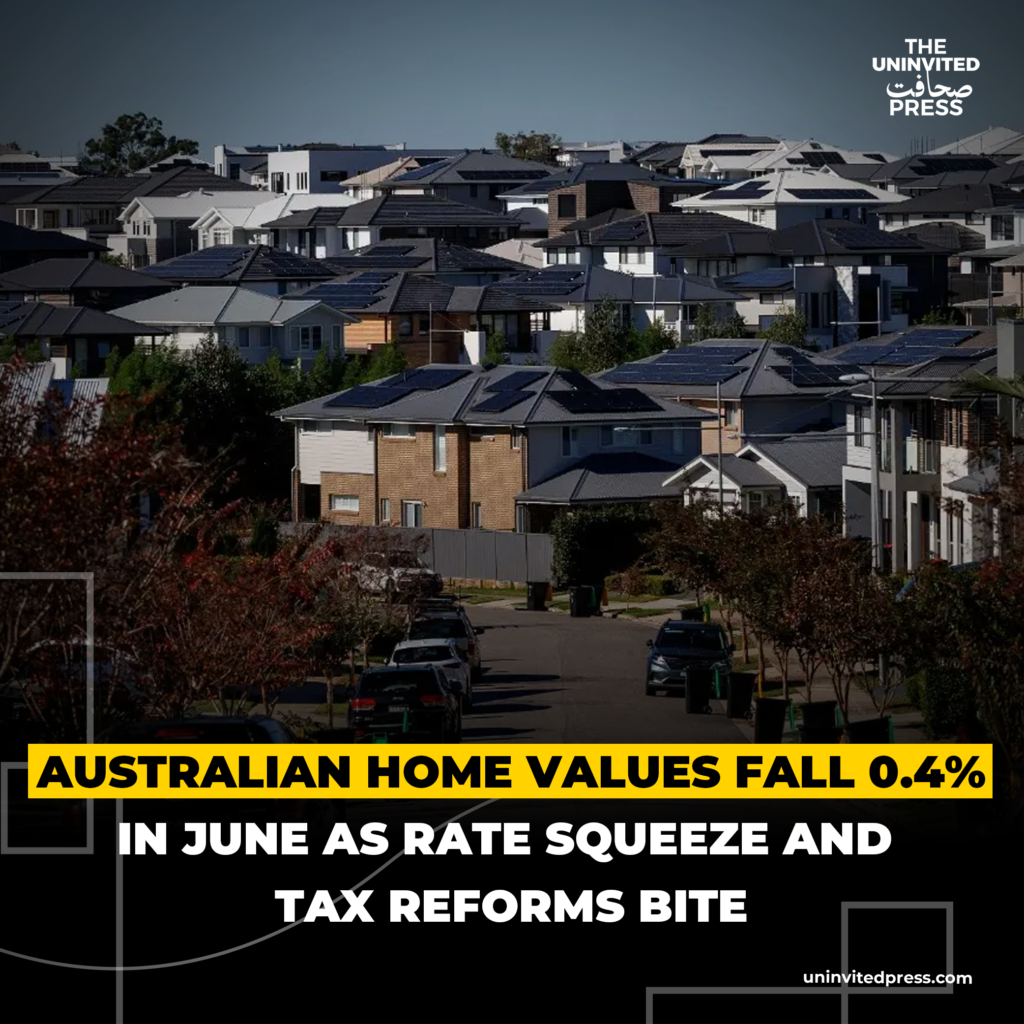
Property market cools as higher borrowing costs and policy changes weigh on buyer sentiment across the country.
Australian residential property values fell by 0.4% in June, marking a notable monthly decline as persistent high interest rates and recent tax reforms continue to exert pressure on the housing market.
The drop, reported by major property data analysts, signals a cooling in what had been one of the world’s most resilient real estate markets during the post-pandemic period. National home values had shown relative stability earlier in the year, but mounting economic headwinds appear to be testing buyer confidence.
Australia Home Market Hit by Rate Squeeze:
The Reserve Bank of Australia (RBA) has maintained elevated cash rates in response to stubborn inflation, increasing mortgage repayment burdens for millions of households. Many variable-rate borrowers are feeling the strain of higher monthly payments, leading to reduced demand, particularly in the entry-level and investor segments.
Economists note that the combination of high borrowing costs and tighter lending standards has slowed auction clearance rates and extended the time properties spend on the market in major cities such as Sydney, Melbourne, and Brisbane.
Compounding the rate pressure are recent tax reforms and policy adjustments at both federal and state levels. Changes targeting property investors-including adjustments to negative gearing, capital gains tax discounts, and foreign buyer surcharges-appear to be discouraging speculative investment and contributing to softer price growth.
While these measures aim to improve housing affordability for first-home buyers and reduce market speculation, they have created short-term uncertainty for investors and sellers. Some analysts suggest the reforms are achieving their intended cooling effect but may exacerbate supply shortages if new construction does not keep pace.
RBA Decisions to Shape Housing Market:
The national 0.4% decline masks significant differences across cities and regions. Some premium suburbs in Sydney and Melbourne have shown greater resilience due to strong demand from high-income buyers, while outer suburban and regional areas have experienced sharper corrections.
Despite the monthly fall, annual growth remains positive in many markets, supported by strong population growth through migration, limited housing supply, and underlying economic fundamentals. However, forecasters warn that further rate hikes or prolonged high rates could deepen the downturn.
The softening housing market has wider ramifications for the Australian economy, where household wealth is heavily tied to property. A sustained decline could dampen consumer spending and construction activity, key drivers of growth.
The Australian government and the RBA continue to balance the need for inflation control with efforts to support economic stability. Policymakers face the challenge of addressing housing affordability without triggering a sharp correction that could impact financial stability.
As the property sector enters a more cautious phase, buyers, sellers, and investors will be closely watching upcoming inflation data, RBA decisions, and any further policy announcements that could shape the trajectory of home values in the second half of the year.