

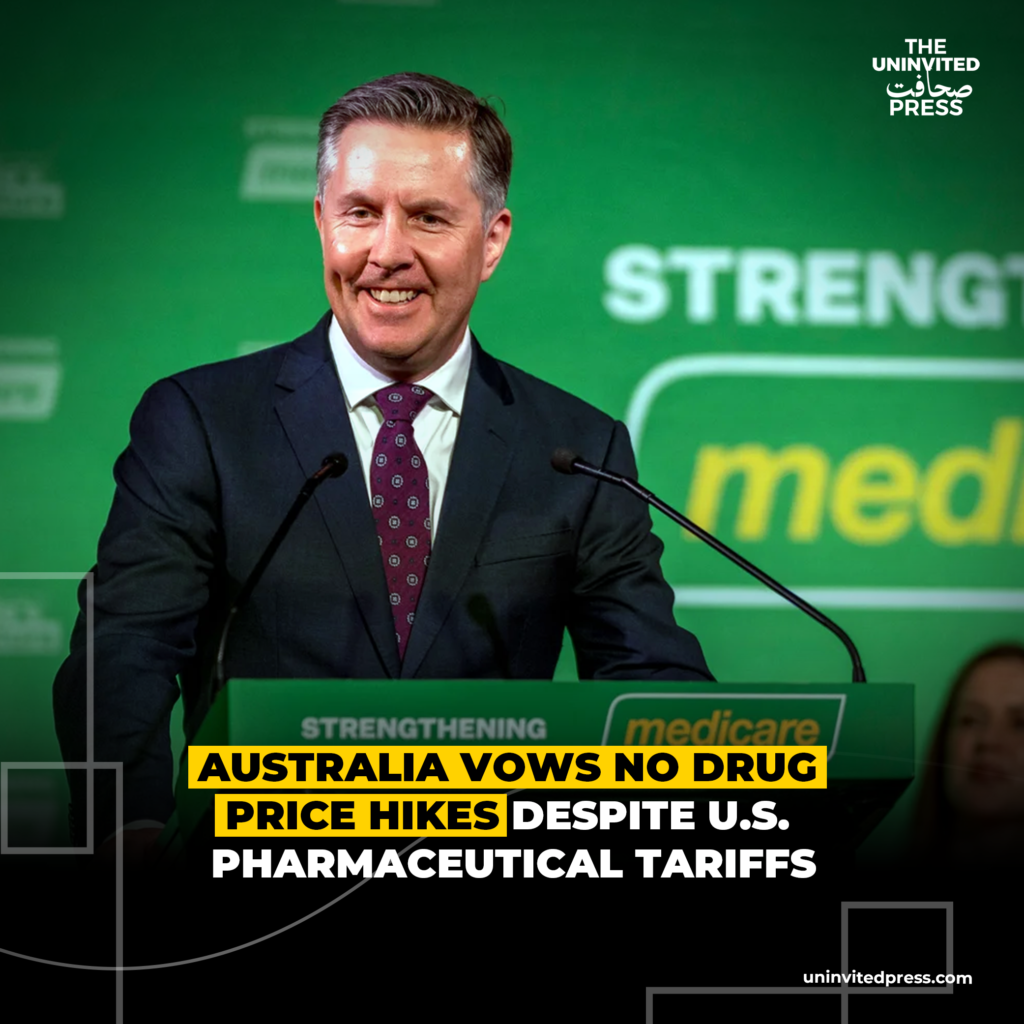
Canberra stands firm on Pharmaceutical Benefits Scheme (PBS) protections as Trump’s new levy hits Australian exporters.
The Australian government has firmly rejected any increase in medicine prices for its citizens, insisting that US President Donald Trump’s imposition of 100 percent tariffs on imported pharmaceuticals will not affect costs at Australian pharmacy counters.
Health Minister Mark Butler declared on Friday that the federal government has “no intention” of negotiating changes to the Pharmaceutical Benefits Scheme (PBS), the longstanding system that subsidises essential medicines and keeps prices among the lowest in the developed world.
The announcement comes after the Trump administration imposed steep tariffs on foreign-made patented and branded drugs entering the United States, with Australian products facing the full 100 percent rate in many cases. The move, which targets roughly A$1.6-2 billion in annual Australian pharmaceutical exports to the US, aims to pressure manufacturers to shift production to American soil and lower drug prices for US consumers.
PBS shielded from external pressure:
Butler emphasised that the PBS, which has operated for nearly 80 years, remains off-limits to foreign influence.
“We’ve said very clearly there is no way we’re negotiating about those fundamental elements of the PBS that has served Australia so well,” he stated. “This will have no impact on medicine prices at Australian pharmacy counters.”
The PBS allows the Australian government to negotiate directly with pharmaceutical companies, often securing prices significantly lower than those paid in the United States. US industry groups have long criticised the scheme, arguing it undervalues innovation and creates an unfair playing field.
Australian officials and opposition figures, including Opposition Leader Angus Taylor, have united in rejecting any linkage between the US tariffs and domestic pricing policy. The government described the tariff as creating uncertainty for exporters but stressed it would not translate into higher costs for Australian patients.
Effects on exporters and industry reactions:
Australia’s largest pharmaceutical exporter, CSL Limited, is expected to largely escape the immediate impact due to its substantial US-based manufacturing and plasma collection facilities. The company has stated it does not anticipate material effects in the current financial year.
Smaller Australian firms without US production may face greater challenges, prompting concerns about potential job losses or reduced investment in the sector. Medicines Australia, the industry body, expressed opposition to the tariffs while noting the relatively modest scale of affected exports compared with overall trade.
The government said it is assessing the broader implications for Australian exporters and seeking a reversal of the US decision through diplomatic channels. “We want the US administration to think again and to reverse this decision,” Butler added.
Broader context of Trump’s trade policy initiative:
Trump’s pharmaceutical tariff is part of an “America First” trade policy aimed at boosting domestic manufacturing and addressing what the administration sees as artificially low prices abroad. Critics in Australia and elsewhere view it as economic pressure on countries to abandon price controls that benefit their populations.
Australia has maintained that its Pharmaceutical Benefits Scheme (PBS) will keep medicines affordable for citizens despite external trade tensions. The move reflects broader global friction between national healthcare policies and international economic pressures, with the government committed to monitoring the situation while protecting access to essential medicines.