

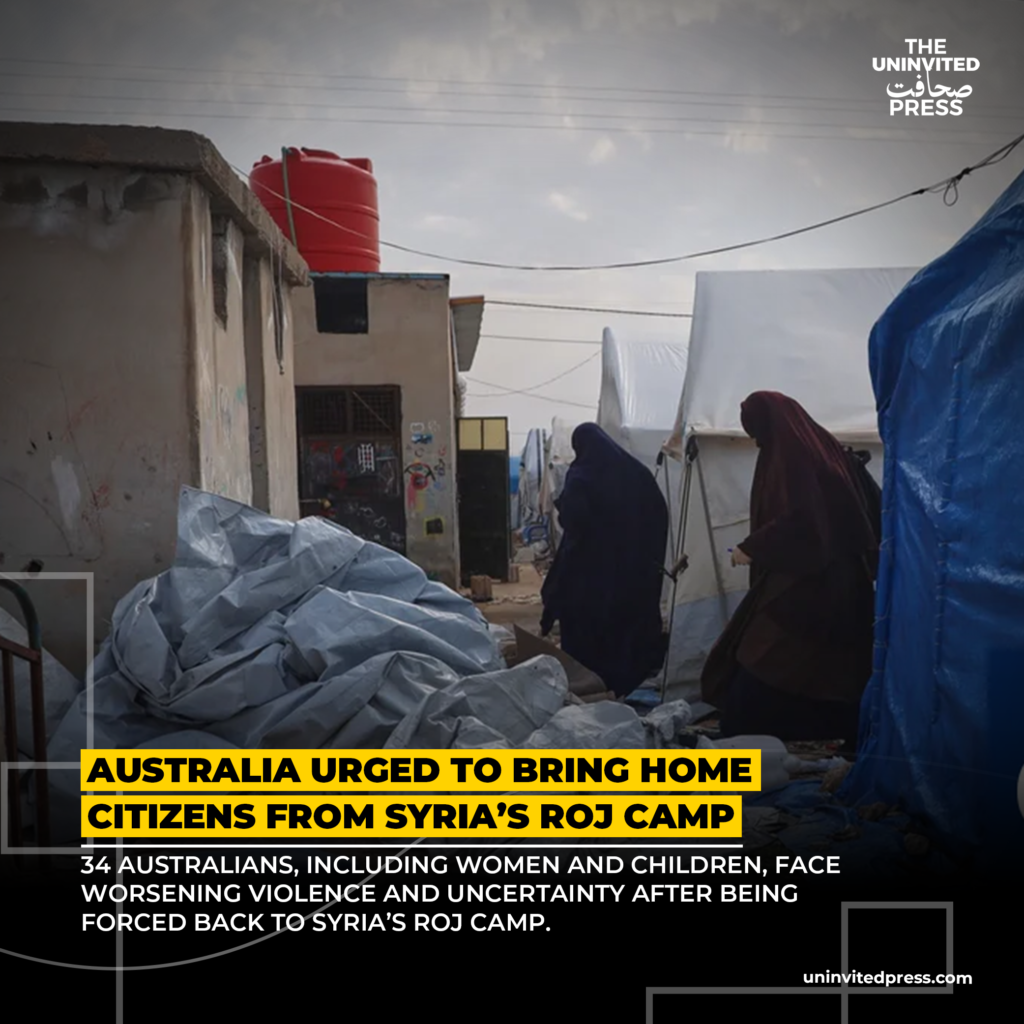
34 Australians, including women and children, face violence in Syria’s Roj camp after failed repatriation bid; government refuses to bring them home.
Stranded After Failed Exit: Australians Face Rising Violence in Syria’s Roj Camp:
A group of 34 Australian citizens-11 women and 23 children-remain trapped in Syria’s Roj detention camp following a dramatic but failed bid to depart for home. Released briefly by camp authorities on February, 2026, they were turned back by Syrian officials due to procedural and coordination issues, returning to find their tents demolished and belongings seized. Aid workers and camp officials now warn of escalating violence-including near-nightly raids and increasingly severe beatings-urging Australia to act before conditions worsen further in the unstable northeast Syrian region.
Repatriation Denied, Australians Stranded in Syria:
The events unfolded rapidly in mid-February 2026. Kurdish-led authorities at Roj camp released the Australians, describing it as the first major repatriation operation of the year and noting these were the last Australians in the facility. The group boarded vehicles with a military escort, heading toward Damascus airport for flights home. However, Syrian government officials halted the convoy shortly after departure, citing poor coordination or unspecified procedural issues. The families were forced to return to Roj, where they discovered their section-once nicknamed “Australia Street”-had been dismantled.
Roj camp, holding around 2,200 people from about 50 nationalities (mostly women and children linked to IS), has been a flashpoint since IS’s territorial defeat in 2019. Many detainees, including these Australians, have been held for nearly seven years without formal charges in most cases.
Australia’s government has consistently rejected official repatriation efforts for this cohort. Prime Minister Anthony Albanese stated firmly that the government would provide “no assistance or repatriation,” emphasizing that any who return independently would face “the full force of the law” if crimes were committed. Home Affairs Minister Tony Burke confirmed a temporary exclusion order (barring entry for up to two years) on one woman, based on security agency advice, while the remaining 33 do not meet legal criteria for similar restrictions. Earlier successful repatriations occurred in 2019 (eight orphaned children) and 2022 (four women and 13 children), but plans for broader action have stalled amid security concerns and political sensitivities.
Security vs. Humanitarian Need:
The failed departure comes against a backdrop of shifting control in northeast Syria. Kurdish-led Syrian Democratic Forces (SDF) have been handing over territories, including the larger al-Hol camp (now largely emptied or under Syrian government oversight), raising fears of renewed instability or forced transfers at Roj. Aid organizations describe camp conditions as “dire,” with pervasive risks from violence, poor sanitation, and exposure to extremist ideology-conditions some argue pose greater threats than repatriation and prosecution in Australia.
Human rights advocates and camp administrators, including Roj co-director Hukmiya Ibrahim, have repeatedly called on foreign governments to repatriate their citizens, particularly children. “Take your citizens, take these children and women,” Ibrahim urged in prior statements. Reports indicate the Australians’ tents and possessions were seized upon return, exacerbating humanitarian concerns.
The Australian government maintains that national security and public safety override other considerations. No official response has been issued to the latest calls for repatriation amid the reported violence, though security monitoring continues. Opposition figures have pushed for broader entry bans.