

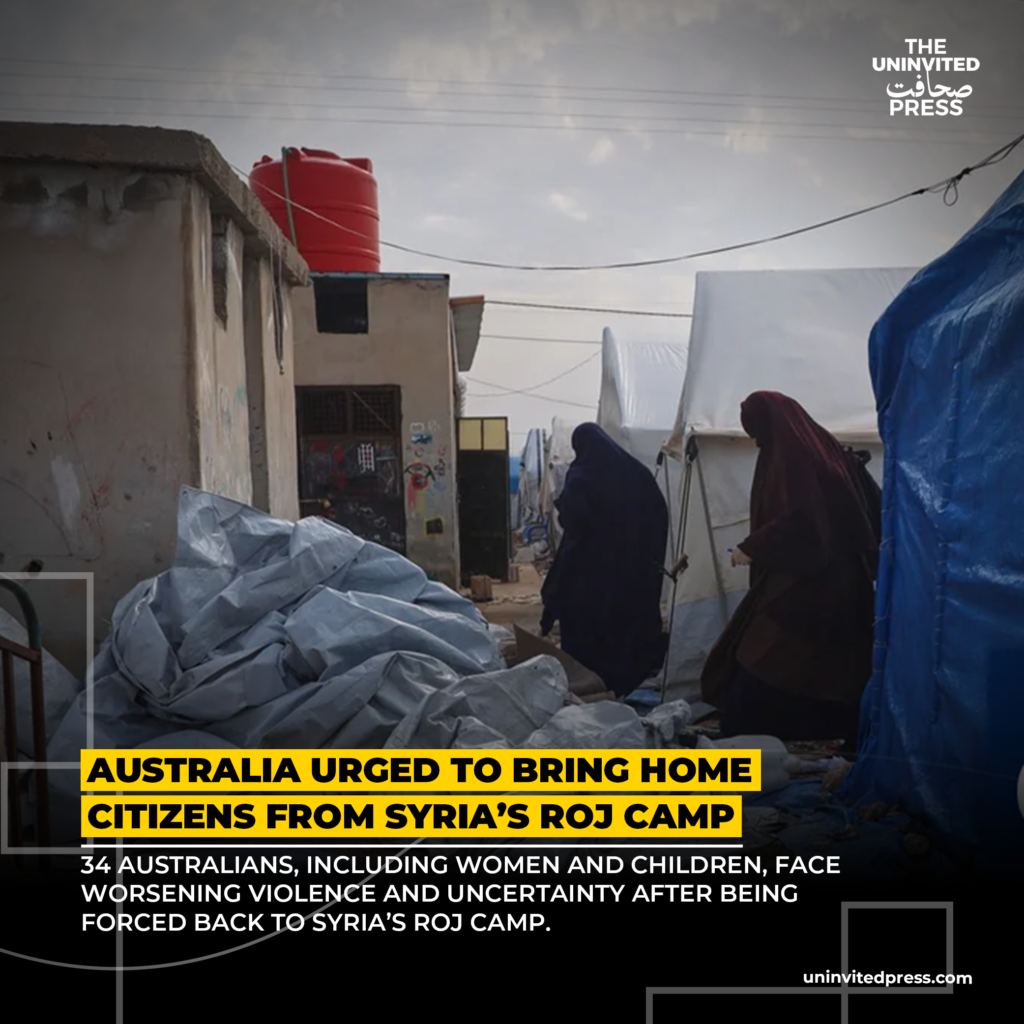
Human rights groups and aid workers warn of nightly raids, violent beatings and growing uncertainty as women and children face indefinite detention without charge.
Rights organisations and aid workers have renewed calls on the Australian government to facilitate the return of 34 Australian citizens-including 11 women and 23 children-currently held in the Kurdish-controlled Roj detention camp in north-eastern Syria, where conditions have sharply deteriorated following a failed attempt to leave the camp in February.
The group, consisting of wives, widows and children of deceased or imprisoned Islamic State (IS) fighters, was briefly released by camp authorities on 16 February 2026 in what appeared to be a step toward repatriation. They were escorted toward Damascus but were turned back by Syrian government authorities due to “technical” or procedural issues and forced to return to the camp.
Since then, reports from inside Roj describe near-nightly raids, increasingly severe beatings, and heightened insecurity as regional power dynamics shift following the fall of the Assad regime and ongoing instability in north-eastern Syria.
Severe humanitarian conditions:
Aid workers and sources on the ground say the camp’s conditions have worsened dramatically. Tents previously occupied by the Australian families-sometimes referred to locally as “Australia Street”-were reportedly dismantled, with belongings seized upon their return. Women and children describe an atmosphere of fear, with reports of violence and uncertainty about the camp’s future under changing authorities.
The Roj camp holds more than 2,000 people from around 50 nationalities, the majority women and children. Many of the Australian children were born in the camp or taken to Syria at a young age and have spent most or all of their lives in detention-like conditions without formal charges.
The Australian Human Rights Commission has joined calls for the government to support efforts to bring the citizens home, emphasising that the women and children have valid Australian passports and have not been charged with any crimes in Australia.
Government position draws criticism:
Prime Minister Anthony Albanese and Home Affairs Minister Tony Burke have repeatedly stated that the government will not actively facilitate or assist the repatriation of this group. One woman in the cohort has been issued a temporary exclusion order on security advice, barring her return for up to two years.The government maintains it has a firm policy against providing assistance to individuals with alleged links to IS, while stressing that any who return and have committed crimes will face the full force of Australian law.
Critics, including human rights advocates and some opposition figures, argue that the policy punishes Australian children for the actions of their parents and violates international obligations regarding the rights of children and the prevention of statelessness. Some mothers have reportedly indicated willingness to allow their children to return separately, though others insist the families should stay together.
Long shadow of IS defeat:
Australians have been held in Roj camp since the territorial defeat of IS in 2019. Previous governments carried out limited repatriations in 2019 and 2022, bringing back smaller groups of women and children for rehabilitation and possible prosecution. The current group is believed to be the last known Australians in the camp.
Camp authorities have urged countries to repatriate their citizens, warning that conditions are worsening. Aid and human rights groups caution that prolonged detention without due process may lead to radicalisation and harm, especially for children, and continue to call for repatriation with proper support. The Australian government has not indicated any policy change, leaving the remaining citizens in uncertainty.