

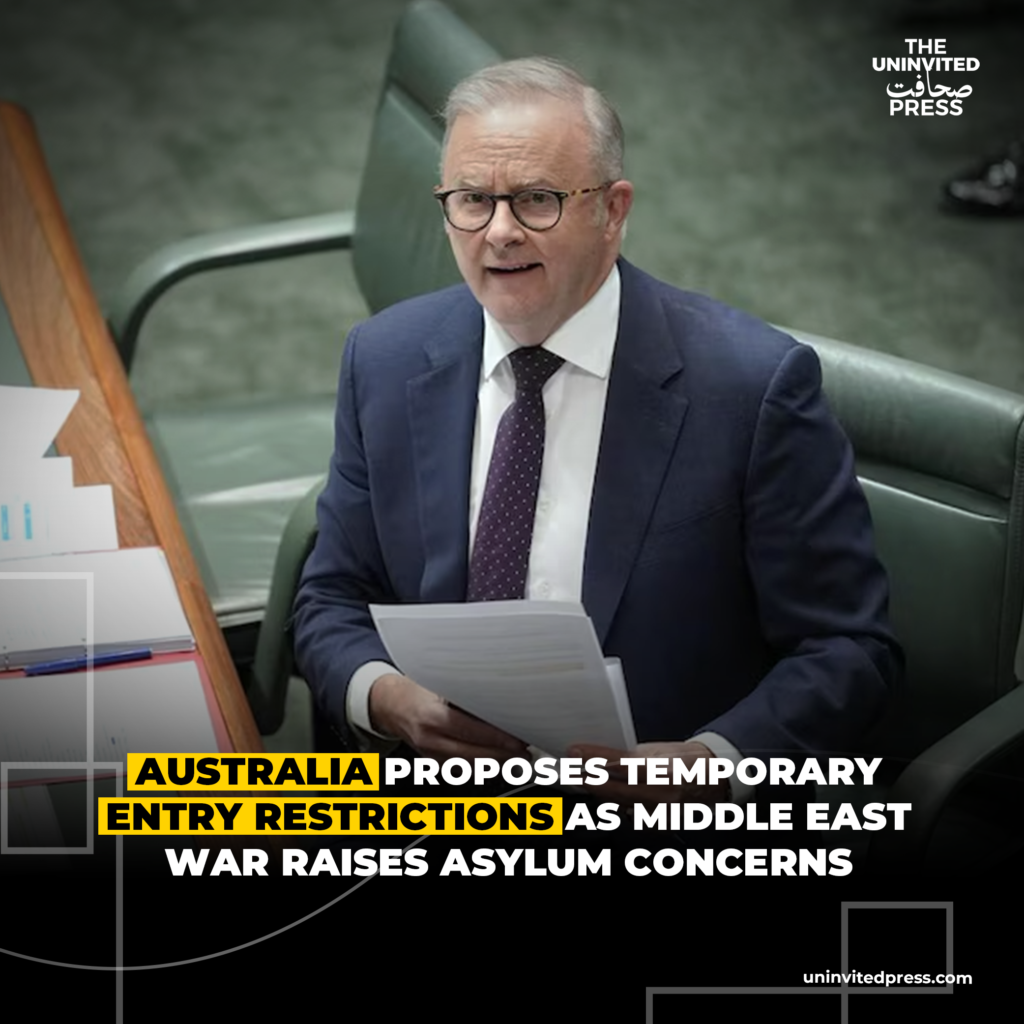
Australia introduces bill to bar temporary visa holders from war zones like Iran amid asylum surge fears from 2026 Middle East conflict.
Australia Closes Doors on War Refugees as Celebrities Get Safe Haven:
With Iran’s skies ablaze from US-Israeli strikes, Australia is fast-tracking laws to let its immigration chief slam the door on temporary visa holders from war-torn nations-potentially blocking thousands fleeing chaos while granting asylum to a handful of high-profile athletes. The move, unveiled March 10, 2026, exposes cracks in Canberra’s border strategy as global conflict spills into domestic debates on refuge and security. Critics blast it as a betrayal of humanitarian values, while officials insist it’s essential to safeguard the system’s integrity amid unprecedented upheaval.
Visa Bans vs Selective Asylum Grants:
The bill landed in parliament on March 10, 2026, introduced by Julian Hill, who cited the “current situation in the Middle East” as a prime example of how “circumstances can change” rapidly, potentially leading visa holders to abandon temporary intentions and seek permanent protection. Under the legislation, Burke could designate cohorts-such as nationals from certain countries holding visitor, student, or other temporary visas-and bar their entry to “protect the integrity and sustainability of Australia’s immigration system.”
This came mere hours after Burke announced humanitarian visas for five members of Iran’s women’s national football team, who were in Australia for the Asian Cup when war erupted on February 28 with US-Israeli airstrikes killing Iran’s Supreme Leader Ayatollah Ali Khamenei and others. The athletes, labeled “traitors” by Tehran, sought protection; six initially accepted offers, but one later opted to return home. Burke confirmed around 7,000 Iranians hold valid temporary visas issued pre-war, fueling fears of a mass influx seeking asylum amid blackouts, bombardments, and economic collapse in Iran.
The war’s timeline intensified the urgency: US-Israeli strikes on February 28 targeted nuclear sites and leadership, prompting Iranian retaliation against Gulf allies starting March 1, including missile barrages on UAE, Saudi Arabia, and shipping lanes. By March 10, disruptions had stranded travelers, closed airspace, and spiked oil prices, with UN reports of civilian deaths in the hundreds. Australia’s response included deploying an E-7A Wedgetail surveillance plane and missiles to Gulf states for “defensive” support on March 10, as announced by Albanese.
Australia's Immigration Dilemma: Humanitarian Ideals vs Border Realities:
Australia’s immigration policies have long navigated tensions between humanitarian commitments and border security, amplified by its alliance with the US. The 2026 Iran war-sparked by strikes Australia publicly endorsed as efforts to halt Tehran’s nuclear ambitions-has thrust Canberra into a bind. Albanese’s government backed the initial attacks in a February 28 statement, pledging no offensive role but providing logistical aid, including crisis teams and military assets deployed by March 5.
Historically, Australia has faced asylum surges from conflicts like Afghanistan (2021) and Syria (2015), leading to offshore processing and strict visa rules under the Migration Act. The current bill echoes 2014 amendments barring boat arrivals, but targets legal visa holders-a novel expansion amid fears of “visa hopping” where tourists pivot to protection claims. With 115,000 Australians in the Middle East, DFAT upgraded travel warnings to “do not travel” for Iran, Israel, Lebanon, and Gulf states by March 1, urging evacuations via commercial flights despite widespread cancellations.