

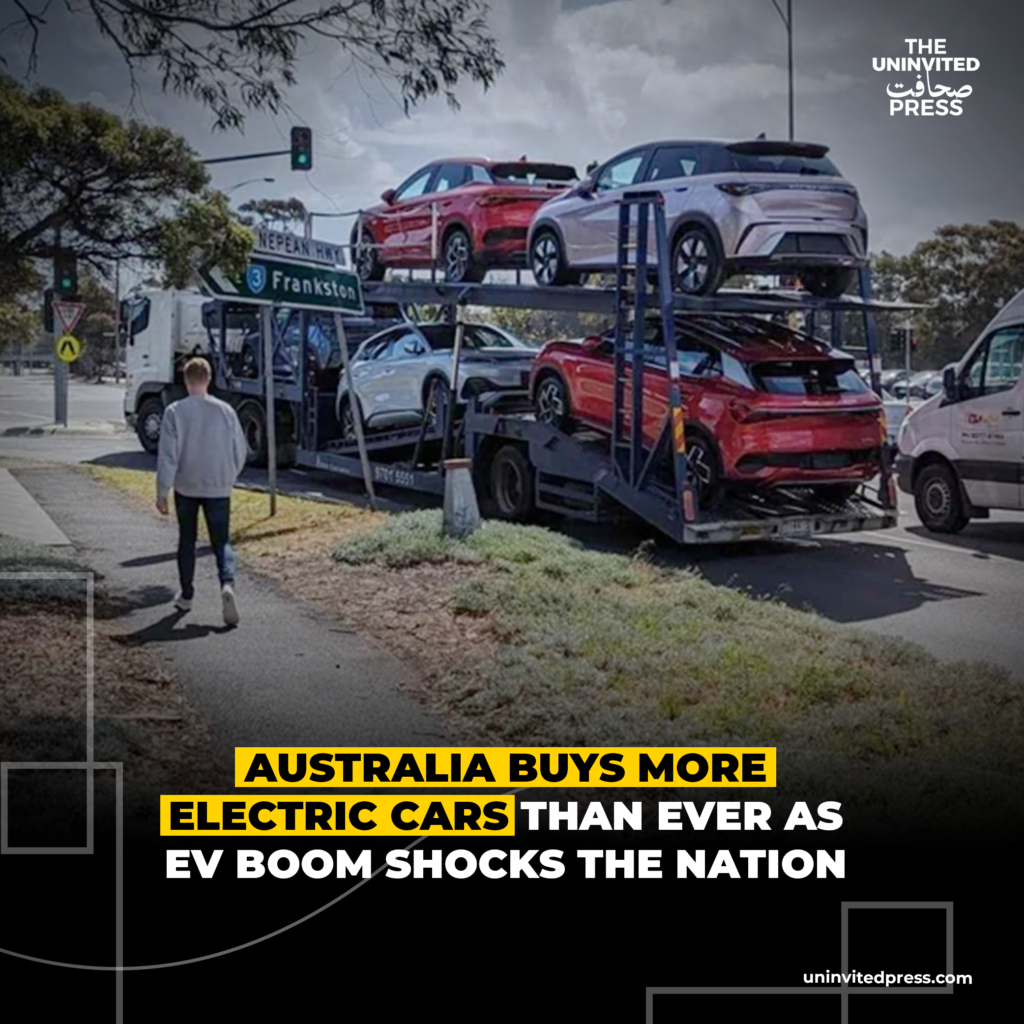
Battery electric cars capture record 14.6% market share in March 2026 as soaring petrol and diesel costs drive buyers toward EVs, with Tesla Model Y leading the charge.
Australians are buying more electric vehicles than ever before, with battery electric vehicle (BEV) sales reaching a new monthly record in March 2026 as high fuel prices and improving affordability push consumers away from traditional petrol and diesel cars.
According to the latest VFACTS data, BEVs accounted for 14.6 percent of all new vehicle sales in March-the highest share on record-with 15,839 units registered. This represents an 88.9 percent increase compared to March 2025 and a 42.3 percent jump from February.
The surge comes as petrol prices in some parts of the country have climbed toward A$2.50 per litre, while diesel has exceeded A$3 in certain areas, making the lower running costs of electric vehicles increasingly attractive to both urban and regional buyers.
Tesla Model Y Leads the Market as Chinese Brands Expand Their Presence:
The Tesla Model Y was the standout performer, registering 2,818 units in March alone and placing third overall among all new vehicles sold. Other popular models included the BYD Sealion 7, Zeekr 7X and BYD Atto 2, reflecting strong demand for affordable options from Chinese manufacturers.
Industry analysts note that the boom is not limited to major cities. Outer suburban and regional postcodes, where long commutes are common and rooftop solar is widespread, are driving much of the growth. Many households are pairing solar panels with home EV chargers to slash energy costs significantly.
The Electric Vehicle Council (EVC) reported that EV sales across the first quarter of 2026 rose sharply, with some leading brands such as Tesla and Polestar seeing combined sales up 40 percent year-on-year.
Rising Fuel Costs Drive EV Demand Despite Infrastructure Challenges:
The dramatic rise in fuel prices-partly linked to global supply disruptions-has prompted a noticeable shift in buyer behaviour. Car dealerships and finance providers report a sharp increase in inquiries and loan applications for electric and hybrid vehicles, while used EV sales at auction houses have also surged.
Environmental groups and industry bodies have welcomed the trend, pointing out that the growing EV fleet is already delivering measurable reductions in emissions and fuel consumption. Australia’s total EV fleet surpassed 454,000 vehicles by the end of 2025, with battery electric sales alone crossing the 100,000 mark for the first time that year.
However, challenges remain. Critics argue that the pace of charging infrastructure rollout in regional areas still lags behind demand, and some buyers continue to express range anxiety despite improving battery technology.
EV Boom Accelerates in Australia Amid Incentives and Fuel Crisis:
The Australian government’s electric car discount and other incentives have helped lower upfront costs, while the increasing variety of models-now exceeding 100 available locally-has broadened appeal across different budgets and lifestyles.
Automotive experts say the March figures signal that the EV transition in Australia is accelerating faster than many forecasts predicted, particularly as conventional vehicle sales decline amid economic pressures.
As the country grapples with volatile global energy markets, the sustained growth in electric vehicle adoption could reshape the automotive sector, reduce dependence on imported oil and contribute to Australia’s climate targets.
For now, car carriers loaded with the latest EVs are becoming a more common sight on highways like the Nepean Highway, as Australians increasingly embrace the shift toward cleaner, cheaper motoring.