

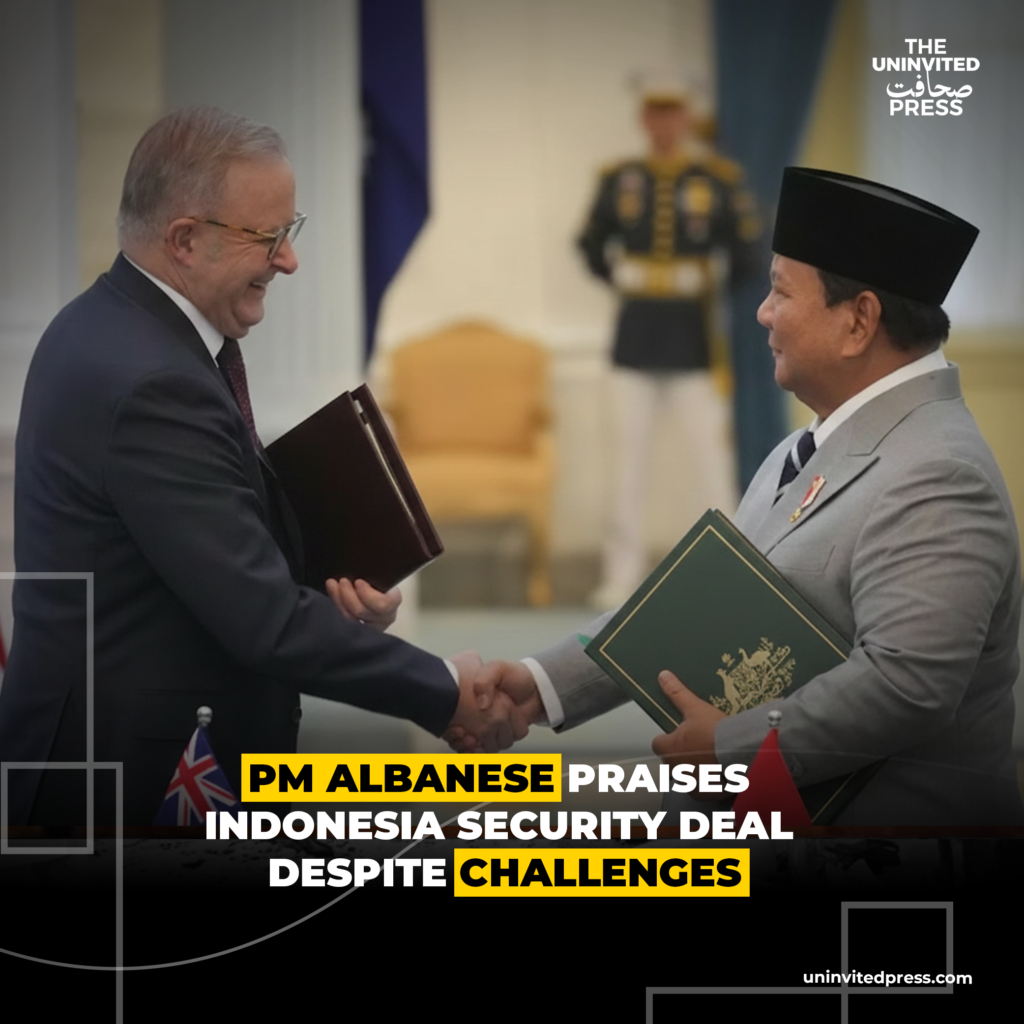
Australian PM Albanese praises new security treaty with Indonesia signed Feb. 6, 2026, in Jakarta, amid challenges like differing alliances. Deal boosts Indo-Pacific stability but faces scrutiny on depth.
Albanese Celebrates Landmark Australia-Indonesia Security Deal Amid China Tensions:
Australian Prime Minister Anthony Albanese has hailed a newly signed security treaty with Indonesia as a “watershed moment” that strengthens bilateral ties amid rising regional tensions. The pact, inked on February 6, 2026, in Jakarta, commits both nations to consult on threats but stops short of mutual defense obligations. As China expands its influence in the Indo-Pacific, this deal underscores Canberra’s push for closer alliances with neighbors, potentially stabilizing volatile sea lanes and trade routes critical to global economies. Yet, experts caution it may offer more symbolism than substance, highlighting ongoing challenges in aligning the two countries’ strategic outlooks.
Historic Australia-Indonesia Pact Signed at Merdeka Palace:
The ceremony at Jakarta’s Merdeka Palace marked the culmination of negotiations that began substantively in November 2025 during Prabowo’s visit to Sydney. Albanese arrived in Indonesia on February 5, 2026, and met Prabowo the following day for the formal signing. The leaders exchanged documents amid a backdrop of national flags and a ceremonial guard, shaking hands in a display of mutual respect.
In a joint press conference, Albanese described the treaty as reflecting “the close friendship, partnership, and deep trust” between the nations. He announced complementary initiatives, including offering a senior position for an Indonesian officer in the Australian Defence Force, supporting joint military training facilities in Indonesia, and expanding education exchanges. Prabowo echoed the sentiment, stating the pact demonstrates commitment to “good neighbor principles” and contributes to regional peace.
The event wrapped up with both leaders emphasizing collaboration over confrontation, with no immediate disruptions reported despite past frictions in bilateral relations. Albanese departed Jakarta on February 7, 2026, after additional meetings on economic ties.
From Rivals to Allies: The 2026 Jakarta Treaty:
Australia and Indonesia share a complex history, marked by geographic proximity but occasional distrust. The two nations first formalized security ties in the 1995 Agreement on Maintaining Security, which was updated in 2006 via the Lombok Treaty. Past tensions include border disputes, asylum seeker policies, and espionage allegations, but economic interdependence-Indonesia is Australia’s 13th-largest trading partner-has driven reconciliation.
The 2026 treaty emerges amid heightened Indo-Pacific instability, fueled by China’s assertive claims in the South China Sea and military buildup. For Australia, part of the AUKUS alliance with the US and UK, this pact diversifies partnerships beyond Western allies, hedging against potential conflicts that could disrupt vital shipping routes. Indonesia, maintaining a non-aligned foreign policy, views the deal as bolstering its defense capabilities without entangling it in great-power rivalries.
Enhanced cooperation could improve maritime security, reducing risks for fishermen and migrants in shared waters, while joint training might foster people-to-people ties. Economically, it could stabilize trade flows worth billions, easing inflation pressures on everyday goods in both countries. However, challenges persist, including Indonesia’s reluctance for binding commitments and differing views on regional alliances.