

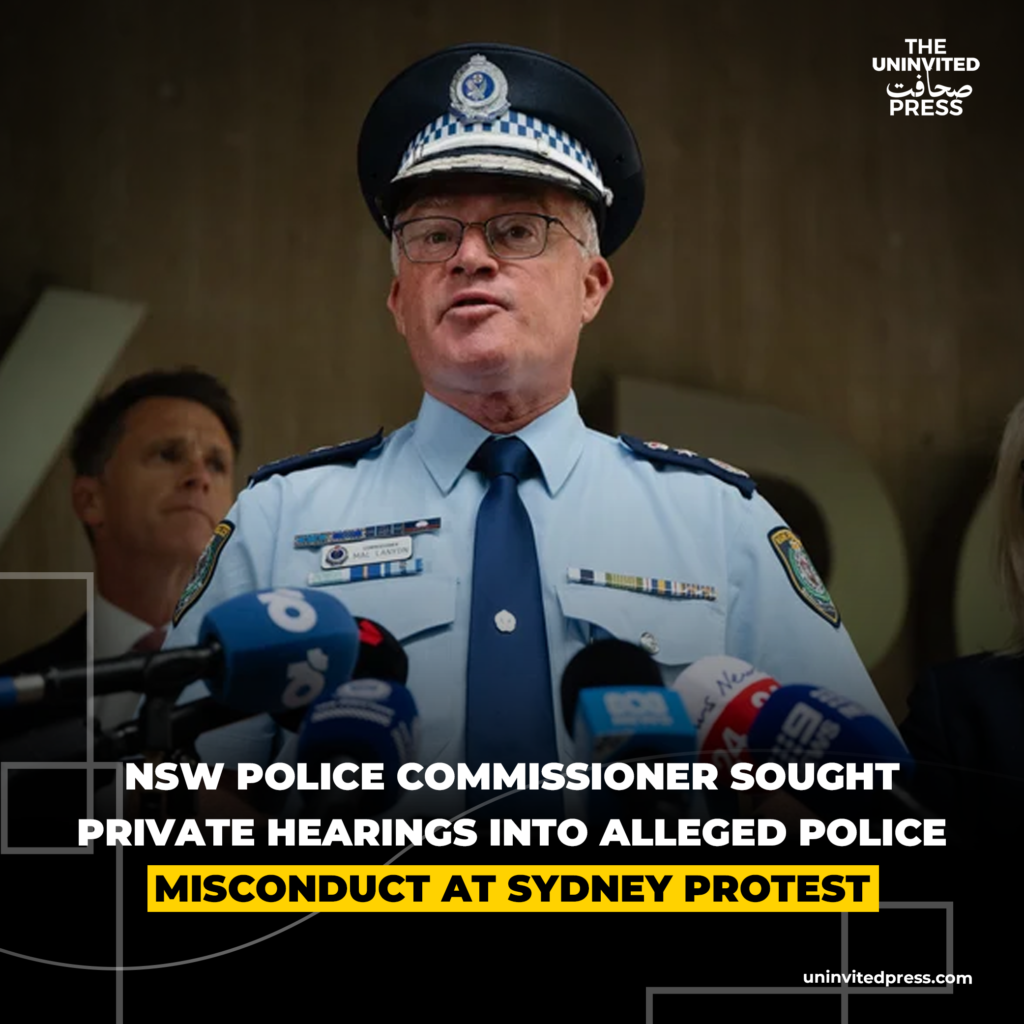
Commissioner Mal Lanyon’s late intervention delayed public inquiry into police handling of anti-Herzog demonstration that sparked more than 800 complaints.
New South Wales Police Commissioner Mal Lanyon made a last-minute bid to hold closed-door hearings into allegations of police misconduct during a major Sydney protest, the state’s independent police watchdog has revealed.
The Law Enforcement Conduct Commission (LECC) said Lanyon intervened in September to argue that examinations of witnesses should be conducted privately and not livestreamed. The move delayed the inquiry into the police response to a February demonstration against Israeli President Isaac Herzog outside Sydney Town Hall.
LECC Probes NSW Police Protest Handling:
The commission confirmed on Thursday that hearings will now proceed, beginning with a public opening address on 19 October. This will be followed by approximately five weeks of private examinations before public hearings involving senior commissioned officers.
More than 800 complaints were lodged over the handling of the 9 February protest, one of the largest volumes of complaints the LECC has received on a single issue. Protesters and observers alleged unnecessary force, including officers punching demonstrators, using pepper spray, and forcibly disrupting Muslim worshippers during evening prayers. Body-worn camera footage circulating publicly showed an officer appearing to boast after a violent altercation.
The LECC launched its investigation, known as Operation Makalu, after determining it was in the public interest to examine the police operation, including incidents of alleged misconduct. The inquiry will review video footage, documents and other records, and will deliver a public report to the New South Wales parliament.
In a detailed decision released this week, the commission noted that Lanyon had been informed as early as March that public examinations were contemplated but only raised formal objections in early September-less than two weeks before hearings were originally expected to begin. The timing was described as “regrettable” because it disrupted preparations and delayed the efficient use of public resources.
NSW Police Misconduct Hearings to Partly Open to Public:
Lanyon’s submissions cited concerns about the welfare and mental health of officers, as well as potential impacts on effective policing, community relations and “social cohesion.” The LECC rejected the request for fully private proceedings. It ruled that the opening address and examinations of senior officers would be public and livestreamed, while evidence from operational officers and civilian witnesses-including those who allege they were subjected to violence-will be heard in private. Findings from the private sessions will still be addressed in the final public report.
Greens MP and justice spokesperson Sue Higginson criticised the commissioner’s intervention, describing it as an “extraordinary attempt by the police to suppress the public examination of allegations of serious misconduct.” She noted that the violence occurred in full public view and that footage had been seen internationally.
Police have previously defended their actions on the night, with Lanyon stating officers showed “remarkable restraint” after protesters ignored directions. Ten officers were injured during the clashes, and a number of protesters were arrested. Some charges were later withdrawn.
The protest took place amid heightened tensions surrounding Herzog’s visit to Australia, which followed an antisemitic attack in Sydney and drew strong opposition from pro-Palestinian groups. The LECC emphasised that the right to peaceful protest remains a fundamental part of Australia’s democratic system, particularly at a volatile time. Hearings are scheduled to open publicly on 19 October, with the full process expected to examine both individual conduct and broader systemic questions about the policing of protests in New South Wales.