

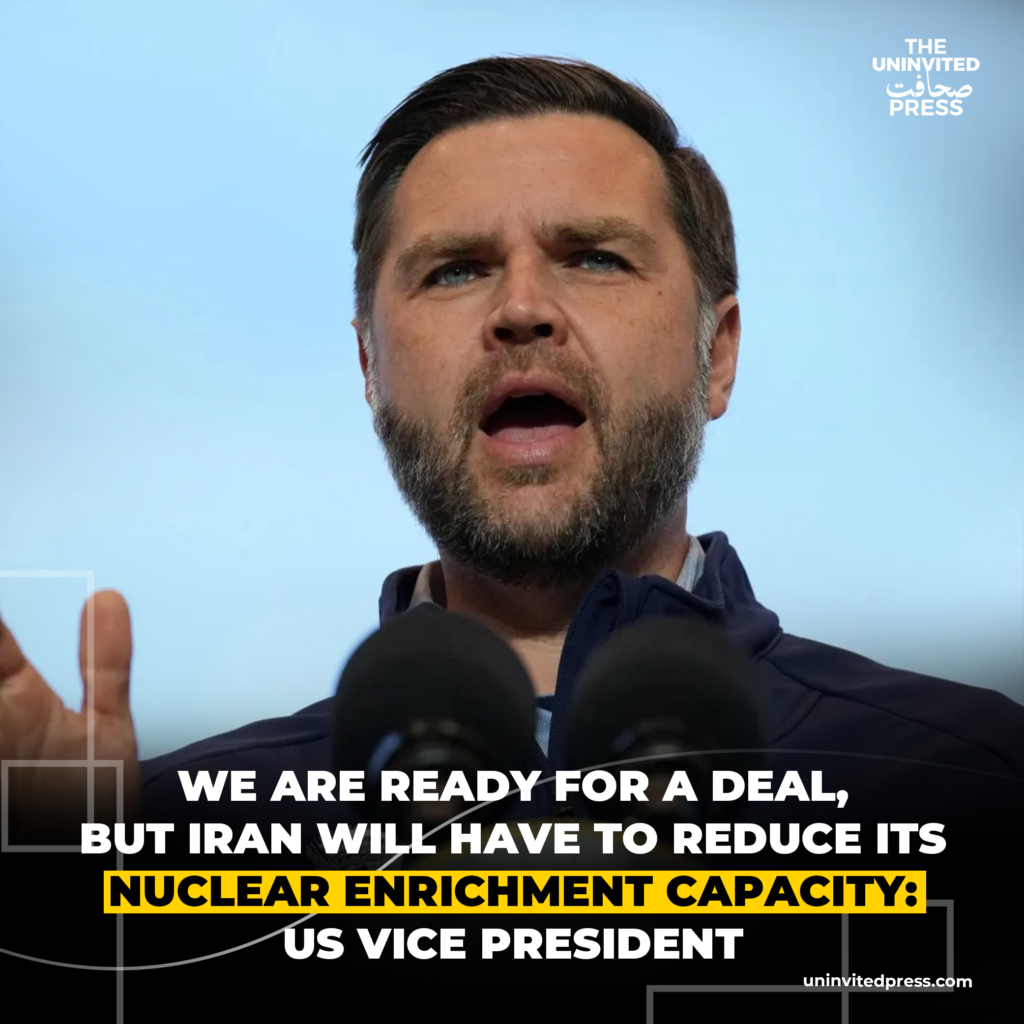
Vice president insists Tehran must take concrete steps to reduce capacity amid seven-month war and uncertainty over Iranian leadership.
United States Vice President JD Vance has stated that Washington remains ready to reach a deal to end its seven-month conflict with Iran, but only if Tehran makes a “meaningful” reduction in its nuclear enrichment capacity.
Vance Sets Conditions for Iran Nuclear Deal:
In an exclusive interview with Media conducted on Monday following a campaign stop in Alaska, Vance said any agreement would require tangible action from Iran rather than verbal assurances about future limits. “If you don’t want a nuclear weapon, then why do you need 60% enriched fuel? And if you want to show commitment to not building a nuclear weapon, don’t build highly enriched fuel. That’s a very basic threshold issue,” he said.
“I think if they want to show a commitment to not building a nuclear weapon, they would do something meaningful on their enrichment capacity,” Vance added. “We’re not going to trade words for actions.”
The comments come as the United States and Iran have exchanged proposals in recent weeks aimed at ending the war and reopening the Strait of Hormuz, a critical artery for global energy shipments. President Donald Trump has rejected Tehran’s latest offer and warned that military operations could intensify after the November midterm elections.
US Seeks Verifiable Nuclear Concessions From Iran:
Vance also highlighted complications in the negotiations, noting that Washington remains uncertain about how decisions are made in Tehran. The US is engaging with Iranian President Masoud Pezeshkian and Foreign Minister Abbas Araghchi, but questions persist about the extent of their authority following the killing of Supreme Leader Ayatollah Ali Khamenei in joint US-Israeli strikes at the outset of the conflict.
The war, now in its seventh month, has disrupted energy markets, raised fuel prices, and heightened regional tensions. Iran has long maintained that its nuclear programme is for peaceful purposes, while the United States and its allies have accused Tehran of pursuing capabilities that could lead to a nuclear weapon.
Vance’s remarks underscore the Trump administration’s insistence on verifiable nuclear concessions as a precondition for de-escalation. Whether Iran will accept such demands, and whether internal power dynamics in Tehran allow for decisive action, remain central uncertainties as both sides navigate a fragile diplomatic track amid ongoing hostilities.