

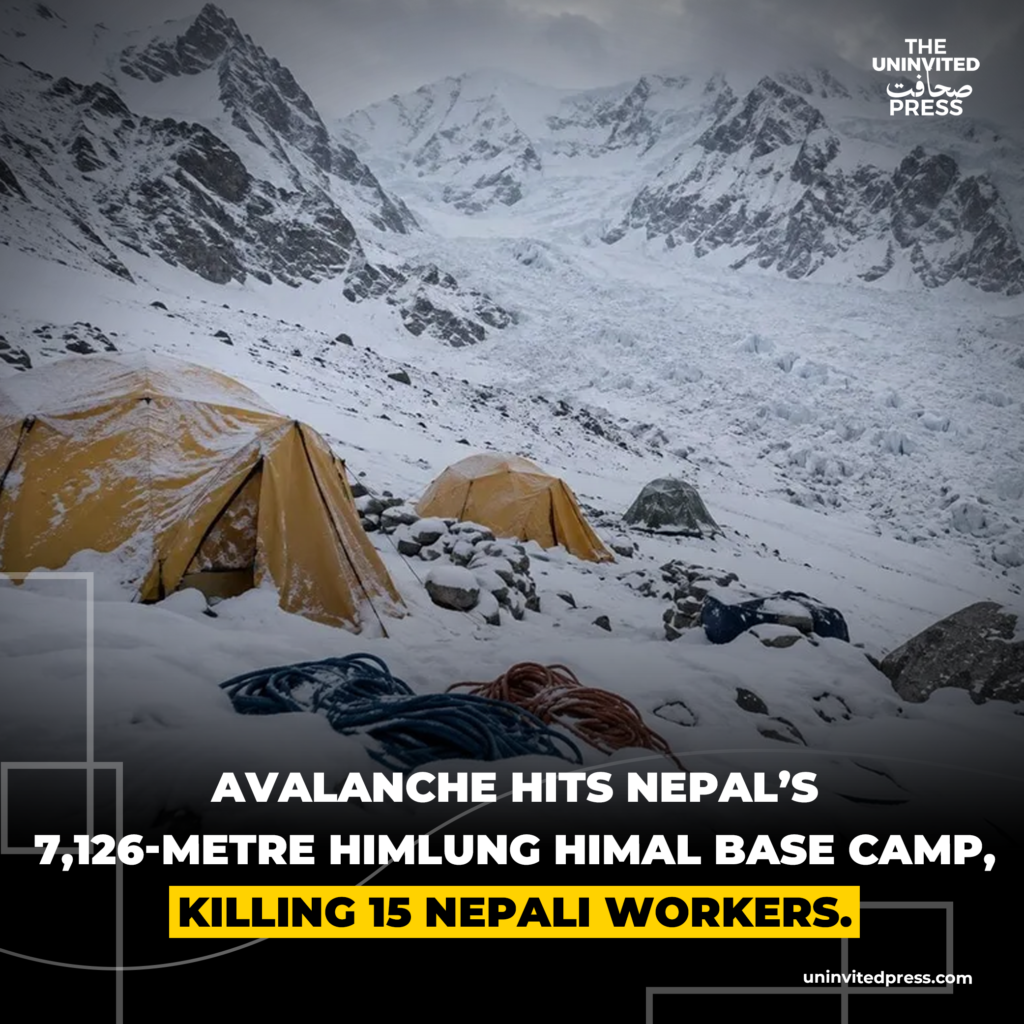
Rescue teams recover bodies from under deep snow as one remains missing after disaster strikes preparatory crew ahead of autumn climbing season.
At least 15 Nepali mountain workers have been confirmed dead after a powerful avalanche buried the base camp of Himlung Himal, a 7,126-metre peak in northern Nepal’s Manang district, while they prepared the site for foreign climbers.
The avalanche struck early on Sunday morning, 27 September 2026, in the remote Nar Phu region near the border with Tibet. The workers-mostly kitchen and support staff along with two climbing guides-were pitching tents and fixing ropes at the base camp when a massive slide of snow and ice engulfed the area, burying tents under roughly 14 to 15 feet of debris.
Rescuers from the Nepal National Mountain Guide Association (NNMGA), working with local guides and expedition companies, have so far recovered 15 bodies. Eight were found on Thursday alone during intensive digging under extremely difficult conditions. One worker remains missing, and officials have said the chances of finding the person alive are remote. The recovery operation is expected to wind down soon due to the depth of the snow, freezing temperatures and unstable terrain.
Himlung Himal Avalanche and Rescue Efforts:
The victims belonged to two Nepali tourism companies, Himalayan Holidays Nepal and Imagine Nepal Treks. Around two dozen high-altitude workers had travelled to the site weeks earlier to set up the camp ahead of the autumn climbing season. No foreign climbers had yet arrived. Some members of the team, positioned away from the main slide path, managed to escape and return safely to lower elevations.
Himlung Himal, standing at 7,126 metres (23,379 feet), is a popular peak for commercial expeditions, particularly among climbers seeking less crowded routes than Everest or other 8,000-metre giants. The base camp is typically located on relatively flat ground at a safe distance from the mountain’s steeper flanks, making such a large avalanche at this elevation relatively uncommon. The disaster followed days of heavy rain and snowfall linked to a weather system originating from the Bay of Bengal that affected large parts of Nepal.
Rescue efforts were complicated from the outset by poor weather that grounded helicopters and made access to the remote site hazardous. Teams led by experienced IFMGA-certified guides, including Pasang Kaji Sherpa, dug manually through metres of packed snow using specialised equipment where possible. Bodies recovered earlier in the week were flown to Kathmandu for identification and postmortem examinations, with further transfers planned as weather permits.
Deadly Avalanche Hits Himlung Himal:
The incident ranks as the deadliest of Nepal’s current autumn climbing season and underscores the heavy risks borne by local workers who perform the essential, often invisible labour of preparing high-altitude camps. Nepal’s mountain tourism industry employs tens of thousands of guides, porters, cooks and support staff each year, generating vital income for communities in remote districts. Yet these workers frequently face the greatest exposure to extreme weather, avalanches and other hazards while foreign clients remain in safer locations.
Officials and mountain guides have described the avalanche as exceptionally large. Searchers reported that many of the victims were found still inside their tents, highlighting how suddenly the snow swept over the camp. Personal belongings of the remaining missing person have been located, but the body has not yet been recovered.
As helicopters ferry the latest recovered bodies to Kathmandu, families across Nepal await confirmation and the return of their loved ones. The tragedy comes against a backdrop of increasingly unpredictable Himalayan weather patterns, with heavy pre-monsoon and post-monsoon precipitation contributing to unstable snow conditions on even established routes and campsites.
Authorities in Manang district and national mountaineering bodies continue to coordinate the final stages of the operation. For the families of the 15 confirmed dead and the one still missing, the focus now shifts from the remote, snow-covered slopes of Himlung Himal to the painful process of identification, mourning and support in the days ahead.