

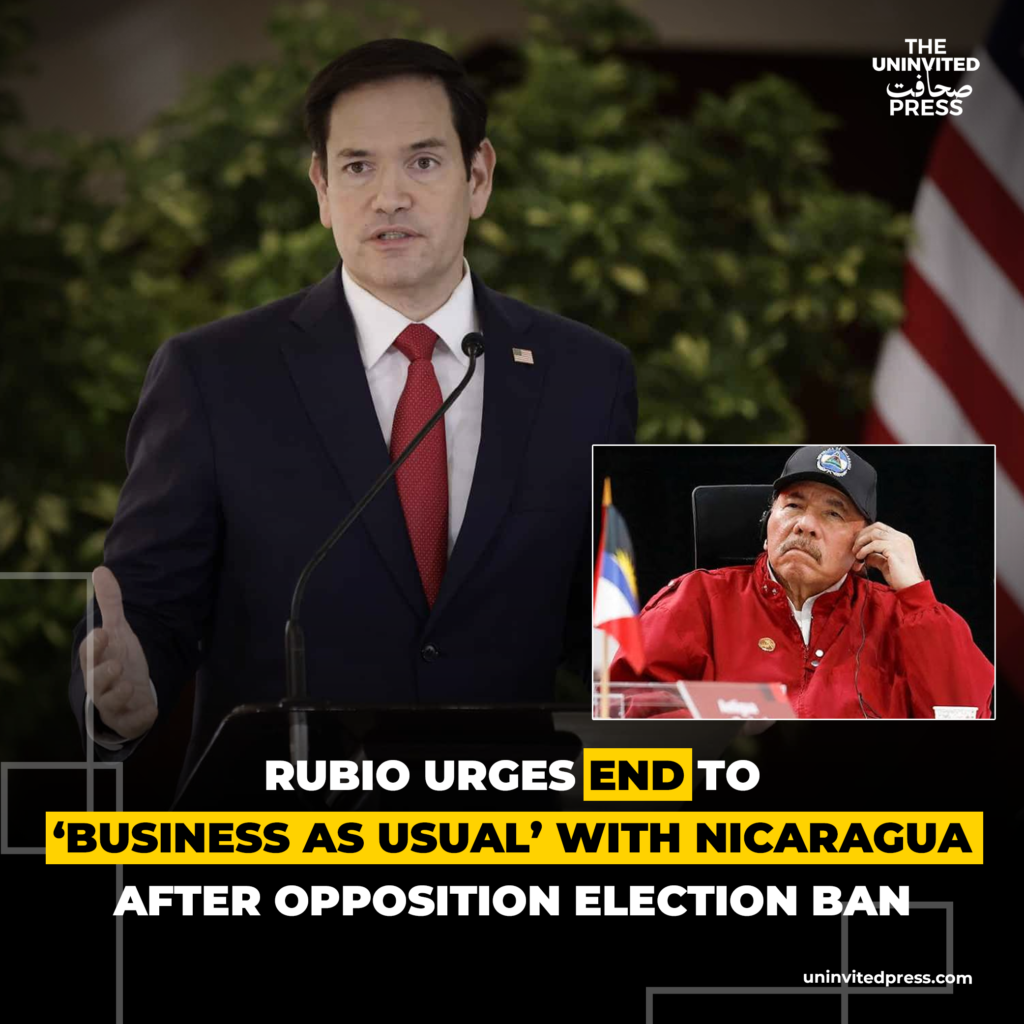
US secretary of state calls for regional isolation of Ortega-Murillo government following constitutional changes that bar opposition from polls.
United States Secretary of State Marco Rubio has called on international partners to immediately halt “business as usual” dealings with Nicaragua’s government after lawmakers approved constitutional reforms that ban most opposition figures from participating in elections and extend the presidential term.
In a statement issued on Wednesday, Rubio said Nicaragua’s National Assembly had “gutted what was left” of the country’s democracy by rewriting the constitution for a second time in two years. The changes, passed on Tuesday, prohibit anyone designated a “traitor to the homeland” from standing for elected office and lengthen the presidential term from six to seven years.
“Dictatorships that deny the unalienable rights of their citizens should not enjoy the same economic or political benefits as governments committed to defending hemispheric peace and security,” Rubio said. He described President Daniel Ortega and his wife and co-President Rosario Murillo as waging a “war on democracy” that “threatens our hemisphere’s stability and prosperity.”
Nicaragua Reforms Deepen Political Crackdown, Delay Elections to 2028:
The United States will press for concrete measures at an upcoming meeting of foreign ministers of the Organization of American States (OAS) to ensure countries in the region stop normal political and economic engagement with Managua, Rubio added. Washington remains committed to addressing the government’s human rights record through regional forums, the statement said.
Nicaragua withdrew from the OAS several years ago after repeated criticism of its human rights record. The organisation’s Permanent Council had already decided last month to convene a special ministerial session on the situation, describing it as a matter of urgent common interest to the American states.
The constitutional package effectively sidelines the opposition and delays the next general election, which had been expected in November 2026, until at least 2028. The government has already applied the “traitor” label to hundreds of critics, many of whom have been stripped of their nationality and forced into exile. Among those affected are prominent writers and former allies of the Sandinista movement that brought Ortega to power.
Ortega, 80, has ruled continuously since 2007. He and Murillo tightened their grip after the violent suppression of mass protests in 2018, which left hundreds dead according to United Nations figures and prompted a wave of emigration. Critics say the latest reforms further entrench what they call a family dynasty and eliminate any remaining pretence of competitive politics.
US Moves to Isolate Nicaragua Over Democratic Crackdown:
Nicaraguan authorities have defended the changes as necessary to protect national sovereignty and prevent what they describe as foreign-backed attempts to seize power. Ortega has previously stated that there would be “no more elections” for opponents to try to take control of the government.
The US move comes amid broader regional concerns over democratic backsliding in Central America. Human rights organisations have documented arbitrary detentions, restrictions on civil society and the closure of independent media under the Ortega-Murillo administration. Washington has already imposed targeted sanctions on senior officials and members of the ruling family.
As the OAS prepares its ministerial discussions, the question of how far regional governments are willing to go in isolating Managua remains open. Brazil previously opposed convening the session, while Mexico abstained. The outcome will test the hemisphere’s collective response to what Rubio called the systematic dismantling of democratic institutions in Nicaragua.