

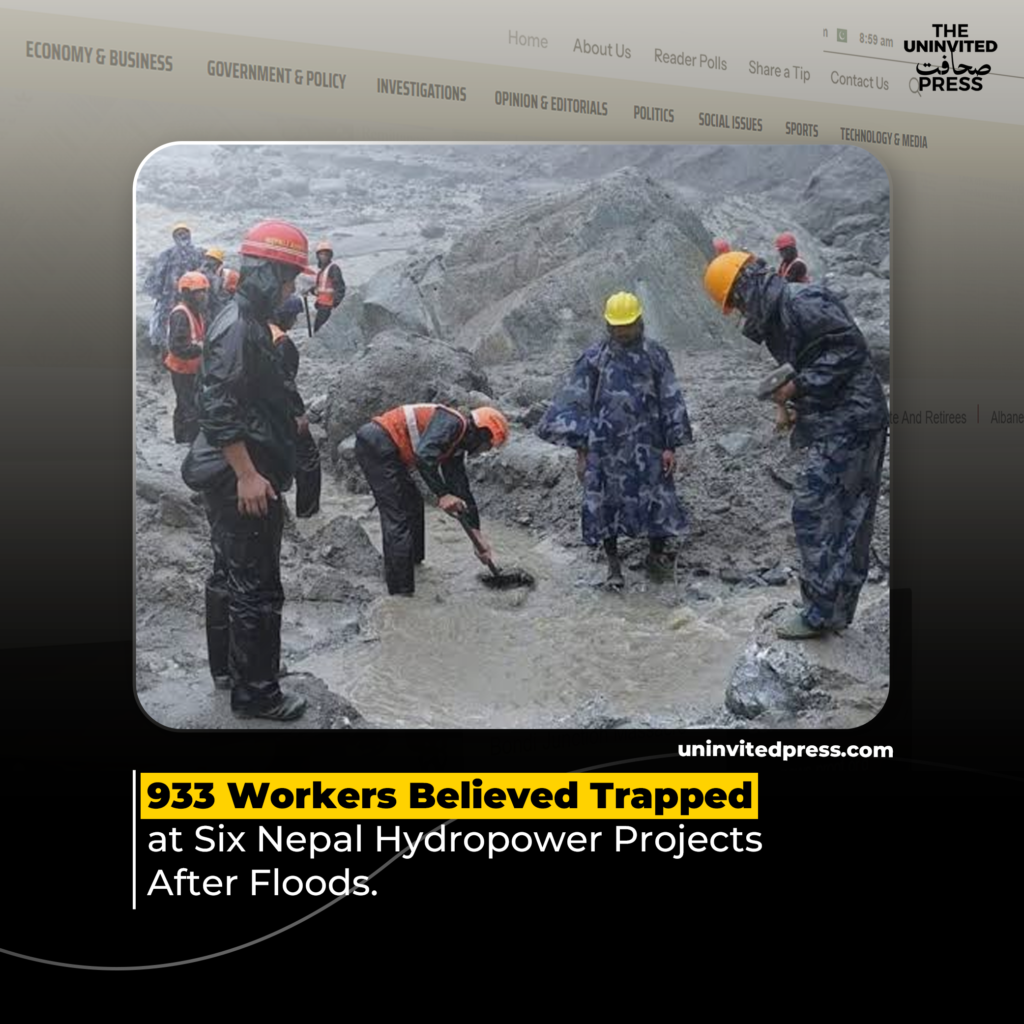
Rescue teams race against time to reach 933 missing workers at multiple projects following glacier-triggered flash floods near Tibet border.
Rescue teams in Nepal, supported by specialists from India and China, are working intensively to reach hundreds of workers believed trapped inside blocked tunnels at hydropower projects after devastating flash floods last week.
Nepal’s National Disaster Risk Reduction and Management Authority has reported that 933 people associated with hydropower projects in the flood-hit region remain missing. Officials said the focus of ongoing operations is on about half a dozen tunnels blocked by mud and rock debris at sites concentrated along the Bhotekoshi and Trishuli rivers in Rasuwa and Nuwakot districts.
The disaster was triggered on Wednesday when a massive ice-rock avalanche or glacial collapse high in the Himalayas near the Nepal-Tibet border unleashed a surge of water, mud and debris that tore through valley towns, villages and construction sites, extending into Chinese territory as well.
Workers Feared Trapped in Mud-Filled Tunnels:
Nepal’s hydropower sector has expanded rapidly in recent years, drawing investment and workers-including Nepali, Indian, Chinese and South Korean nationals-to projects that harness the steep Himalayan rivers. The floods severely damaged multiple facilities, with the highest numbers of missing workers reported at Upper Trishuli-1, followed by sites including Trishuli 3A, Trishuli 3B, Rasuwagadhi, Chilime and Langtang.
Some workers managed to escape or were pulled to safety in the days after the disaster. Videos released by the Nepali Army have shown dramatic rescues from mud-filled tunnels. However, many others are feared still trapped underground, where air and access remain critical concerns. Authorities have indicated that more than 100 workers may still be alive inside certain tunnels, though exact numbers of those confirmed trapped versus missing vary as efforts continue.
At Trishuli 3A, army teams using drills broke through into the upper section of a mud-swamped tunnel, began pumping air and inserted cameras. Progress has been repeatedly hampered by rain, rising river levels and the volume of debris. Heavy machinery, including excavators and hydraulic equipment, has been deployed under difficult conditions, with operations continuing through the night under floodlights.
Thousands Missing After Deadly Nepal Floods:
The overall death toll from the floods has risen into the high hundreds on the Nepali side, with thousands still listed as missing across the affected areas. Chinese authorities have reported additional fatalities and hundreds missing in Tibet’s Gyirong County, including foreign nationals. The Red Cross estimates that more than 90,000 people may have been affected.
Nearly 21,000 security personnel have been mobilised in Nepal’s rescue and relief operations. Families of the missing workers have expressed growing anxiety as days pass, with some holding onto hope that oxygen systems or air pockets inside the tunnels could sustain survivors.
China has linked the glacier instability that triggered the disaster to the effects of global warming. The event has highlighted both the vulnerabilities of infrastructure in a region prone to climate-related hazards and the human cost borne by the labour force that powers Nepal’s energy development ambitions. Rescue operations remain the highest priority, with specialised tunnel teams continuing efforts to clear debris and establish contact with anyone still alive underground.