

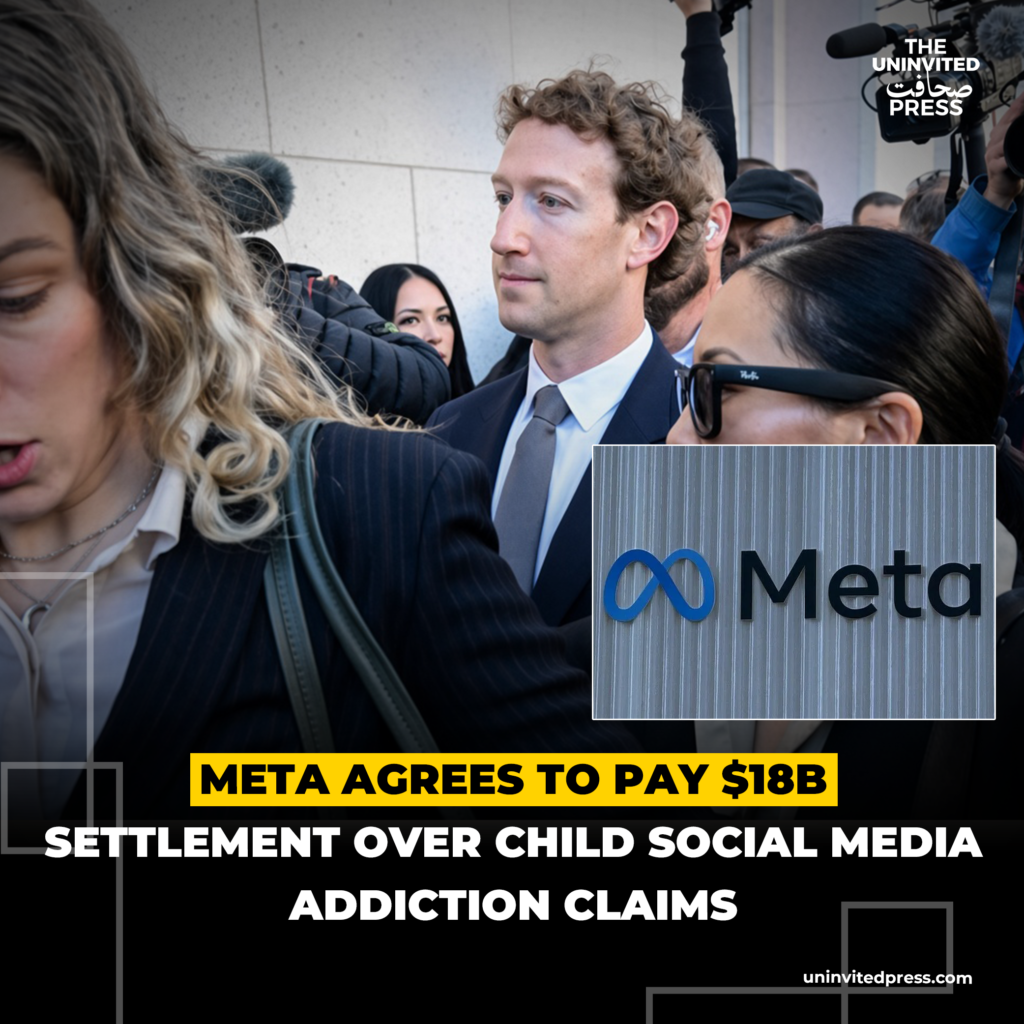
Deal ends landmark trial with Facebook and Instagram parent, imposing daily time limits and other safeguards for teenage users.
Meta Platforms has agreed to pay up to $18 billion and introduce strict new restrictions on how teenagers use Facebook and Instagram, settling claims by dozens of US states that it deliberately designed its social media platforms to addict young users and harm their mental health.
The settlement, announced on Wednesday, resolves a multistate lawsuit that had gone to trial in a federal court in Oakland, California. It covers nearly all US states and territories and ranks among the largest legal payouts ever made by a technology company.
Under the terms, Meta will make maximum payments of approximately $16.7 billion to 47 states, the District of Columbia, Puerto Rico, American Samoa and the Northern Mariana Islands. A separate agreement with Texas adds roughly $1 billion, bringing the potential total to about $18 billion. The money will be paid in annual instalments over a decade and is intended to fund youth online safety programmes and related state initiatives.
New restrictions on teenage use:
As part of the deal, Meta has committed to a series of default safeguards for users under 18 that will remain in place for at least five to 10 years. These include a combined two-hour daily time limit across Facebook and Instagram that only a parent can raise, a night-time block from midnight to 6am, and muted notifications during school hours (typically 8am to 3pm on weekdays).
The company will also introduce mandatory “productive pauses” after periods of continuous scrolling, turn off “like” counts by default on teen posts, strengthen age-assurance systems, and expand parental controls. An independent auditor will monitor compliance and effectiveness.
Meta has said about 30 percent of the settlement-roughly $5.3 billion-will only be paid if YouTube and TikTok adopt comparable time limits, night modes and age-verification measures and make matching payments. The company framed the agreement as an attempt to create an industry-wide standard, arguing that teens move fluidly between apps.
Meta Settlement Targets Social Media Risks to Children:
The states had accused Meta of knowingly designing features that fostered compulsive use, exposing children to content linked to anxiety, depression, body-image issues and other harms, while misleading the public about the platforms’ safety. Some claims also involved the collection of data from underage users without proper parental consent.
Meta did not admit wrongdoing. In a statement, the company said ensuring a safe experience for teens was “an absolute imperative” and that it wanted to “get this right for parents and teens.” Shares rose following the announcement.
Attorneys general from participating states described the outcome as a significant victory for child protection. California Attorney General Rob Bonta called it a “major breakthrough,” while Colorado’s Phil Weiser said the relief obtained went “well beyond what any court has ordered or is likely to order.”
The settlement still requires final court approval. Florida was reported to have rejected the terms, describing the financial component as insufficient. Other social media companies face similar legal pressure over youth mental health, and the deal may increase pressure on them to adopt comparable restrictions.
Critics have long argued that platform design prioritises engagement metrics over user well-being, particularly for developing minds. Supporters of the settlement say the combination of financial accountability and enforceable design changes represents a concrete step toward reducing the documented risks of heavy social media use among children and adolescents.