

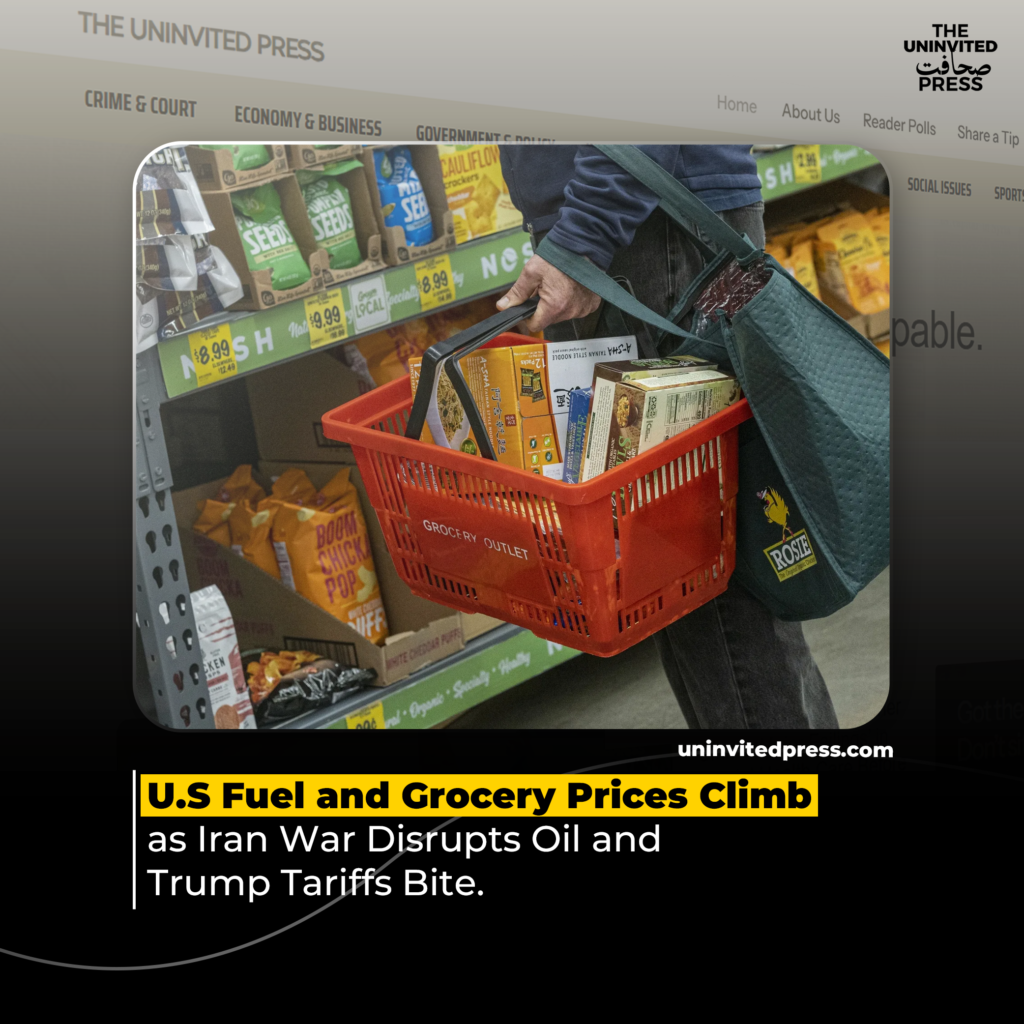
Americans face higher costs at the pump and supermarket amid ongoing Middle East war and trade policies, with households bearing the brunt.
American consumers are contending with rising prices for petrol and everyday groceries, as the protracted conflict involving the United States and Iran continues to disrupt global oil flows while President Donald Trump’s tariff regime compounds cost pressures on imported goods.
US Fuel and Food Prices Rise Amid Iran War:
National average petrol prices have hovered near or above $4 per gallon in recent months, according to tracking by the American Automobile Association (AAA), representing a significant increase from pre-conflict levels earlier in 2026. Diesel prices have climbed even more sharply in some periods, exceeding $5 per gallon at peaks, with direct implications for transportation, logistics and the broader food supply chain. These increases stem largely from volatility in crude oil markets triggered by the war that began in late February, when US and Israeli strikes on Iran were met with retaliatory measures, including restrictions on shipping through the Strait of Hormuz-a chokepoint that normally handles about one-fifth of the world’s seaborne oil.
Oil benchmarks such as Brent crude have swung widely, at times approaching or surpassing $90-$100 per barrel during periods of heightened tension, before moderating with any signs of de-escalation or diplomatic progress. Analysts note that even temporary closures or threats to the strait, combined with naval blockades and attacks on tankers, have tightened global supplies and elevated refining and shipping costs. The effects have cascaded into higher prices for gasoline, diesel and jet fuel in the United States, adding hundreds of dollars annually to the average household’s energy bills, according to estimates from firms such as Moody’s Analytics.
At the same time, grocery prices have faced upward pressure from multiple sources. Higher fuel and diesel costs raise expenses for farming, fertiliser production, trucking and refrigeration. Economists point out that energy can account for 15 to 30 percent of the total cost of food by the time it reaches supermarket shelves. Compounding this, Trump administration tariffs-imposed or adjusted throughout 2025 and 2026 on a range of imports from major trading partners-have increased the cost of certain food items, packaging materials and intermediate goods. While some agricultural products later received exemptions or temporary relief, analysts say the cumulative effect has contributed to sticky food-price inflation, with categories such as beef, coffee, produce and packaged goods showing notable rises in government data.
Consumer advocates and economists observe that lower- and middle-income households feel these increases most acutely, as food and energy constitute a larger share of their budgets. Rural communities, which typically drive longer distances and rely more heavily on diesel for agriculture, have reported particularly sharp impacts. Some reports estimate the combined war-related and policy-driven costs have added well over $1,000 to annual household expenses for many families.
US Living Costs High:
The White House has at times emphasised progress in bringing prices down or highlighted selective relief measures, such as temporary tariff adjustments on certain imports including ground beef, aimed at easing supermarket costs. Administration officials have also argued that tariffs protect domestic industries and that energy-price spikes are temporary consequences of confronting Iran. Critics, including Democratic lawmakers and independent analysts, counter that the conflict and trade policies have prolonged inflationary pressures, undermining earlier campaign promises to lower the cost of living. Inflation metrics, including the Consumer Price Index, have shown energy as a primary driver of recent upticks, with core measures also reflecting secondary effects.
Global energy markets remain sensitive to developments in the Middle East. Any escalation risks further supply disruptions, while progress toward negotiations or reopening of shipping routes has occasionally brought temporary relief to oil prices. Yet experts caution that even after military tensions ease, elevated fuel and food costs can linger due to supply-chain lags, depleted inventories and the time required for prices to fully adjust at the retail level.
For ordinary Americans, the dual pressures of geopolitics and trade policy have translated into tangible strain at the filling station and checkout counter. As the conflict enters its sixth month and tariff regimes continue to evolve, the question of how quickly-or whether-prices will ease remains tied to both diplomatic outcomes in the Middle East and domestic economic decisions in Washington.