

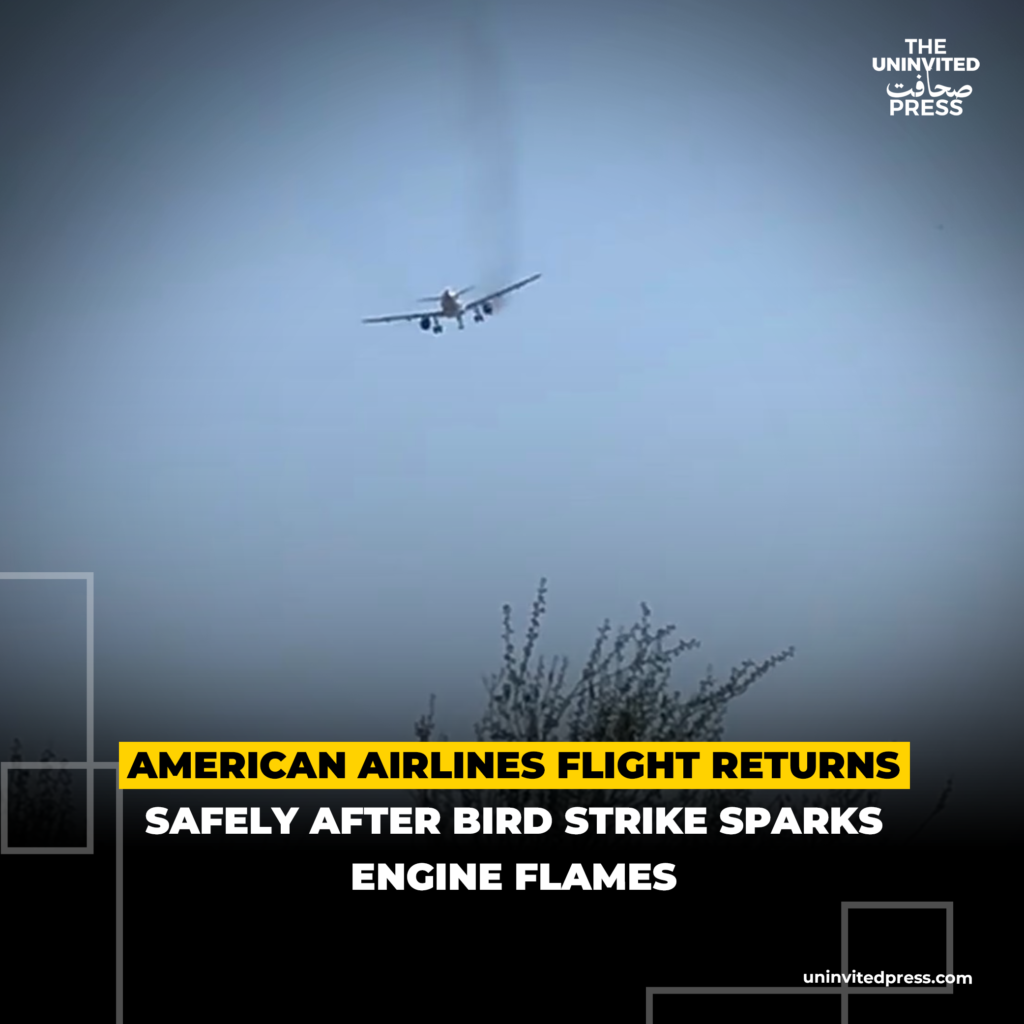
Boeing 737 makes emergency landing in Myrtle Beach with no injuries after mayday call and dramatic passenger footage of flames.
An American Airlines flight bound for Charlotte, North Carolina, returned safely to Myrtle Beach International Airport on Monday after a bird strike shortly after takeoff caused visible flames to shoot from one of its engines.
Flight 1760, a Boeing 737-800 carrying approximately 172 passengers and crew, departed Myrtle Beach around 8:11 a.m. local time. Within minutes, the pilots reported an engine problem and declared a mayday. Air traffic control recordings captured the urgency: “Mayday, mayday, mayday, we got an engine problem here.” Another pilot monitoring the radio reported seeing birds enter the left-side engine.
American Airlines Flight Returns After Bird Strike:
Passenger videos circulated widely showed bursts of orange flames emerging from beneath the left wing as the aircraft flew over water. Witnesses on the nearby beach also reported loud popping sounds and flashes of fire. Inside the cabin, travellers described a loud bang followed by significant shaking and rumbling. One passenger said the noise was intense enough that they asked a companion to cover a child’s ears.
The aircraft circled and landed safely back at Myrtle Beach around 8:40 a.m., less than 30 minutes after departure. Airport ground crews later found bird remains and debris on the runway. American Airlines confirmed the plane had returned due to a “maintenance issue,” landed without incident, and was taken out of service for inspection by maintenance teams. Passengers were transferred to a replacement aircraft to continue to Charlotte. No injuries were reported.
The airline stated there was no indication of a sustained fire within the engine itself; the visible flames were consistent with birds being ingested and combusting. The US Federal Aviation Administration said the crew reported striking a bird during departure and confirmed it is investigating the incident.
Safe Landing Highlights Importance of Crew Training:
Bird strikes remain a persistent hazard in commercial aviation. Modern jet engines are designed to withstand significant impacts, yet strikes can still cause sudden power loss, vibrations or temporary flames. According to FAA data, thousands of wildlife strikes-the vast majority involving birds-are reported across the United States each year, with higher risks during migration seasons and near coastal or wetland airports.
The successful outcome of Flight 1760 underscores the effectiveness of crew training and emergency procedures. Pilots quickly diagnosed the issue, declared the emergency, and returned the aircraft under control. Passengers later praised the calm professionalism of the flight crew during the brief but unsettling ordeal.
While the plane has been grounded for thorough inspection, the incident serves as a routine yet vivid reminder of the everyday challenges of operating commercial aircraft in environments shared with wildlife. For the passengers who experienced the flames and turbulence, the safe return to Myrtle Beach marked a fortunate end to what could have been a far more serious situation.