

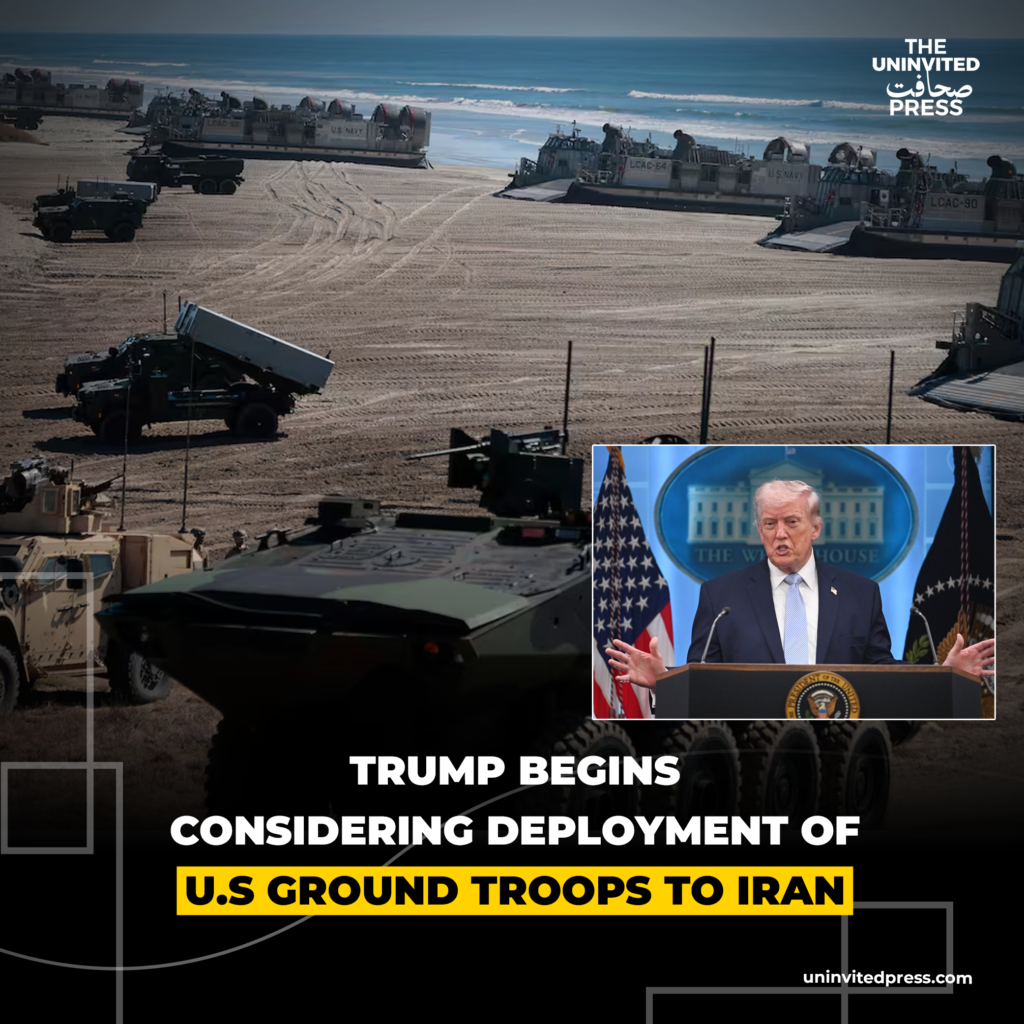
The Trump administration is reportedly evaluating limited military operations, including potential ground force options, as tensions with Iran continue to mount. Officials say no final decision has been made, while growing fears of a wider regional conflict fuel calls for restraint.
As tensions in the Middle East reach a boiling point following weeks of intense military exchanges between the United States, Israel, and Iran, reports have emerged that President Donald Trump is privately exploring options for deploying US ground troops into Iranian territory.
The discussions come at a critical juncture in what has become a multi-front conflict, with Iranian forces suffering significant losses in naval capabilities and infrastructure, according to US officials. Images circulating online, including military equipment staged on beaches reminiscent of amphibious assault preparations, have fuelled speculation about potential US incursions.
Strategic calculations and regional fallout:
Sources familiar with the White House deliberations indicate that Trump has shown interest in using ground forces to secure key sites, such as oil export facilities on Kharg Island or to neutralise remaining Iranian nuclear capabilities. However, the president has publicly downplayed the prospect of a large-scale invasion, describing it as a “waste of time” given Iran’s weakened position.
“We’ve lost everything. They’ve lost their navy,” Trump reportedly told media outlets, while stopping short of ruling out targeted operations.
For Iran and its allies across the region, any deployment of US boots on the ground would cross a dangerous threshold. Iranian officials have warned that such a move would invite fierce resistance and potentially ignite a broader regional conflagration involving proxy militias in Iraq, Syria, Lebanon, and Yemen.
Analysts warn that a US ground presence could mirror the prolonged and costly engagements of the past in Iraq and Afghanistan, with unpredictable consequences for civilian populations already reeling from strikes and economic sanctions.
Trump Weighs Military Escalation:
In Tehran and other Iranian cities, residents express a mix of defiance and apprehension. “The Americans think they can come here like they did in Iraq,” said one shopkeeper who declined to be named for fear of reprisal. “But this is different. This land will not be easy for them.”
Neighbouring countries, including Gulf states with close US ties, are watching developments nervously. While some quietly support efforts to curb Iranian influence, others fear the disruption to oil flows through the Strait of Hormuz could send global energy prices soaring.
The deliberations reflect Trump’s long-standing “maximum pressure” approach toward Iran, now accelerated by ongoing hostilities. Reports suggest the Pentagon is preparing contingency plans that could involve thousands of additional troops beyond those already stationed in the region, potentially including special operations forces for targeted raids.
Critics, including some within the US foreign policy establishment, question whether ground deployments align with stated goals of regional stability or risk entangling America in another endless Middle East conflicts.