

Military exchanges between Iran and the US continue despite international calls for restraint. The crisis threatens regional stability and one of the world’s most vital shipping routes.
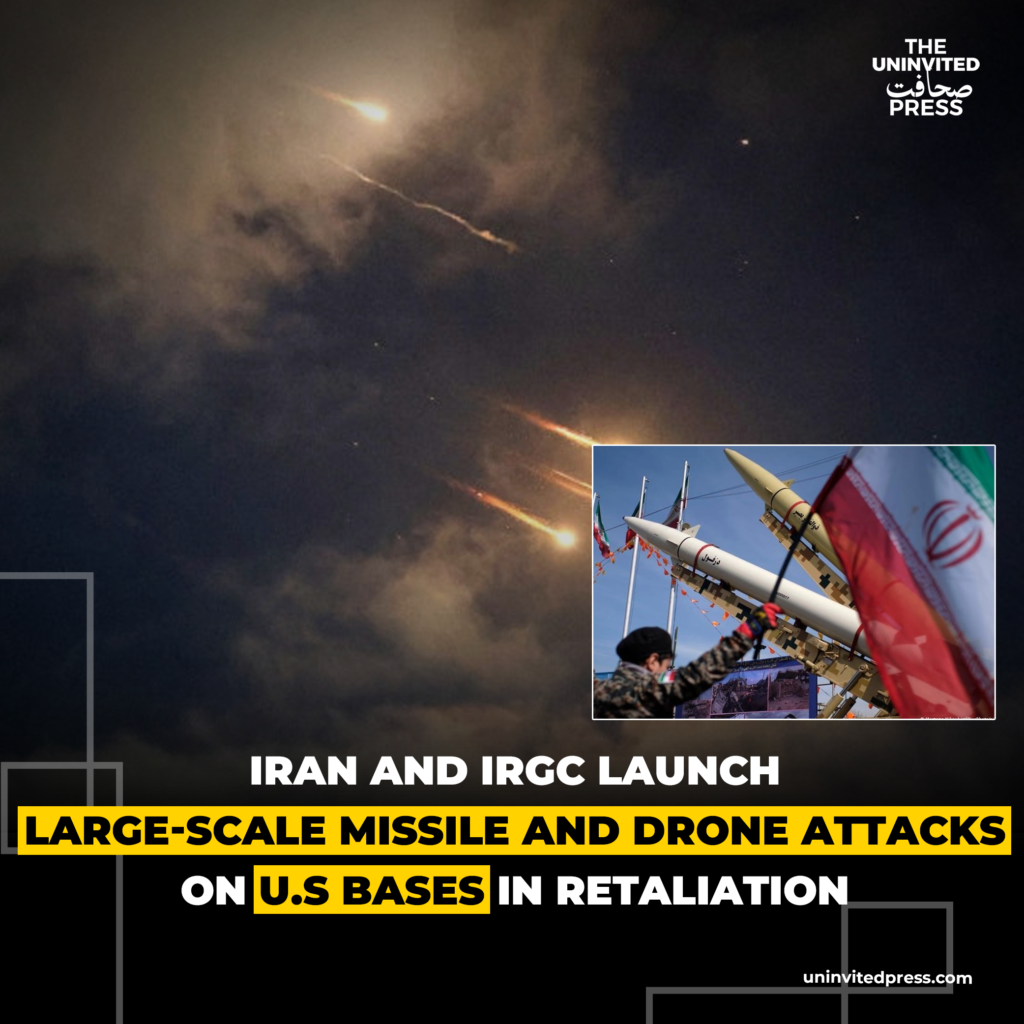
Iran’s Islamic Revolutionary Guard Corps (IRGC) has carried out a major retaliatory operation involving ballistic missiles and drones targeting multiple US military facilities across Gulf states, escalating a dangerous cycle of direct confrontation between Tehran and Washington.
The IRGC described the strikes as a direct response to recent US attacks on Iranian targets, which Washington said were aimed at degrading Iran’s ability to threaten shipping in the strategically vital Strait of Hormuz. Iranian state media reported successful hits on US-linked bases in countries including Kuwait, Bahrain, Jordan, and others, with footage showing missile trails lighting up the night sky.
In a statement, the IRGC said its Aerospace Force targeted key infrastructure, including command centres, drone hangars, radar systems, and ammunition depots used by US forces. Regional allies reported intercepting incoming projectiles, with sirens sounding and defensive systems activated in several Gulf capitals.
Largest Assault of Current Conflict:
The latest exchange follows US Central Command’s announcement of fresh strikes on Iranian military sites, part of an ongoing campaign triggered by Iranian actions against commercial vessels in the Strait of Hormuz. Iran has repeatedly threatened to close the narrow waterway-a lifeline for global energy supplies-in response to perceived aggression.
US officials have described their operations as “defensive” and limited, aimed at protecting freedom of navigation. However, Iranian leaders, including senior IRGC commanders, have framed the US actions as a declaration of war, vowing broader retaliation if attacks continue.
The barrage marks one of the largest direct Iranian assaults on US-associated targets in the current round of hostilities. Reports from the region mention fires and damage at several sites, though full casualty figures and extent of destruction remain unconfirmed amid a fog of competing claims.
Gulf on High Alert:
Gulf states hosting US forces, including Kuwait and Bahrain, have condemned the Iranian attacks on their territory while activating air defences. Jordan also reported interceptions. The strikes risk drawing more countries into the conflict and disrupting oil flows, already under pressure from the Hormuz tensions.
This escalation occurs against a backdrop of a fragile ceasefire that had briefly held following earlier rounds of fighting. Analysts warn that the tit-for-tat strikes could spiral into a full-scale regional war, with devastating consequences for energy markets, civilian populations, and stability across the Middle East.
Iran’s Supreme Leader and military commanders have signalled resolve, while the United States has reiterated its commitment to defending its forces and allies. Diplomatic efforts by international mediators appear stalled as both sides dig in.
As missiles and drones streak across Gulf skies, the world watches anxiously. The coming hours and days will be critical in determining whether this latest flare-up can be contained or will ignite a broader conflagration.