

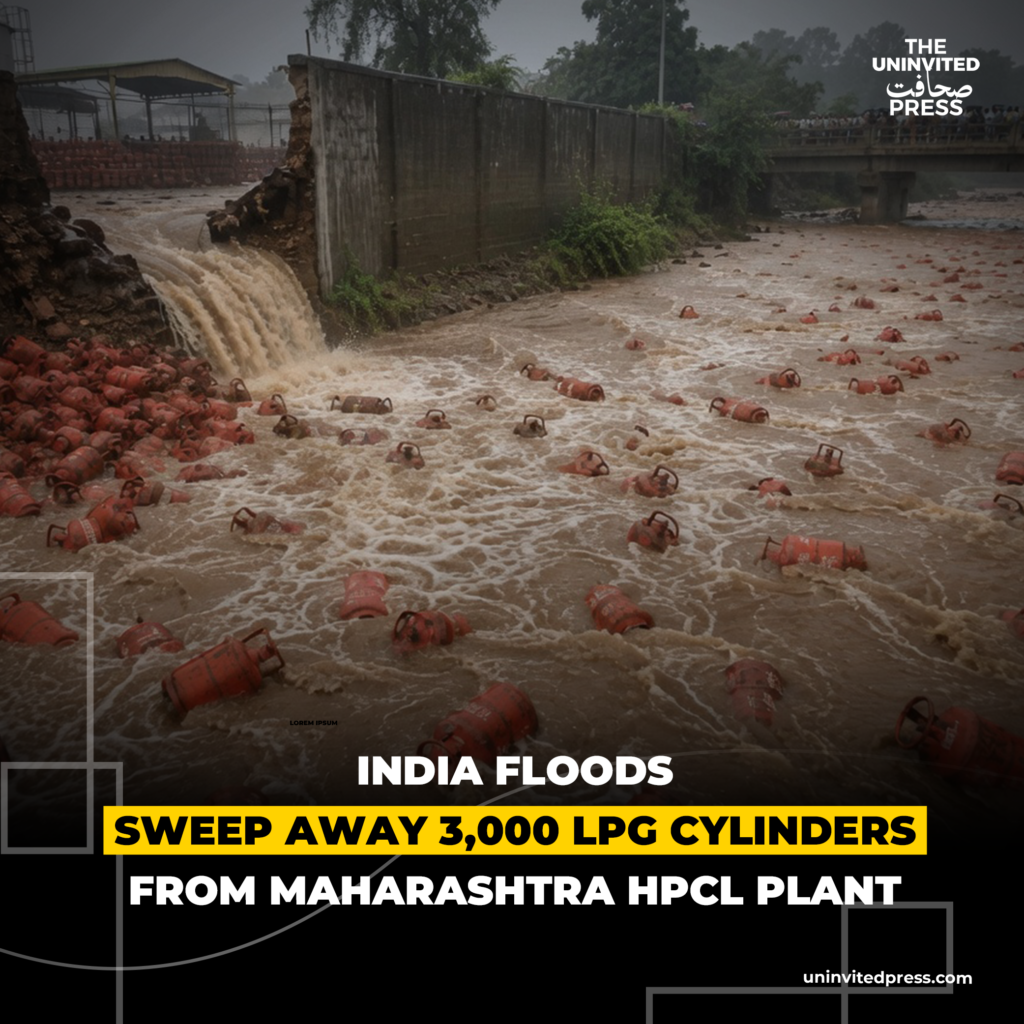
Heavy monsoon rains trigger severe flooding in western India, washing away around 3,000 liquefied petroleum gas cylinders and raising fears of environmental and safety hazards.
Torrential monsoon rains have triggered devastating floods in parts of Maharashtra, sweeping away approximately 3,000 LPG cylinders from a Hindustan Petroleum Corporation Limited (HPCL) plant, officials and local authorities confirmed.
Images from the affected industrial area show muddy floodwaters gushing through the facility, carrying bright red gas cylinders downstream like debris in a raging river. The incident has sparked concerns over potential explosions, water contamination, and disruptions to domestic gas supplies in the region.
Authorities Race to Recover LPG Cylinders:
Authorities have launched urgent recovery operations, deploying teams to retrieve the floating and submerged cylinders. HPCL stated that emergency protocols were activated immediately after the flooding breached containment areas at the plant.
“Most cylinders are designed with safety valves, but their uncontrolled movement in floodwaters poses serious risks,” said a senior disaster management official who spoke on condition of anonymity. “We are working round the clock with local administration to secure them before they cause secondary disasters.”
Environmental experts warned that any leakage from damaged cylinders could contaminate local water bodies and soil, compounding the already severe impact of the floods on agriculture and drinking water sources.
Maharashtra has been battered by unusually heavy rainfall this season, with several districts recording more than 200 percent of their average precipitation. Rivers and streams have overflowed, inundating low-lying areas, damaging infrastructure, and displacing thousands of residents.
The floods come as India grapples with the increasing frequency and intensity of extreme weather events linked to climate change. Scientists have noted that warming oceans and changing atmospheric patterns are making monsoon rains more erratic and violent.
Local residents described chaotic scenes as floodwaters rapidly rose, forcing many to abandon homes and belongings. “We have seen floods before, but nothing like this,” said Ramesh Patil, a farmer from a nearby village. “The water took everything in its path.”
Maharashtra Floods Raise Safety Concerns:
The Maharashtra government has deployed the National Disaster Response Force (NDRF) and state rescue teams to the affected regions. Chief Minister Devendra Fadnavis is reported to have reviewed the situation and directed officials to prioritise the safety of residents and containment of the gas cylinders.
Compensation packages for affected families and support for damaged infrastructure are expected to be announced soon. The central government in New Delhi has also been apprised of the developing crisis.
This is not the first time industrial facilities in flood-prone areas have been impacted. Similar incidents in previous years have raised questions about the location and resilience standards of chemical and energy installations in vulnerable zones.
Beyond the immediate safety concerns, the loss of thousands of LPG cylinders is likely to cause short-term shortages in cooking gas supply across Maharashtra, affecting millions of households that rely on subsidised LPG for daily needs.
As rescue and recovery efforts continue, meteorologists have forecast more rain in the coming days, urging residents in low-lying and riverside areas to remain vigilant.