

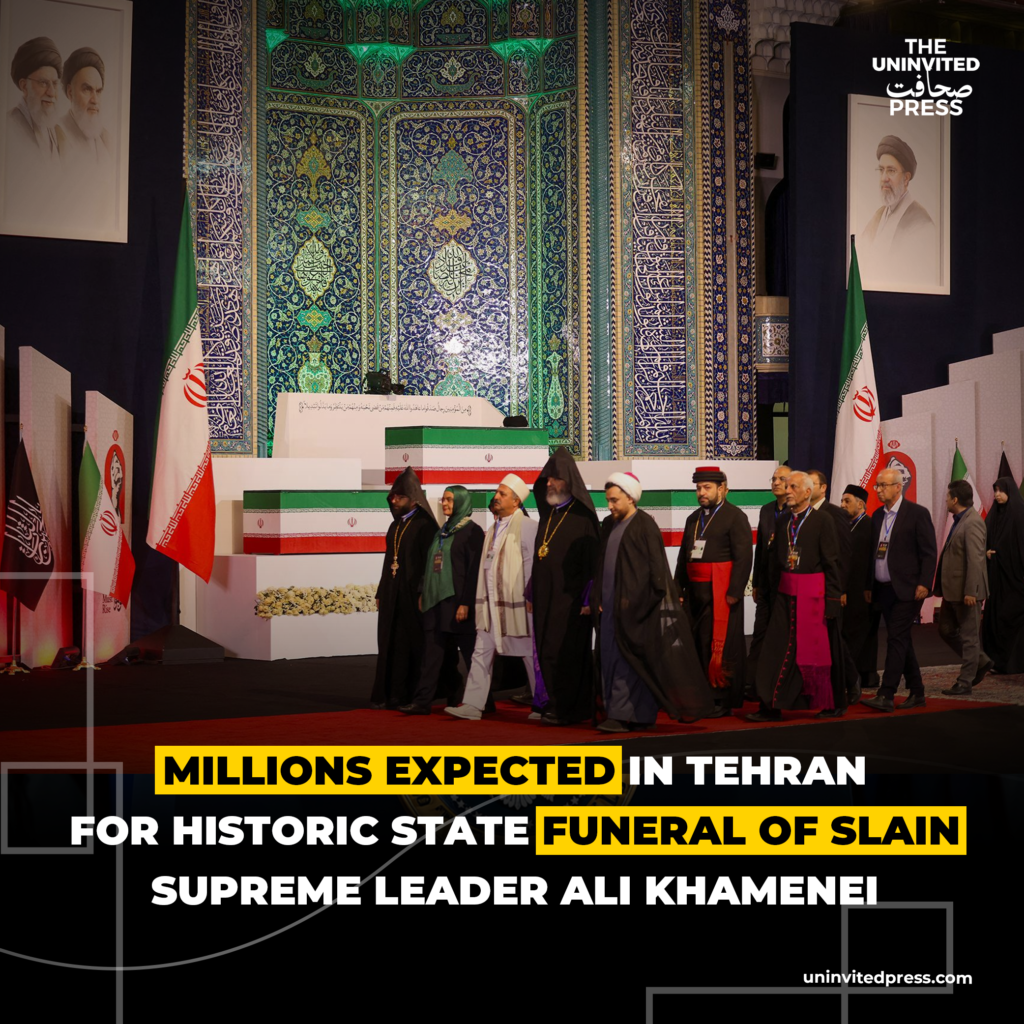
Iran begins multi-day mourning ceremonies following assassination during US-Israeli war, with processions planned across cities and foreign dignitaries in attendance.
Iran has launched days-long national mourning for Ayatollah Ali Khamenei, the country’s Supreme Leader for 36 years, who was assassinated in a joint US-Israeli strike in late February. Officials expect millions of mourners to flood Tehran and other cities for what state media has described as a historic funeral.
Khamenei’s coffin, along with those of slain family members, was placed on display at a major mosque in Tehran on Friday, drawing crowds of mourners waving flags and chanting slogans. A massive procession is scheduled for Monday from Imam Hossein Square to Azadi Square, with further events planned in Qom, Mashhad, and Iraqi Shia shrine cities of Kerbala and Najaf.
Tehran’s mayor has estimated that up to 20 million people could attend ceremonies in the capital alone, more than doubling its population. Nationwide figures suggest 18 to 35 million may participate across multiple sites.
Tight Security for Funeral:
Authorities have imposed heavy security measures amid fears of potential attacks during the high-profile gatherings, which will also host delegations from over 100 countries.
The funeral comes months after Khamenei’s death on February 28, which Iranian officials attribute to US-Israeli airstrikes at the outset of the 2026 war. The delay allowed time for elaborate preparations, turning the events into a show of national resilience and unity.
Khamenei’s son, Mojtaba Khamenei, who succeeded him as Supreme Leader, has not appeared publicly during the mourning period. Wounded in the February strike, he has remained largely in hiding, communicating primarily through written statements. It is unclear if he will make a public appearance during the funeral events.
Debate Over Khamenei’s Rule:
The funeral ceremonies have also renewed scrutiny of Khamenei’s decades-long leadership, his influence over Iran’s political system, and the country’s role in regional affairs. Supporters describe him as a leader who upheld the principles of the 1979 Islamic Revolution, strengthened Iran’s military capabilities, and maintained resistance against Western pressure despite years of sanctions and international isolation.
Critics argue that his tenure was marked by increased political repression, economic hardship, and a concentration of power within Iran’s religious establishment. Questions have also resurfaced over the financial resources linked to institutions operating under the Supreme Leader’s authority, including Setad, a powerful economic organization that has long faced allegations of controlling extensive assets. Iranian authorities have consistently rejected accusations of personal enrichment, maintaining that such institutions are used to support charitable and state-related initiatives.
As Iran enters a new political chapter following the recent conflict and leadership transition, the funeral is expected to carry significance beyond a ceremonial farewell. Analysts say the event is likely to project continuity within the Islamic Republic’s leadership while reinforcing the state’s message of stability, resilience, and unity during a period of heightened domestic and regional uncertainty.