

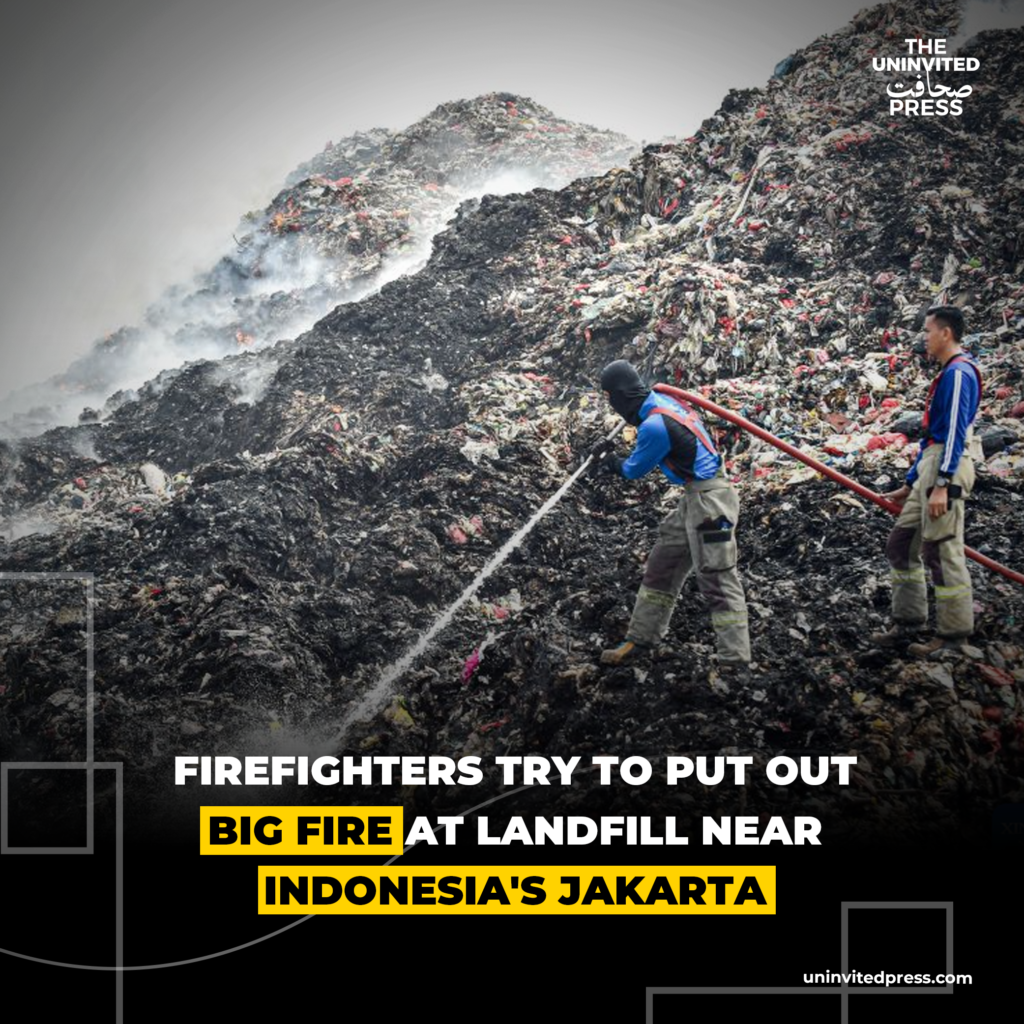
Blaze at Jatiwaringin site in Tangerang highlights chronic waste management challenges in densely populated capital region.
Indonesian authorities have intensified efforts to contain a large fire at a major landfill on the outskirts of Jakarta, deploying water-bombing helicopters and dozens of firefighters as thick smoke billows over residential areas and the blaze enters its third day.
The fire broke out on Tuesday at the Jatiwaringin landfill in Tangerang Regency, Banten Province, scorching several hectares of accumulated waste and forcing the evacuation of nearby residents, officials said.
Footages show firefighters in protective gear navigating steep, smouldering mounds of garbage, directing hoses into the flames while heavy smoke obscures the horizon.
Methane Blamed for Blaze:
The National Disaster Mitigation Agency (BNPB) reported that the fire has affected approximately 7 to 15 hectares of the landfill, with strong winds and the highly flammable nature of the waste complicating containment efforts.
Two water-bombing helicopters have been deployed to support ground operations involving around 45 firefighters and multiple fire trucks. BNPB head Lt. Gen. Suharyanto warned that the fire remains uncontained and could spread further due to the terrain and volume of debris.
Local environmental groups, including WALHI, criticised what they described as systemic failures in waste management, pointing to overcrowded landfills and insufficient recycling infrastructure as root causes of such recurrent incidents.
The exact ignition source of the Jatiwaringin landfill fire remains under investigation, but officials and environmental experts attribute it primarily to the buildup of methane gas from decomposing organic waste.
- Methane accumulation: Landfills like Jatiwaringin use open dumping, where large amounts of organic waste (food scraps, etc.) decompose anaerobically, producing highly flammable methane gas. This creates “hot spots” deep within the waste piles.
- High temperatures and weather: Prolonged heat and dry conditions in the region likely helped ignite the gas. Strong winds then rapidly spread the flames across the flammable mix of plastics, paper, and other materials.
- Structural challenges: The towering, compacted waste heaps make it difficult for water to reach smouldering areas underground, allowing the fire to persist and reignite.
No official confirmation of arson, electrical faults, or lightning as the direct trigger has been widely reported, though some early mentions noted sparks during stormy weather in the broader area.
Smoke Sparks Health Alerts:
Residents in surrounding communities have reported respiratory issues, with at least 150 cases of acute respiratory infections linked to the smoke. Authorities have distributed masks and advised vulnerable populations to stay indoors.
The Jatiwaringin site is one of several landfills serving the greater Jakarta metropolitan area, which generates thousands of tonnes of waste daily. Environmental advocates have long called for a shift toward modern waste processing facilities and reduced reliance on open dumping.
This latest fire comes amid broader pressures on Indonesia’s waste management systems, as rapid urbanisation and population growth strain existing infrastructure in one of Southeast Asia’s most populous nations.
Officials say efforts will continue around the clock until the blaze is fully extinguished, while investigations into the cause of the fire are underway.