

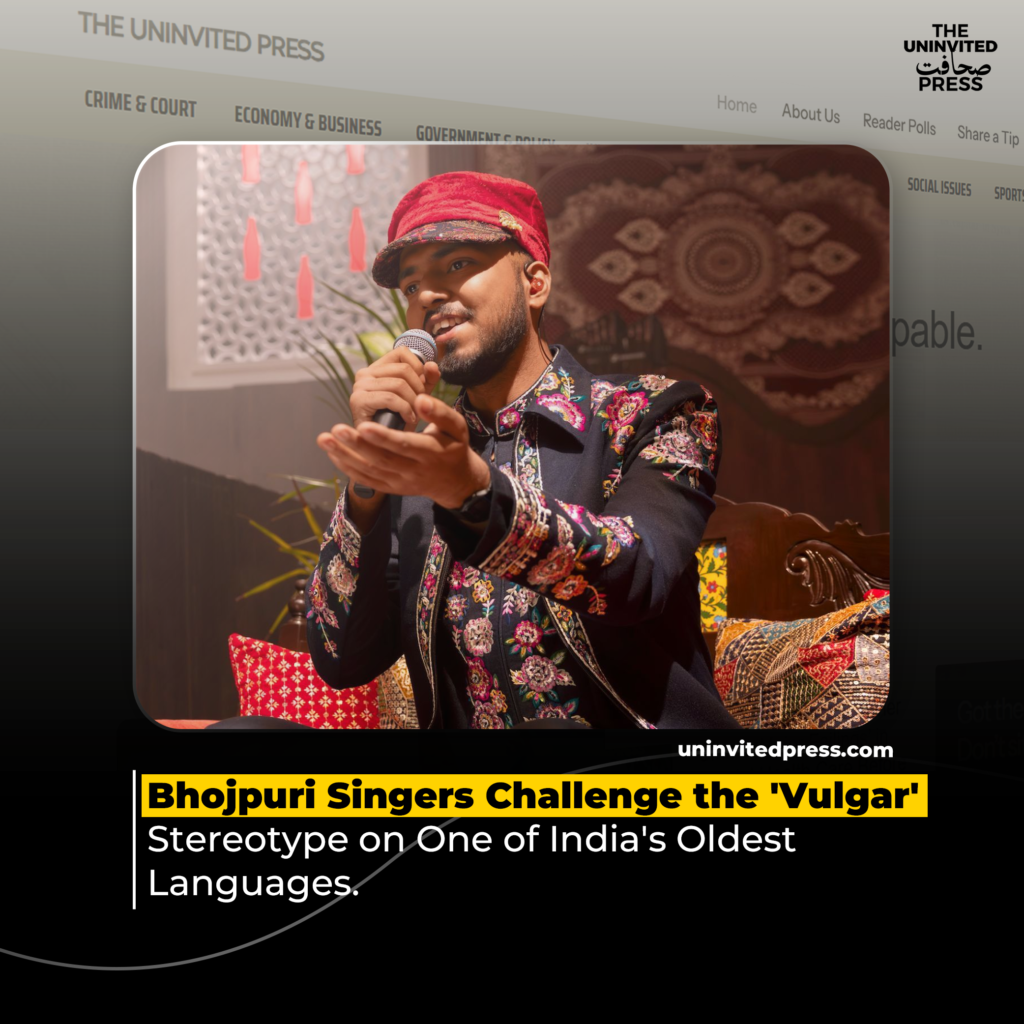
Emerging artists draw on folk roots and modern sounds to reclaim the linguistic and cultural richness of Bhojpuri amid a dominant commercial image.
For decades, Bhojpuri-a language spoken by tens of millions across Bihar, eastern Uttar Pradesh and migrant communities worldwide-has been overshadowed by a popular music industry often criticised for its reliance on sexual innuendo, double entendres and misogynistic tropes. Now, a new generation of singers is actively challenging that narrow perception, seeking to highlight the language’s deep literary, devotional and poetic heritage.
Through platforms like Coke Studio and independent releases, artists are presenting alternative visions of Bhojpuri music that resonate beyond the stereotypes, sparking conversations about cultural identity and representation in India’s diverse linguistic landscape.
New Generation of Artists Redefines Bhojpuri Music:
Bhojpuri boasts a centuries-old tradition of folk songs, poetry and storytelling that reflect the lived experiences of rural communities, devotion and social realities. Yet for many urban Indians and global audiences, the language is primarily associated with raunchy, mass-market Bhojpuri songs and films that dominate YouTube and regional entertainment circuits.
“It hurts when you are deeply connected to the music of your roots, yet others perceive it poorly,” folk singer Utpal Udit told the BBC. His collaboration on Kachaudi Gali with Rekha Bhardwaj in a recent Coke Studio Bharat episode brought national attention, showcasing soulful, narrative-driven Bhojpuri that draws from traditional forms while appealing to broader audiences.
Udit and others argue that the commercial dominance of explicit content has unfairly tainted perceptions of the entire language, reducing a vibrant cultural expression to caricature.
Not all efforts to reshape the narrative look backward. Rapper Sanket Shikriwal has emerged as a distinctive voice in India’s independent hip-hop scene, infusing Bhojpuri with contemporary beats, street language and social commentary. His work challenges assumptions about what Bhojpuri music “should” sound like, blending tradition with urban realities.
This dual approach-one rooted in folk revival, the other in modern experimentation-reflects a broader push within Bhojpuri-speaking regions to diversify artistic output and counter the industry’s reputation for “ashleel” (vulgar) content.
Artists Lead Campaign to Restore Bhojpuri’s Cultural Image:
Folk singer and political satirist Neha Rathore has been vocal about the need for a cultural movement to preserve Bhojpuri’s dignity. She has criticised the political mainstreaming of artists associated with explicit material, calling for greater awareness and responsible representation.
Authorities in Bihar have occasionally cracked down on the public broadcast of obscene songs, particularly around festivals, but enforcement remains inconsistent. Many artists and listeners stress that the problem lies not with the language itself-which has produced revered poets and devotional works-but with unchecked commercial incentives that prioritise views and revenue over substance.
The efforts of these singers come at a time when regional languages in India are navigating globalisation, migration and digital media. Bhojpuri, like many mother tongues, carries the emotional weight of home, migration and identity for millions. Its stereotyping, critics say, marginalises speakers and diminishes a living cultural archive.
By bringing nuanced, emotionally resonant and socially aware music to the fore, artists like Udit and Shikriwal are not only expanding artistic possibilities but also asserting that Bhojpuri-one of India’s oldest and most expressive languages-cannot be defined by its most commercially successful, and often most criticised, expressions alone.