

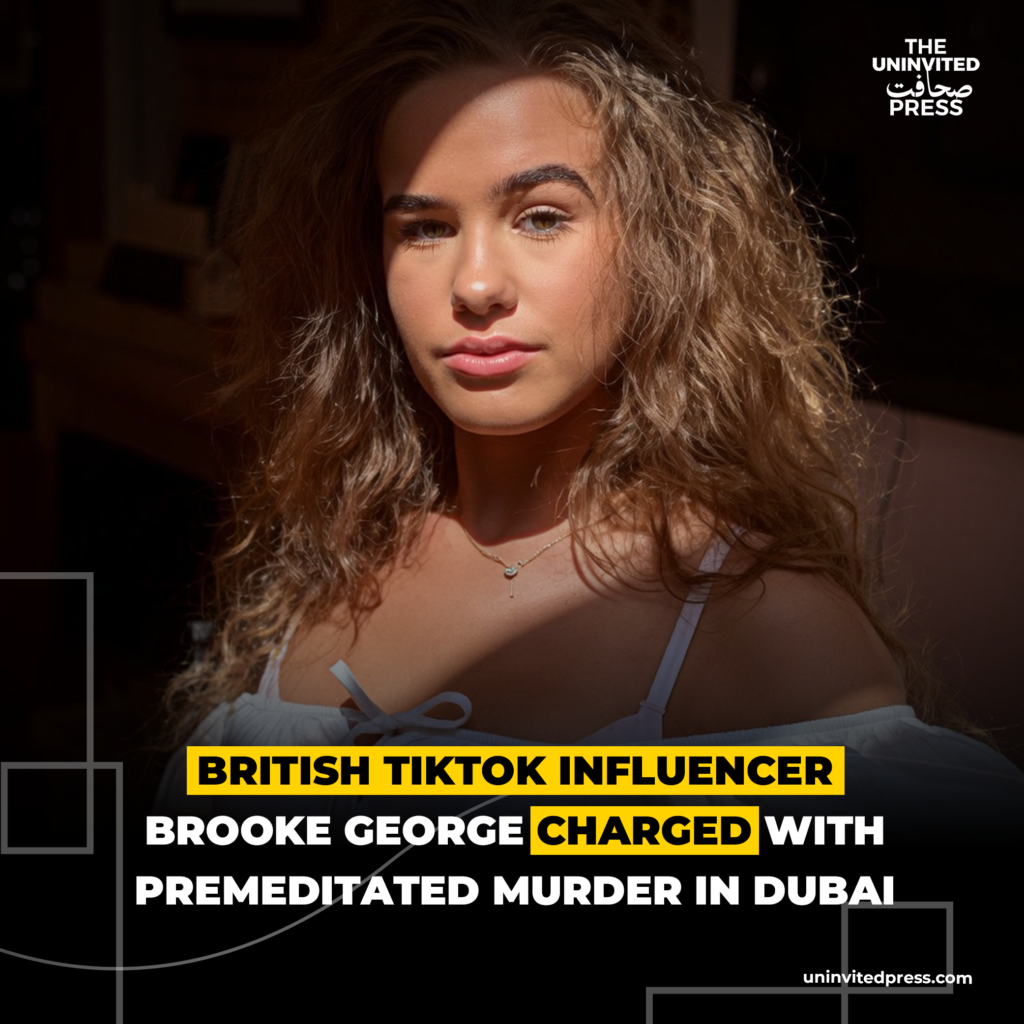
Brooke George claims self-defence in case highlighting risks faced by women in abusive relationships in the UAE.
A 23-year-old British social media influencer has been charged with premeditated murder in Dubai after allegedly stabbing her partner to death, a case that has drawn attention to the UAE’s strict legal system and the potential for severe penalties, including execution.
Brooke George, a TikTok creator from Gravesend in Kent, England, was arrested on June 22, 2026, and charged with the murder of a 26-year-old British man she met online. If convicted, she could face execution by firing squad, according to human rights advocates assisting her case.
Claims of domestic abuse and self-defence:
According to Detained in Dubai, an advocacy group supporting George, the pair connected on Facebook and she travelled to Dubai to visit the man. The relationship allegedly deteriorated during her second visit, with George claiming repeated physical assaults and controlling behaviour, including the withholding of her passport.
Advocates say George was attacked while attempting to retrieve her documents and leave the country. In the confrontation, she allegedly picked up a kitchen knife in self-defence, resulting in the fatal stabbing. The group has described the incident as a case of domestic violence and is calling for her release on bail and a fair trial that takes these circumstances into account.
George, a former department store worker with a significant following on TikTok, has been held at Bur Dubai Police Station. Details about the victim’s identity have been reported variably in media, with some outlets naming him in connection to the case.
British TikTok Influencer’s Dubai Murder Case Draws Global Attention:
The United Arab Emirates maintains strict laws on violent crimes, where premeditated murder carries the possibility of the death penalty. Human rights organisations have long criticised aspects of the UAE’s judicial system, particularly regarding due process, treatment of detainees, and the application of capital punishment in cases involving foreigners.
Cases involving British nationals in the Gulf often attract significant diplomatic attention, with the UK Foreign, Commonwealth & Development Office typically providing consular assistance. George’s situation echoes previous high-profile detentions of Westerners in the region, where cultural and legal differences can complicate resolutions.
Detained in Dubai has positioned the case as one requiring urgent intervention, emphasising the need to treat it through the lens of domestic abuse rather than premeditated murder. The organisation assists foreigners facing what it describes as unjust detention or prosecution in the UAE.
George’s online presence as a content creator adds another layer to the story, with her arrest sparking discussions on platforms about safety for women travelling for relationships initiated online, as well as the broader challenges of seeking justice in foreign jurisdictions.
As the investigation proceeds, her family and supporters are appealing for public awareness and pressure to ensure a transparent legal process. UAE authorities have not yet issued detailed public statements on the case beyond the charges filed.