

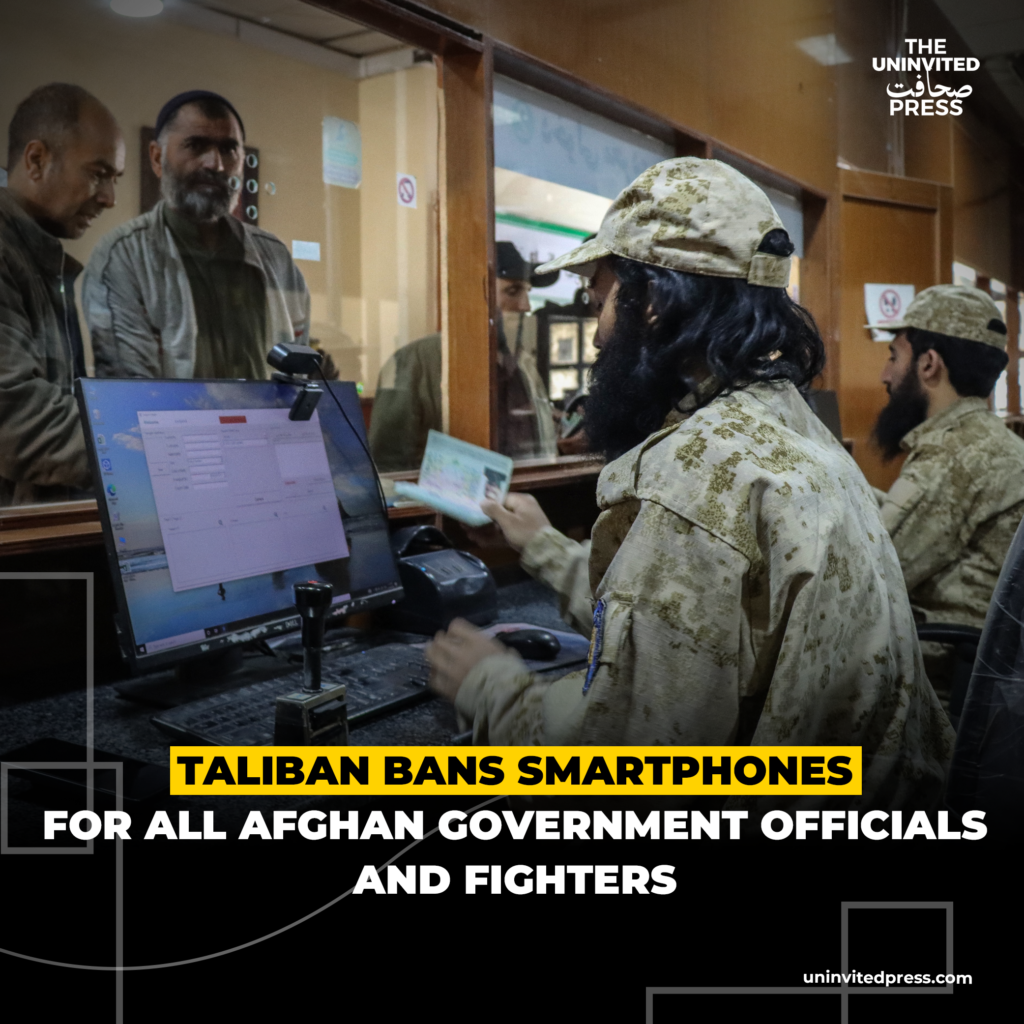
Move seen as latest crackdown on information access and security concerns, with fears it could extend to civilians.
Afghanistan’s Taliban government has ordered a sweeping ban on the use of smartphones by all government officials, military personnel and fighters, in a move that has sparked concern among rights groups about further restrictions on information and personal freedoms in the country.
The directive, issued through the Taliban’s military courts and attributed to Supreme Leader Hibatullah Akhundzada, prohibits officials at all levels-from high-ranking commanders to administrative staff-from using smartphones, with violators facing confiscation, destruction of devices and potential Sharia-based punishments.
Security and discipline cited as reasons:
According to documents reviewed by multiple outlets, the ban aims to prevent security breaches, leaks of sensitive information, and what the Taliban views as distractions or moral risks associated with internet-enabled devices. Officials have been instructed to switch to basic mobile phones for communication.
Reports indicate that the order, which began taking effect in mid-June 2026, has led to public displays of compliance, with videos circulating online showing Taliban members smashing their smartphones with hammers in several provinces. Implementation appears uneven across the country, with stricter enforcement in some areas like Kandahar and Ghazni.
Taliban Smartphone Ban Sparks Rights Concerns in Afghanistan:
Analysts and rights activists warn that the ban on officials could foreshadow wider curbs on smartphone use among the general population, similar to previous Taliban measures limiting internet access, media and women’s rights. In some regions, the restrictions have already reportedly extended to teachers, students, medical workers and civilians.
The move comes amid the Taliban’s ongoing efforts to consolidate control and enforce a strict interpretation of Islamic law since returning to power in 2021. Critics argue it further isolates Afghanistan and hampers government functionality in an increasingly digital world.
Civil servants and fighters have expressed frustration over the policy, which complicates daily administrative tasks and communication, though many comply out of fear of punishment. The Taliban has not issued a detailed public explanation, and spokespersons have not responded to requests for comment from international media.
The ban highlights the tension between the Taliban’s ideological goals and the practical needs of running a modern state. Many government offices and institutions had increasingly relied on smartphones and digital tools for coordination, record-keeping and service delivery.
Human rights organisations have condemned the directive as another step in the erosion of civil liberties in Afghanistan. The development is likely to draw further scrutiny from the international community, which has repeatedly criticised the Taliban’s governance on issues ranging from women’s education to media freedom.