

Request comes amid congressional pushback on war powers and growing scrutiny over the financial toll of US military involvement in the Middle East.
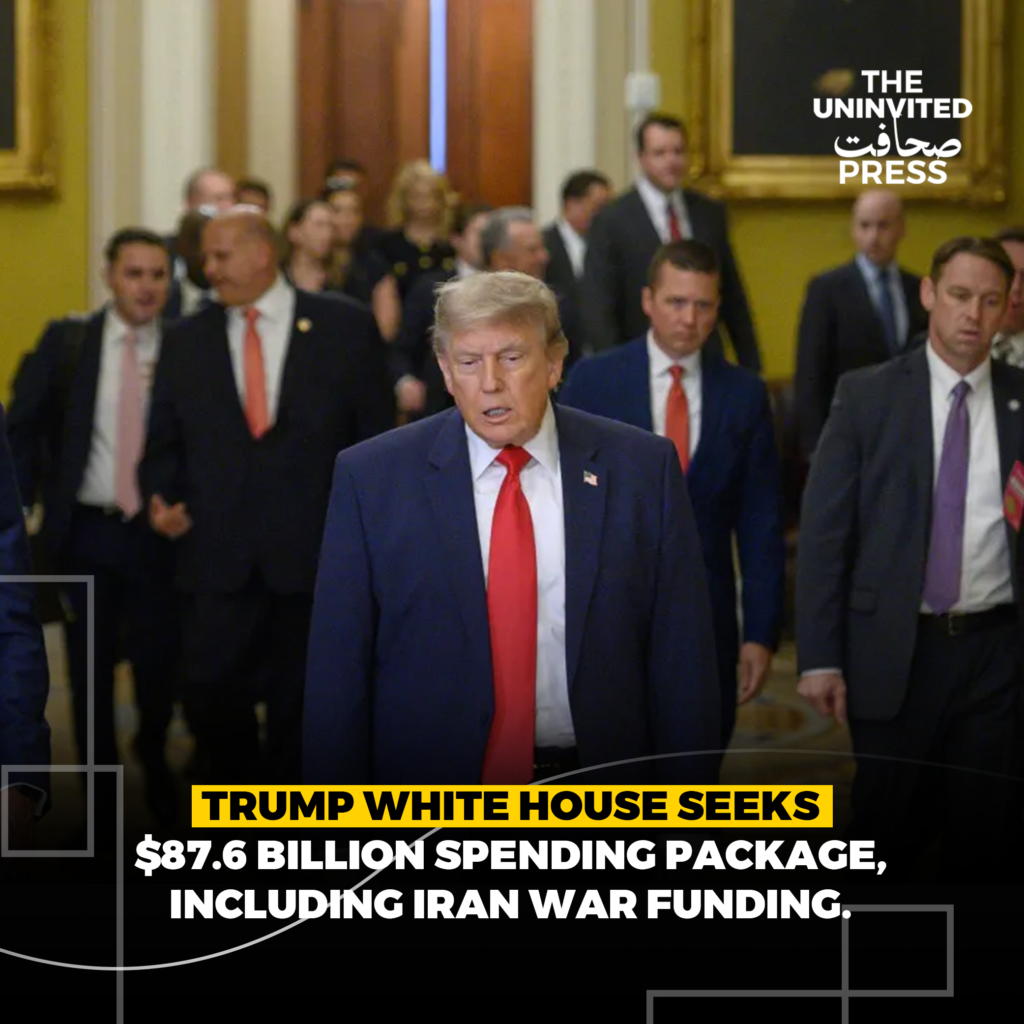
The administration of US President Donald Trump has formally requested that Congress approve an additional $87.6 billion in supplemental spending, with the bulk of the funds directed towards covering costs associated with the recent US-led military operations against Iran.
The request, submitted by the Office of Management and Budget on Wednesday, arrives at a politically charged moment. Just a day earlier, the Senate passed a war powers resolution aimed at curbing Trump’s ability to conduct further military actions in Iran without congressional approval-a rare bipartisan rebuke highlighting deep divisions over the conflict.
Bulk of funds for Pentagon replenishment:
According to details shared by officials and reported across multiple outlets, approximately $67 billion of the package is earmarked for the Department of Defense. This includes funding for military personnel, operational expenses, replenishing munitions stocks depleted during the campaign-codenamed Operation Epic Fury-and classified programmes.
The US has already spent around $24 billion on the Iran conflict so far, according to some estimates, as the military worked to degrade Iranian capabilities and support regional allies, particularly Israel.
The remaining funds in the supplemental request are allocated to domestic priorities, including aid to American farmers hit by economic pressures, support for Ebola response efforts in Africa, and various restoration projects in Washington, DC. Critics argue these non-military items are being bundled in to broaden political support for the larger defence ask.
US $87.6 Billion Iran War Funding Request Faces Congressional Resistance:
The proposal is likely to face significant hurdles on Capitol Hill. Many lawmakers, including some Republicans, have expressed frustration over the costs and strategic direction of the Iran campaign. The timing-coming hours after tense exchanges between Trump and GOP senators-underscores the friction within the party and across the aisle.
“I urge the Congress to take action on these important and urgent requests as soon as possible,” OMB Director Russ Vought wrote in a letter to House Speaker Mike Johnson.
However, with the Senate already signalling limits on executive war-making authority, the supplemental spending bill could become a flashpoint for broader debates about US foreign policy, fiscal responsibility, and the long-term consequences of military engagements in the region.
The US-Israel military actions against Iran have significantly altered the security landscape in the Middle East. While the Trump administration has described the operations as successful in deterring Iranian nuclear ambitions and reducing its regional influence, concerns remain about civilian casualties, humanitarian fallout, and the potential for renewed instability.
Analysts warn that the massive spending request reflects not just immediate war costs but also a broader commitment to sustaining a high level of military readiness in a volatile region. For many in the Middle East and beyond, it raises questions about the sustainability of US interventionism and its impact on global economic stability amid already strained international finances.
As Congress begins deliberations, the $87.6 billion request will test the balance of power between the executive and legislative branches, and could shape the trajectory of US policy towards Iran and the wider Middle East for years to come.