

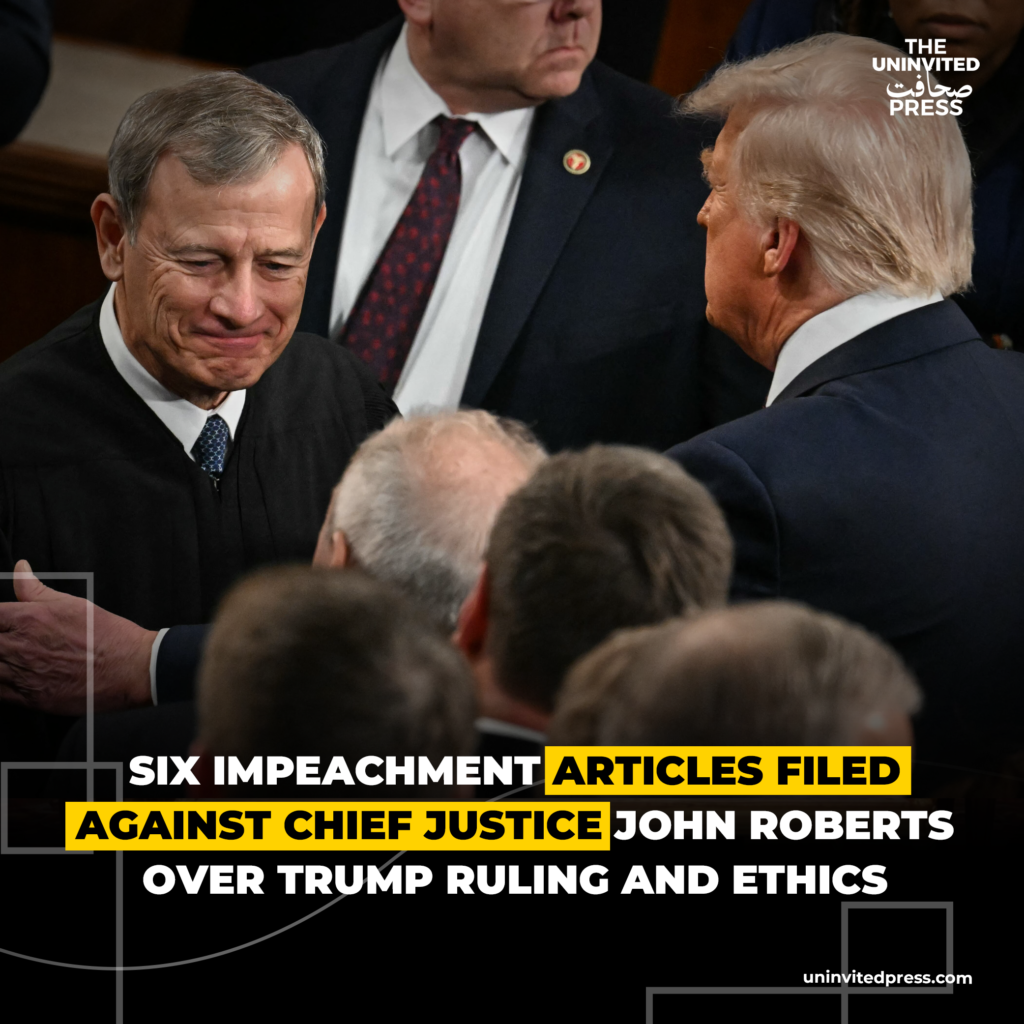
Move targets Supreme Court’s handling of Trump-related cases and ethics concerns, highlighting deep partisan rifts over judicial independence.
US Representative Steve Cohen, a senior Democrat on the House Judiciary Committee, has introduced six articles of impeachment against Chief Justice John Roberts, accusing him of high crimes and misdemeanors related to the Supreme Court’s perceived politicisation, controversial rulings favouring former President Donald Trump, and ethical lapses.
The resolution, filed in May 2026, marks a rare and largely symbolic effort to impeach the nation’s top jurist, coming amid heightened tensions between the legislative and judicial branches during Trump’s second term.
Allegations centre on partisanship and ethics:
The six articles allege that Roberts failed in his stewardship of the Court by allowing it to become a partisan instrument, violating constitutional principles of equal protection, due process, and judicial impartiality. Specific charges include:
- Enabling decisions that entrenched minority rule through rulings on voting rights, gerrymandering, and redistricting that allegedly favoured Republican interests.
- Issuing rulings that empowered wealthy donors via campaign finance decisions.
- Shielding presidents-particularly Trump-from criminal accountability in ways that usurped congressional authority.
- Arbitrary and unexplained orders that undermined public confidence in the judiciary.
- Ethical violations, including incomplete financial disclosures and failure to recuse in cases involving potential conflicts tied to his family.
Cohen stated that Roberts had led the Court to be “understood as biased,” with decisions benefiting Republicans at the expense of representative government.
Democrats Push to Impeach Chief Justice Roberts:
Many of the accusations tie back to the Supreme Court’s decisions during and after Trump’s first term and into his current administration, including immunity-related cases and election disputes. Critics from the left argue these rulings have weakened democratic safeguards, while supporters of the Court maintain they uphold constitutional limits on executive and legislative power.
The impeachment push also highlights long-standing Democratic concerns over Supreme Court ethics, including calls for stronger recusal standards and transparency in financial disclosures for justices.
Impeaching a Supreme Court justice is constitutionally possible but extremely difficult. The House would need a simple majority to impeach, followed by a two-thirds Senate vote for conviction and removal — a threshold nearly impossible in the current political climate. Similar past efforts against justices have failed to advance meaningfully.
Legal experts describe the move as more of a political statement than a viable path to removal, reflecting broader Democratic frustration with the Court’s conservative majority and its role in shaping American governance.
Republicans have dismissed the articles as partisan theatrics designed to undermine judicial independence. The Supreme Court has not issued an official response, though Roberts has previously defended the institution’s integrity in rare public statements.
This development underscores the intense polarisation surrounding the US Supreme Court, which has become a focal point in battles over abortion, voting rights, executive power, and election integrity. With midterms approaching, such conflicts are likely to intensify as both parties weaponise institutional grievances. Whether the articles lead to hearings or simply serve as messaging, they highlight ongoing debates about the balance of power, judicial accountability, and the perceived erosion of norms in American democracy.