

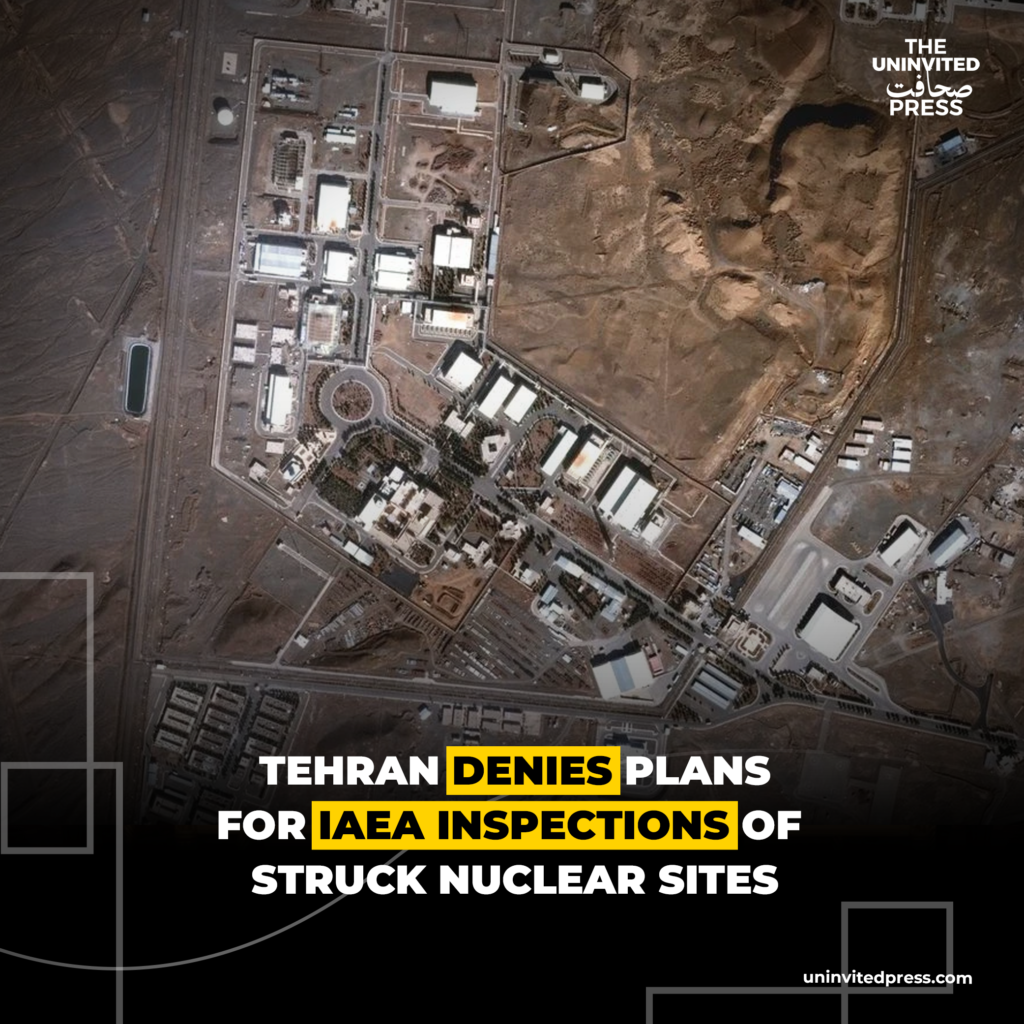
Tehran denies US claims of inspection agreement following recent strikes and ceasefire talks, raising concerns over nuclear transparency.
Iran has firmly denied any plans to allow International Atomic Energy Agency (IAEA) inspectors access to its nuclear facilities damaged in recent Israeli and US military strikes, contradicting assertions from Washington and complicating ongoing diplomatic efforts to stabilise the region.
The announcement comes amid fragile ceasefire arrangements and initial US-Iran talks in Switzerland, highlighting persistent tensions over Tehran’s nuclear programme following the 12-day war earlier in 2026.
Iran Rejects IAEA Inspections of Bombed Nuclear Sites:
Iranian Foreign Ministry spokesperson Esmaeil Baqaei stated that no meetings had taken place with IAEA Director General Rafael Grossi in Switzerland, nor were there any arrangements for inspections of sites hit during the conflict, including key facilities at Natanz, Fordow, and Isfahan.
“We have not had a meeting with the director general of the IAEA, nor do we have any plans for the agency to inspect Iran’s nuclear facilities damaged by the US and Zionist military aggression,” Baqaei said. He added that no specific protocol exists under current frameworks for post-strike inspections.
The remarks directly counter statements by US Vice President JD Vance, who claimed Iran had agreed to invite inspectors back as part of broader understandings reached in recent talks.
Iran insists it remains committed to its safeguards obligations under the Nuclear Non-Proliferation Treaty (NPT) for unaffected sites but rejects demands related to war-damaged locations without new, clearly defined mechanisms.
IAEA Faces New Access Row with Iran:
The facilities in question were targeted during escalating conflict involving Israel and the United States. The IAEA has previously reported its inability to verify activities or the status of nuclear material at several struck sites due to lack of access.
This latest standoff echoes long-running disputes over Iran’s nuclear activities, including unresolved questions about undeclared sites and enriched uranium stockpiles. Critics worry that restricted access could hinder verification that Iran’s programme remains exclusively peaceful.
The denial comes as US officials, including Secretary of State Marco Rubio, engage regional partners to solidify ceasefire terms, which reportedly include uranium dilution measures and temporary sanctions relief in exchange for enhanced oversight.
Iran has framed the issue as one of sovereignty and resistance to “political pressure,” while emphasising that military strikes on safeguarded nuclear facilities set a dangerous precedent.
The development is likely to fuel debates at the IAEA Board of Governors and among world powers about next steps in containing proliferation risks in the Middle East. It also tests the durability of the fragile post-war understandings brokered in recent weeks.
As investigations and talks continue, the standoff underscores the deep mistrust between Iran and Western powers, with significant ramifications for regional security and global non-proliferation efforts.