

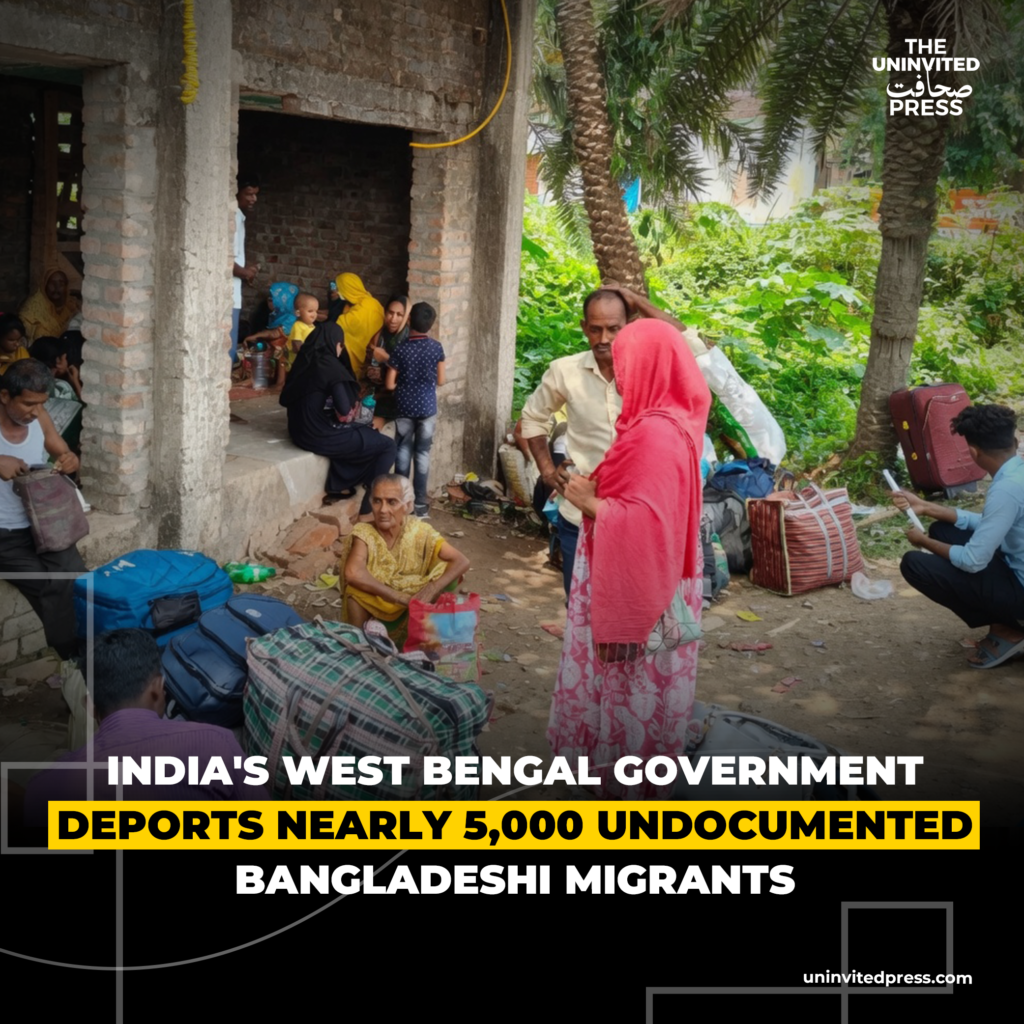
New BJP-led government ramps up crackdown on illegal immigration with detention centres and ‘detect, delete, deport’ policy, sparking humanitarian concerns and diplomatic sensitivities.
India’s eastern state of West Bengal has deported nearly 5,000 undocumented Bangladeshi nationals in just over a month, as the newly elected Bharatiya Janata Party (BJP) government intensifies efforts to curb illegal immigration.
State Chief Minister Suvendu Adhikari announced on Sunday that around 4,800 individuals have already been sent back across the border, with another 836 currently held in newly established detention centres awaiting deportation.
Migrants Face Expulsion as Crackdown Expands:
The deportations follow the BJP’s sweeping victory in West Bengal’s state elections last month, ending more than a decade of rule by the Trinamool Congress. The new government has moved quickly to fulfil campaign promises, ordering the creation of holding centres in every district for undocumented migrants, including Bangladeshis and Rohingya refugees.
Adhikari described the operation as targeting “infiltrators” and stressed that those without proper documentation cannot remain in the state. Authorities have also stepped up border vigilance and verification processes in coordination with the Border Security Force (BSF).
The drive has led to scenes of families with belongings gathering near border crossings, such as Hakimpur, as migrants face sudden expulsion. Critics and rights groups have raised concerns over the potential for arbitrary detentions, family separations, and inadequate due process, particularly affecting vulnerable communities.
Bangladesh has expressed reservations over the manner of some “pushbacks,” calling for proper verification and humanitarian consideration amid ongoing bilateral talks. Indian officials maintain that all deportations follow established legal and bilateral procedures.
Deportations Highlight Sensitive Border Politics:
The issue of illegal immigration from Bangladesh has long been politically charged in West Bengal and India’s northeastern states. The BJP has framed the crackdown as essential for national security, resource protection, and preserving demographic balance, while opponents accuse it of politicising migration and targeting Muslim communities.
This latest wave of deportations underscores the sensitive nature of the India-Bangladesh border and the complex interplay of security, politics, and human rights in the region.