

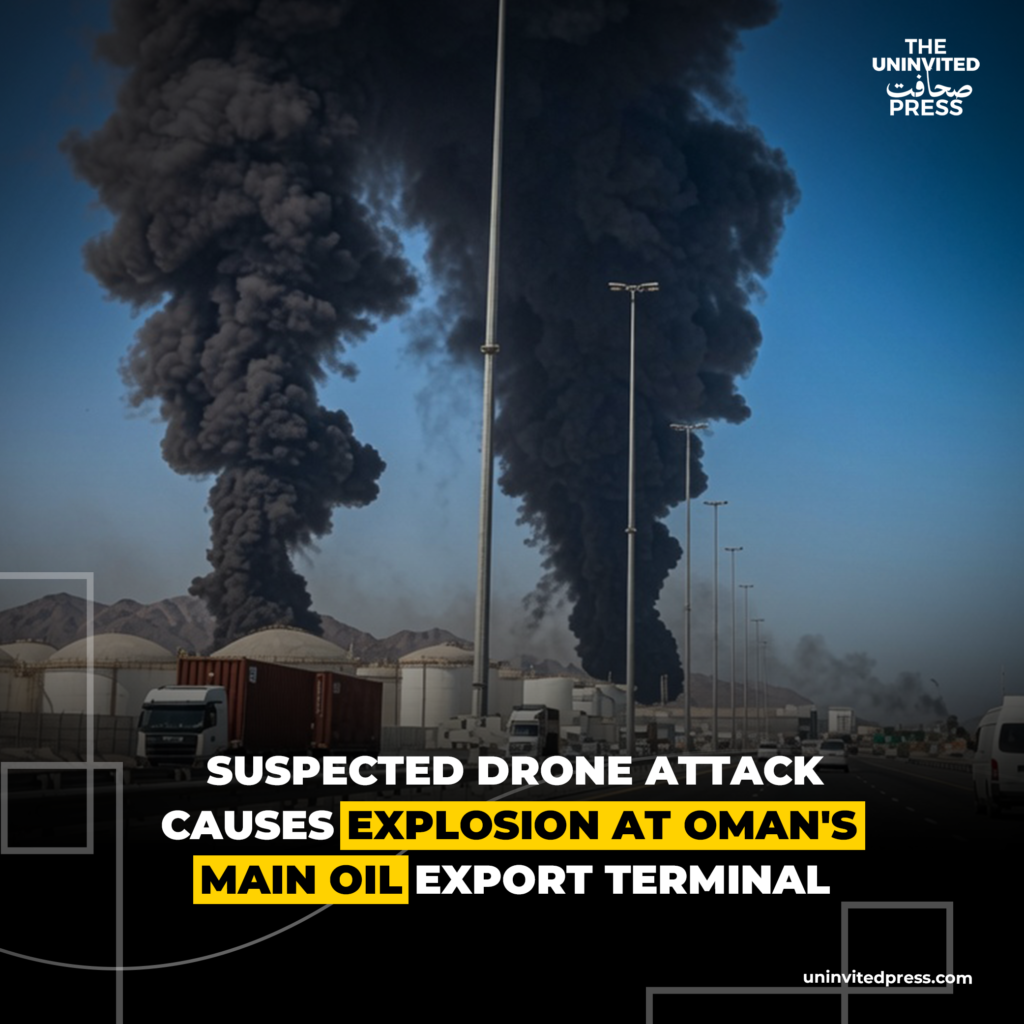
Explosion near Mina al Fahal raises fears of widening Gulf conflict amid Iran tensions.
Oman has suspended crude oil loading at its main export terminal, Mina al Fahal, following a suspected drone attack that triggered a massive explosion and fire, sending thick plumes of black smoke into the sky near the capital Muscat.
The blast occurred between the terminal’s single-buoy mooring (SBM) berths 1 and 2, according to sources familiar with the matter. No immediate reports of casualties have emerged, and details on the extent of damage remain limited as authorities have not issued an official statement.
Mina al Fahal handles the bulk of Oman’s crude oil exports-around 700,000 barrels per day-making it a critical facility for the sultanate’s economy and global energy markets. The suspension of operations comes at a sensitive time, as the region grapples with ongoing instability linked to the broader US-Iran confrontation and disruptions in the Strait of Hormuz.
Attack on Omani Terminal Fuels Market Fears:
Oman has traditionally maintained a neutral stance in regional conflicts, often playing a mediating role between adversaries. The strike on its territory, if confirmed as a deliberate attack, marks a significant escalation that could draw the Gulf sultanate deeper into the fray.
The incident echoes earlier drone strikes on Omani ports, including Salalah and Duqm, amid tit-for-tat actions involving Iranian forces and their responses to strikes on energy infrastructure across the Gulf. While no group has immediately claimed responsibility for the latest attack, speculation points to possible links with Iranian proxies or retaliatory actions in the volatile security environment.
Oil prices reacted with upward pressure following the news, reflecting concerns over potential supply disruptions from one of the region’s important non-OPEC producers. Several supertankers were reported anchored near the terminal at the time of the incident.
Regional Instability Fuels Energy Volatility:
Omani authorities have not yet detailed security measures or timelines for resuming operations. The country’s foreign ministry has in the past emphasised de-escalation and dialogue, particularly between the United States and Iran.
Analysts warn that repeated attacks on energy infrastructure could threaten the stability of vital shipping routes and exacerbate global energy volatility. The United States and its allies have monitored the situation closely, with reports of heightened military activity in the area.