

Cost-of-living pressures and global shocks create a ‘double hit’ for the sector as households tighten belts amid persistent inflation.
Australian retailers are navigating one of the most challenging periods in recent years, caught between subdued consumer spending and rising operational costs that are squeezing profit margins and slowing sector growth.
According to recent industry reports, retail turnover is now forecast to grow by just 1.8% in 2026, down from 2.3% the previous year. Analysts describe the situation as a “simultaneous attack from both flanks,” with weakening demand and escalating costs hitting businesses hard.
Many retailers are absorbing higher supply chain and input costs rather than passing them fully to price-sensitive customers, a strategy that is eroding profitability. Around two in three retailers report concerns about trading conditions ahead, citing cost-of-living pressures and cautious household spending.
Australians Cut Spending Amid Rising Costs:
Australian households, burdened by high interest rates, elevated housing costs, and rising prices for essentials like food, energy and fuel, are prioritising necessities over discretionary purchases such as clothing, electronics and homewares.
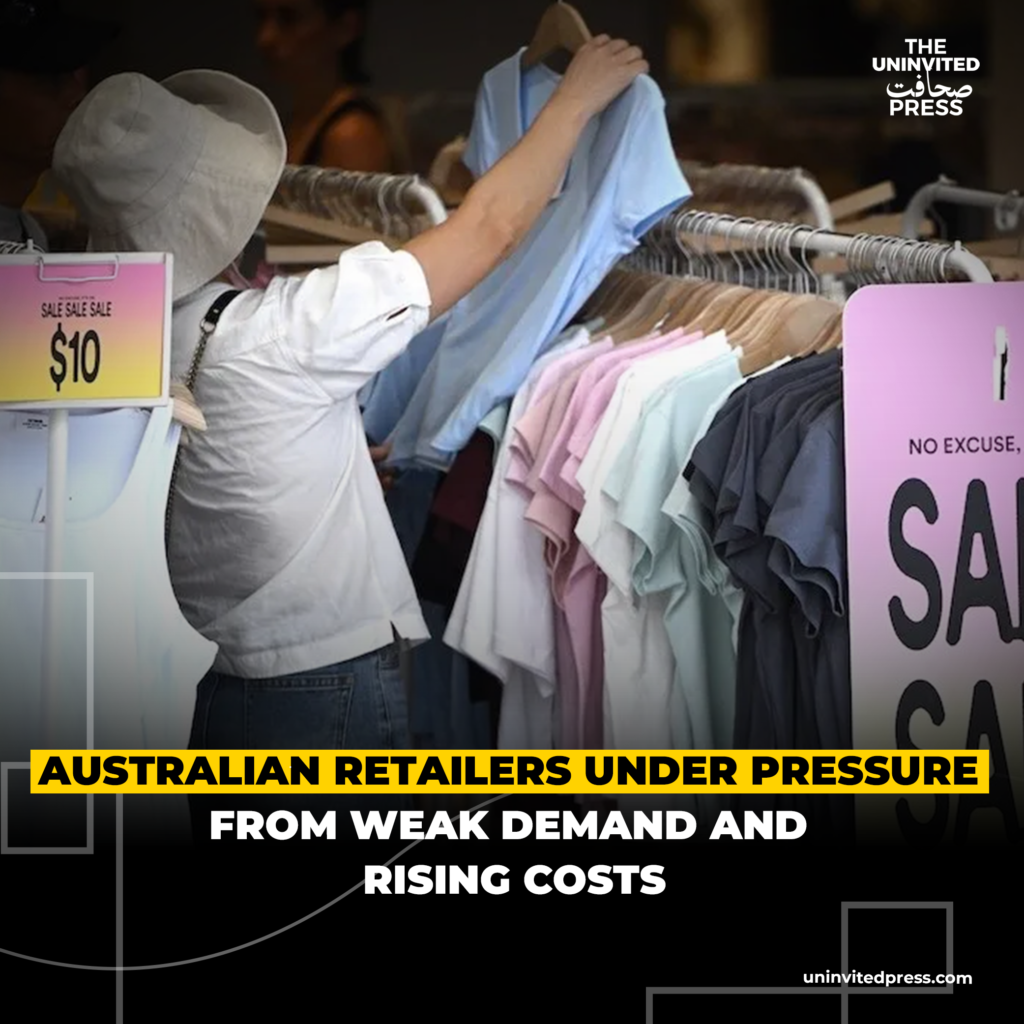
Clothing racks filled with discounted items have become a common sight as retailers attempt to stimulate demand through aggressive sales. However, with consumer confidence remaining fragile, many shoppers are holding back, trading down to cheaper alternatives or delaying purchases altogether.
The pressures have been compounded by global events, including tensions in the Middle East that have driven up fuel, shipping and energy costs, further straining supply chains.
Australian Retail Sector Faces Economic Headwinds:
The retail sector, which employs more than 1.4 million Australians, is feeling the ripple effects of a broader economic slowdown. While the labour market remains relatively resilient, high inflation and interest rates continue to weigh on household budgets.
The Australian Retail Council and economic consultancies like Deloitte Access Economics have warned of a “perfect storm” facing the industry, with some predicting increased insolvencies and hiring freezes if conditions do not improve.
Retailers are responding with cost-cutting measures, inventory reductions, and greater emphasis on value offerings. Some are also accelerating digital transformation to compete with online platforms, though many smaller businesses struggle with rising rents and wage costs.
Support Demanded as Retail Pressures Intensify
Industry leaders are calling on the government for targeted relief measures, including support for supply chain stabilisation and cost-of-living assistance that could help restore consumer confidence.
While some analysts expect conditions to ease later in 2026 or 2027 as inflation moderates, the immediate outlook remains cautious. For many Australian retailers, survival in 2026 will depend on their ability to balance cost control with appealing to increasingly frugal consumers in a high-pressure economic environment.
Whether this squeeze leads to a wave of consolidation or sparks innovation in the sector remains to be seen, but the challenges are testing the resilience of one of Australia’s largest employers.