

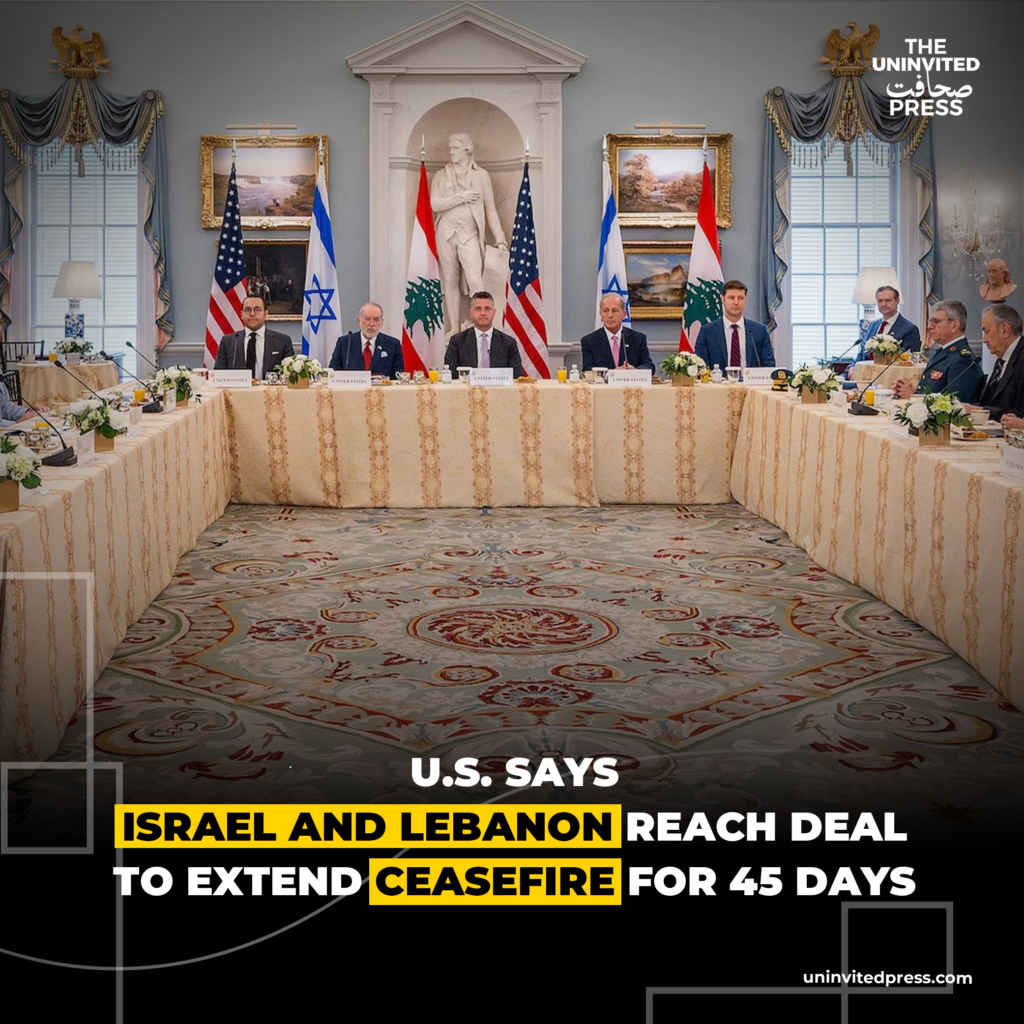
US-mediated negotiations secure a short-term extension of the ceasefire between Israel and Lebanon, but continued violations and rising regional tensions cast doubt on the durability of the truce.
Israel and Lebanon have agreed to extend a fragile ceasefire by 45 days, the US State Department announced on Friday, following two days of negotiations in Washington aimed at preventing a renewed escalation along their shared border.
The extension of the April 16 cessation of hostilities comes as the original truce-already extended once before-was set to expire, raising fears of a return to open conflict involving Israel and the Iran-backed Hezbollah movement in Lebanon.
'Productive' talks, persistent violations:
US State Department spokesperson Tommy Pigott described the discussions as “highly productive,” stating that both sides had agreed on a framework that includes “full recognition of each other’s sovereignty and territorial integrity” and efforts to establish security along the border.
However, the announcement comes against a backdrop of continued violence. Lebanese officials and health authorities have reported repeated Israeli strikes in southern Lebanon, including attacks that have killed civilians, paramedics, and damaged medical facilities even during the ceasefire period. Israel has justified many of these actions as responses to alleged Hezbollah movements or threats.
Analysts say the extension buys time but does little to address core issues, including the presence of Hezbollah fighters near the border, Israeli occupation concerns, and the broader regional fallout from tensions involving Iran.
Beirut Reacts Cautiously to Ceasefire Extension:
In Beirut, the extension has been met with cautious relief among residents weary of war, but scepticism remains high. Lebanese officials have stressed the need for Israel to fully withdraw from any positions inside Lebanese territory and respect the country’s sovereignty.
Hezbollah, which has been significantly weakened by months of Israeli military operations, has not publicly committed to the terms but has historically conditioned its actions on Israeli behaviour. Israeli Prime Minister Benjamin Netanyahu’s government, meanwhile, continues to insist on a strong security buffer and the implementation of UN resolutions that would limit Hezbollah’s military capabilities south of the Litani River.
The US, under the current administration, has positioned itself as a key mediator, with officials hoping the temporary calm will pave the way for more substantive long-term security arrangements.
Heavy Toll of Conflict Raises Fears as Ceasefire Countdown Begins:
The conflict has already exacted a heavy price. Thousands have been killed in Lebanon since the escalation linked to the wider regional crisis, with massive displacement, destruction of infrastructure, and severe economic strain. Southern Lebanese villages have borne the brunt of repeated airstrikes and artillery exchanges.
Rights groups continue to document alleged violations of international humanitarian law by all parties, calling for independent investigations and accountability.
As the 45-day clock starts, diplomats warn that without concrete progress on underlying disputes-including border demarcation, Hezbollah’s arsenal, and Israeli security demands-the region risks sliding back into full-scale war, with dangerous implications for the wider Middle East.