

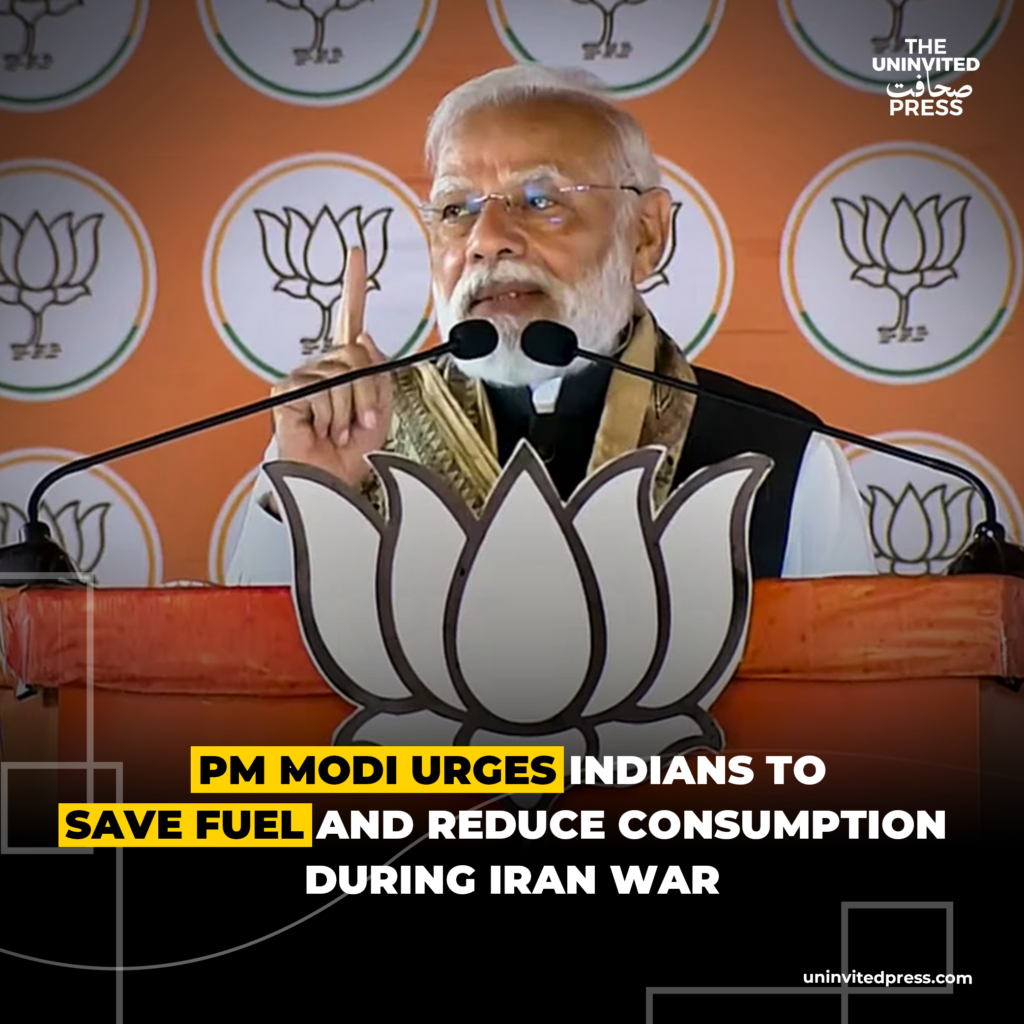
Prime Minister calls on citizens to cut petrol and diesel use, revive work-from-home, and postpone gold purchases amid soaring oil prices and foreign exchange pressures.
Indian Prime Minister Narendra Modi has appealed to the country’s 1.4 billion citizens to embrace personal sacrifices and reduce fuel consumption as the ongoing war in West Asia sends global oil prices surging and threatens India’s energy security and economy.
Speaking at a public rally in Hyderabad, Telangana, on May, Modi urged Indians to curb non-essential travel, carpool, use public transport and electric vehicles where possible, and revive COVID-19-era practices such as working from home and virtual meetings. He also asked families to postpone gold purchases and foreign travel for at least a year.
Modi Urges Fuel Cuts Amid Iran War Oil Shock:
The appeal comes as the US-Israeli military campaign against Iran has severely disrupted oil supplies, with Iran imposing a near-total blockade on the Strait of Hormuz-a critical chokepoint for global energy trade. India, which imports nearly 90 percent of its crude oil, has seen its import bill balloon, putting pressure on the rupee and foreign exchange reserves.
“ We have to reduce our use of petrol and diesel,” Modi said, according to reports. He emphasised that such measures would help save precious foreign currency at a time when the country faces “severe risks” from the conflict.
Analysts say the conflict has pushed crude oil prices above $100 per barrel, exacerbating inflationary pressures in India, which relies heavily on imported energy. The government has also encouraged greater use of railways for goods transport and local products to reduce import dependence.
Opposition Criticises Modi Fuel Appeal:
The call for public austerity has drawn sharp criticism from opposition parties, particularly the Congress, which accused Modi of shifting the burden onto ordinary citizens while failing to strengthen India’s long-term energy security, such as by adequately building strategic petroleum reserves.
Some commentators described the appeal as a sign of the government’s limited options in the face of an external shock, highlighting India’s structural vulnerabilities in the energy sector.
India Urges Unity Amid Iran War Impact:
The Iran war, which began earlier this year, has already caused global economic ripples, with supply chain disruptions and rising costs affecting countries across Asia. For India, the stakes are particularly high given its large diaspora in the Gulf, substantial trade ties, and dependence on the region for energy.
Modi framed the measures as a “challenge of patriotism,” calling on citizens to contribute collectively to national resilience during the crisis.
As the ceasefire between the US and Iran remains fragile, with recent statements from US President Donald Trump describing it as being “on life support,” uncertainty continues to loom over global oil markets.
Indian officials are monitoring the situation closely, with inter-ministerial briefings underway to assess the impact and coordinate a response. Whether the Prime Minister’s personal appeal will translate into widespread behavioural change remains to be seen, but it underscores the far-reaching domestic consequences of the conflict thousands of kilometres away in West Asia.